


CNC Machining Stainless Steel: 5 Essential Techniques for Precision Parts & Surface Finish
CNC Machining Stainless Steel: 5 Essential Techniques for Precision Parts & Surface Finish
Procurement managers and engineering teams face a common challenge when outsourcing precision components. You need parts delivered on time, within strict budget lines, and to exact specifications. Stainless steel remains a top choice for demanding industries like aerospace, medical devices, and semiconductor equipment. Yet, this material is notoriously difficult to cut. It hardens quickly under heat, ruins cutting tools, and can cause unpredictable lead time delays.
Managing quality risks requires a deep understanding of shop-floor mechanics. When your manufacturing partner controls the machining process properly, your component costs go down. A reliable machine shop minimizes scrap rates and delivers consistent quality across large production batches. Here are five essential techniques that top-tier CNC machine shops use to deliver flawless stainless steel parts with superior surface finishes.
1. Mastering Work Hardening with Aggressive, Constant Feeds
Stainless steel possesses high thermal capacity and high ductility. When a cutting tool moves across the metal, the material deforms and hardens ahead of the tool edge. This phenomenon is called work hardening. If a CNC machine hesitates or slows down, the tool rubs against a hardened layer. This ruins the cutting edge instantly, increases spindle runout, and destroys part dimensions.
Experienced machinists prevent this by maintaining an aggressive, constant feed rate. The tool must always cut beneath the work-hardened zone from the previous pass. Machining centers must utilize rigid setups to prevent any tool chatter or vibration.
Using climb milling is standard practice for high-precision components. The cutting edge enters the metal at its thickest point and exits where the chip is thinnest. This pushes heat into the chip rather than back into the workpiece. It protects the tool, keeps the metal cool, and ensures your critical dimensions stay well within print tolerances.
2. Choosing Advanced Coatings and Wiper Inserts
Tool selection directly impacts your piece-part price and production lead time. Raw untreated carbide tools wear out too fast when cutting 304 or 316 stainless steel. Modern machine shops use premium cutting tools with advanced PVD coatings. Titanium Aluminum Nitride (TiAlN) or Aluminum Chromium Nitride (AlCrN) coatings create a slick barrier against heat. They handle high temperatures well and prevent the stainless steel from sticking to the tool.
For parts requiring strict surface finish limits, finishing passes require specialized geometry. Machinists use a wiper insert to achieve smooth finishes without increasing cycle times. A wiper insert features a small flat section next to the main cutting radius. This flat edge acts like a miniature iron, smoothing down the tiny ridges left by each rotation of the tool. You get a beautiful surface finish below 0.4 μm Ra without paying extra for manual polishing.
3. Controlling Thermal Drift and Fixture Deflection
Precision machining requires strict control over environmental variables. High-speed stainless steel cutting creates extreme heat. This thermal energy transfers into the machine tools and structural components. As the machine warms up, its components expand slightly. This issue is known as thermal drift. It can pull your true position coordinates out of spec over a long production run.
High-end CNC shops combat this issue using real-time thermal compensation software and chiller units. They also track machine accuracy using strict Cpk (Process Capability Index) metrics.
Fixture deflection is another hidden enemy of quality parts. Stainless steel requires high clamping forces due to the heavy cutting pressures involved. If a fixture flexes even slightly, part geometry deforms under pressure. Machinists use custom, heavy-duty hydraulic fixtures to support the workpiece evenly. This rigidity keeps your parts flat, square, and accurate from the first piece to the last.
4. Minimizing Ball Screw Backlash and Spindle Runout
GD&T print requirements are getting tighter every year. Achieving strict true position tolerances requires high machine tool precision. Two major mechanical issues can ruin your part accuracy: ball screw backlash and spindle runout.
Ball screw backlash happens when a CNC machine axis reverses direction and there is tiny physical play in the drive gears. It causes slight profile errors on round holes and complex curves. Spindle runout occurs when the tool rotates off-center. Even a few microns of runout causes uneven wear on tool teeth, resulting in poor surface finishes and inconsistent part sizes.
Top-tier machine shops run regular calibration tests to fix backlash and runout. They utilize advanced linear scales and coordinate measuring machines (CMM) to verify physical part shapes. Buying components from a shop that maintains its machinery keeps your production lines running smoothly.
5. Optimizing Stepover and Tool Path Strategy
The final surface finish of a machined part depends heavily on tool path programming. Stepover is the distance between adjacent cutting passes. If the stepover is too wide during a 3D milling operation, the tool leaves distinct ridges. Machinists balance stepover and feed rates to achieve smooth finishes without lengthening cycle times.
Modern CAM software allows shops to use high-efficiency trochoidal tool paths. Instead of driving a tool straight into a heavy block of stainless steel, the machine cuts in smooth, circular loops. This advanced technique maintains a constant tool engagement angle. It prevents sudden shocks to the cutting edge, lowers physical cutting forces, and keeps temperatures stable. For procurement teams, this translates into faster material removal rates and shorter delivery lead times.
Partnering for CNC Success
Procuring precision stainless steel parts does not have to be a risky process. When sourcing your next project, ask your manufacturing partner about their specific machining strategies. Do they use climb milling? Do they track thermal drift and monitor Cpk data? Do they use CMM inspection to verify tight GD&T callouts?
A shop that invests in rigid machine setups, modern tooling, and stable processes will consistently protect your supply chain. You get accurate parts, excellent surface finishes, and predictable lead times that keep your production line moving forward.
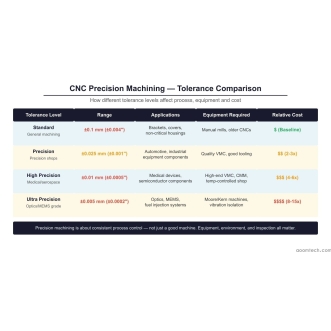 CNC Precision Machining Parts:
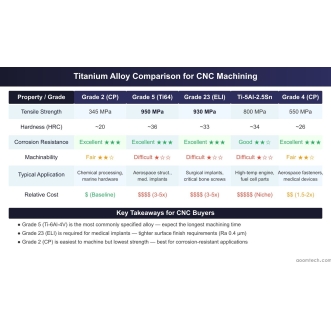 CNC Machining Titanium: Alloys
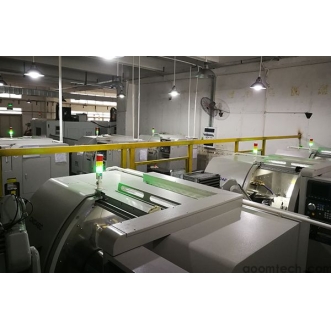 CNC Machining for Automotive:
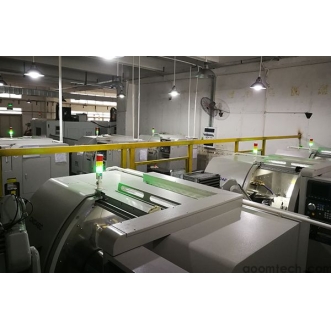 How to Choose a CNC Machining