Welcome to AOOM Co., LTD
Precision CNC Machining Services | Custom Parts Manufacturer

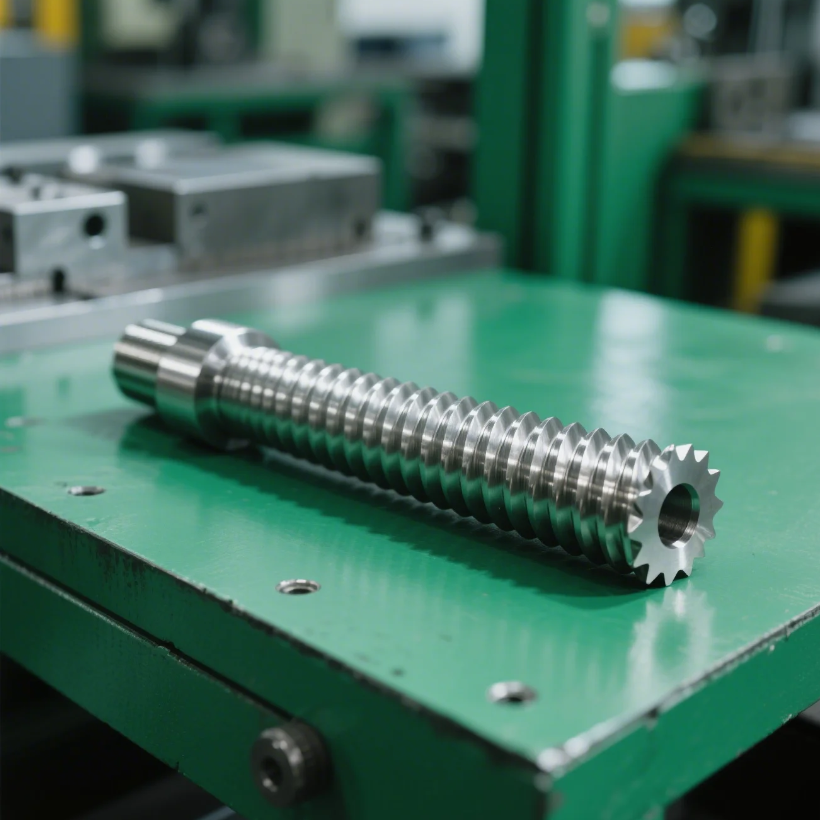
CNC Machining of Buttress Threads

CNC Machining of Buttress ThreadsIntroduction to CNC Machining of Buttress ThreadsCNC Machining of Buttress Threads is a precise manufacturing method used to produce special thread...


Product Details

CNC Machining of Buttress Threads

Introduction to CNC Machining of Buttress Threads

CNC Machining of Buttress Threads is a precise manufacturing method used to produce special thread forms designed for heavy load and one-direction force applications. Buttress threads are different from standard threads because one side of the thread is steep and the other side is shallow, allowing them to handle high axial loads efficiently in one direction.

The significance of CNC Machining for Buttress Threads lies in its ability to produce highly accurate and repeatable thread geometry. CNC (Computer Numerical Control) technology ensures that each thread is cut with consistent dimensions, which is critical for performance, safety, and long service life. These CNC-machined buttress threads are widely used in mechanical systems where strength and reliability are essential.


Importance of CNC Machining for Buttress Threads

Precision and Consistency

One of the main importance of CNC machining for buttress threads is precision. CNC machines follow programmed instructions to control thread pitch, flank angles, and depth with high accuracy. This ensures that every part produced matches the design requirements.

For example, in a heavy-duty lifting mechanism such as a screw jack, precise CNC-machined buttress threads help ensure smooth load transfer and prevent slipping under high pressure. This improves both safety and operational reliability.

Complex Design Realization

Another key benefit is the ability to produce complex geometries. Buttress threads often require custom profiles depending on the load direction and application. CNC machining allows engineers to create and replicate these complex designs without manual errors.

For instance, in industrial presses, a specially designed buttress-threaded spindle may be required to handle extreme axial loads. CNC machining makes it possible to produce these customized thread forms with high accuracy and repeatability.


Process Steps in CNC Machining Buttress Threads

Design and Programming

The process steps in CNC machining buttress threads begin with CAD (Computer-Aided Design). Engineers design the thread profile, including pitch, flank angles, and diameter. After that, CAM (Computer-Aided Manufacturing) software converts the design into machine instructions.

For example, when designing a custom buttress thread for a hydraulic press, engineers may need to adjust the flank angle to optimize load direction. This requires careful programming to ensure the CNC toolpath accurately reflects the design intent.

Material Selection and Preparation

Material selection plays a critical role in CNC machining. Common materials include carbon steel, alloy steel, stainless steel, and brass. Each material behaves differently during cutting and affects final thread performance.

Harder materials like alloy steel require slower cutting speeds and stronger tools, while softer materials like brass allow faster machining. Proper preparation, such as cutting raw stock to size or heat treatment, helps improve machining stability and thread quality.

Tool Selection and Setup

Specialized threading tools are used in machining buttress threads. These may include single-point tools or form tools designed specifically for thread profiles.

For example, when machining a buttress-threaded shaft, a form tool is carefully aligned to ensure correct flank angles. Incorrect setup can lead to poor thread engagement and reduced load capacity.

Machining Operations

In CNC turning or milling, the workpiece rotates while the cutting tool follows a controlled path to form the thread. Parameters such as feed rate, spindle speed, and depth of cut must be carefully controlled.

A slower feed rate is often used for buttress threads to ensure smooth surface finish and accurate geometry, especially in high-strength applications.

Quality Control and Inspection

Quality inspection ensures that the finished threads meet design requirements. Tools such as thread gauges, micrometers, and optical measurement systems are used.

For example, a thread gauge is used to verify pitch accuracy and fit between mating components. This step ensures reliability in real-world applications such as heavy machinery or aerospace systems.


Challenges in CNC Machining Buttress Threads

Maintaining Precision

One of the main challenges in CNC machining buttress threads is maintaining accuracy during long production runs. Tool wear, heat buildup, and machine vibration can all affect thread quality.

For example, worn cutting tools may cause slight variations in pitch, which can affect how well parts fit together. Regular tool inspection and compensation adjustments are required.

Tool Wear and Breakage

Because buttress threads are often used in high-load applications, they are frequently machined from hard materials. This leads to faster tool wear and occasional breakage.

Using proper cooling fluids and optimized cutting paths helps extend tool life and reduce production interruptions.

Complex Geometry Machining

The asymmetric design of buttress threads makes them more difficult to machine than standard threads. The steep and shallow flank angles require precise tool positioning and programming.

CNC programmers must carefully calculate toolpaths to avoid errors in thread geometry, especially in high-precision components.


Applications of Buttress Threads Machined by CNC

Heavy-Duty Machinery

The applications of buttress threads machined by CNC are most common in heavy machinery such as screw jacks, presses, and winches. These systems require high load-carrying capacity in one direction.

For example, a construction screw jack uses CNC-machined buttress threads to lift heavy loads safely and efficiently.

Automotive Industry

In the automotive industry, buttress threads are used in clutch systems, adjusters, and mechanical fasteners. CNC machining ensures smooth operation and long service life.

For example, a clutch release mechanism may rely on buttress-threaded components for precise adjustment under repeated use.

Aerospace Industry

In aerospace applications, strength and reliability are critical. Buttress threads are used in landing gear systems and structural assemblies.

CNC-machined buttress threads ensure that components can withstand extreme forces during takeoff and landing while maintaining safety standards.


Advantages of CNC-Machined Buttress Threads

High-Quality Output

The advantages of CNC-machined buttress threads include excellent surface finish, precise geometry, and consistent performance across production batches. This improves product reliability in critical applications.

Cost-Effectiveness for Medium to Large Production

Once programming and setup are completed, CNC machines can produce large quantities of identical parts efficiently. This reduces per-unit cost and increases productivity.

Design Flexibility

CNC machining allows engineers to modify thread profiles easily. This flexibility supports innovation in mechanical design and allows optimization for different load conditions.

For example, a custom buttress thread profile can be designed to improve efficiency in a power transmission system by reducing friction and increasing load capacity.


Conclusion: Mastering CNC Machining of Buttress Threads

CNC Machining of Buttress Threads plays a vital role in modern mechanical engineering. It combines precision, strength, and flexibility to produce high-performance threaded components used in many industries.

Understanding the importance of CNC machining for buttress threads, the process steps in CNC machining buttress threads, challenges in CNC machining buttress threads, applications of buttress threads machined by CNC, and advantages of CNC-machined buttress threads helps engineers and manufacturers improve product quality and efficiency.

As industrial demands continue to grow, CNC technology will remain essential for producing reliable buttress-threaded components that meet strict performance and safety standards.

Leave Your Message


Write your message here and send it to us

Leave Your Message