


CNC Machining Process for Stainless Steel Parts
CNC Machining Process for Stainless Steel Parts
The CNC Machining Process for Stainless Steel Parts plays a key role in modern manufacturing industries. Stainless steel is widely used because of its excellent corrosion resistance, strength, durability, and clean appearance. Through advanced machining technology such as :contentReference[oaicite:0]{index=0}, manufacturers can produce highly accurate stainless steel components that meet strict industrial standards.
This article explains the complete process, from design to finishing, including its benefits, challenges, and how to ensure high-quality results in real production environments.
Introduction to CNC Machining for Stainless Steel Parts
The significance of CNC machining for stainless steel parts
CNC machining is highly important for stainless steel components because it allows precise, repeatable, and efficient production. Stainless steel is used in industries such as construction, automotive, medical, food processing, and aerospace due to its strength and resistance to rust and chemicals.
For example, in medical devices, CNC-machined stainless steel parts ensure safety and hygiene due to their smooth surfaces and precise dimensions. In architecture, stainless steel fittings provide long-lasting structural support and a modern appearance. Without CNC technology, achieving this level of accuracy and consistency would be extremely difficult.
Steps in CNC Machining Stainless Steel Components
1. Design and Engineering
The process begins with CAD (Computer-Aided Design) modeling. Engineers create a 3D model of the part, defining dimensions, tolerances, load requirements, and functional features. This design must consider the machining characteristics of stainless steel.
Accurate design is essential. Even a small error can lead to assembly issues or mechanical failure, especially in load-bearing parts like brackets or shafts.
2. Material Selection
Different stainless steel grades are used depending on application needs:
304 stainless steel: general-purpose, good corrosion resistance
316 stainless steel: excellent for marine and medical environments
410 stainless steel: high strength and hardness
Choosing the correct grade is essential because it affects machinability, tool wear, and final performance.
3. CNC Programming
The CAD model is converted into machine instructions using CAM (Computer-Aided Manufacturing) software. This step defines toolpaths, cutting speeds, feed rates, and machining depth.
Precise programming ensures efficiency and prevents errors such as incorrect dimensions or poor surface finish. Poor programming can cause serious functional problems in final parts, especially in automotive and industrial applications.
4. Machine Setup and Tooling
The CNC machine is prepared with suitable cutting tools and fixtures. For stainless steel, carbide tools are commonly used due to their hardness and heat resistance.
Proper setup ensures stability, accuracy, and reduced vibration. Incorrect setup may lead to tool breakage or dimensional inaccuracy.
Machining Operations for Stainless Steel Parts
Milling
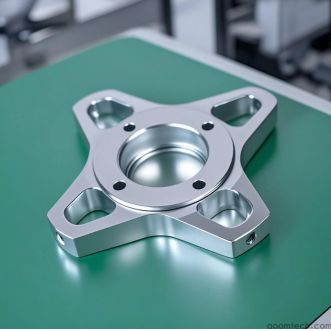
Milling is used to create flat surfaces, grooves, and complex shapes. Cutting parameters must be carefully controlled because stainless steel generates heat during machining. Proper chip evacuation is also important to avoid tool damage.
Turning
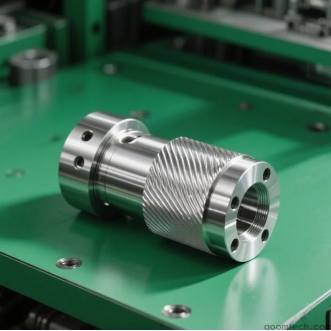
Turning is used for cylindrical parts like shafts and bushings. The workpiece rotates while the tool removes material. Maintaining concentricity and smooth surface finish is critical in applications such as automotive engines.
Drilling and Boring
Drilling creates holes, while boring refines them to precise dimensions. These operations require stable cutting speeds and proper coolant use to prevent overheating and maintain accuracy.
Heat Treatment (if required)
Some stainless steel parts require heat treatment to improve hardness or toughness. Processes such as annealing or tempering may be applied depending on application requirements.
Quality Control in CNC Machining Stainless Steel Parts
Quality control ensures that every part meets design specifications. This includes in-process inspection and final inspection using precision tools such as micrometers and surface testers.
If a part is out of tolerance, it may be reworked or rejected. Strict inspection is especially important for industries like medical and aerospace, where failure is not acceptable.
Finishing and Surface Treatment
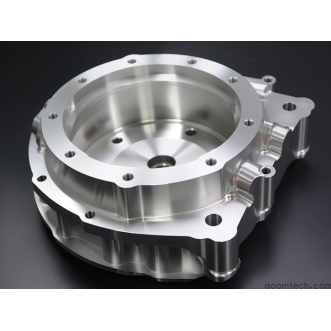
After machining, stainless steel parts often undergo finishing processes such as polishing, grinding, or deburring. These steps improve appearance and remove sharp edges.
Surface treatments such as passivation or electro-polishing enhance corrosion resistance and extend product life. These treatments are especially important for food-grade and medical-grade components.
Benefits of CNC Machining Stainless Steel Parts
High precision
CNC machining delivers extremely tight tolerances, ensuring perfect fit and smooth assembly. This precision improves product performance and reduces mechanical wear.
Customization
One major advantage is flexibility. CNC machining allows manufacturers to produce custom stainless steel parts based on unique design requirements, enabling innovation across industries.
Cost-effectiveness for small batches
For low to medium production volumes, CNC machining reduces setup costs and allows fast production. This is ideal for prototypes and specialized components.
Challenges in CNC Machining Stainless Steel Products
Tool wear
Stainless steel is hard and abrasive, leading to faster tool wear. Using high-quality carbide tools and optimizing cutting parameters helps extend tool life.
Chip evacuation
Stainless steel chips can be tough and continuous, making removal difficult. High-pressure coolant systems and chip-breaking tools are commonly used to solve this issue.
Work hardening
Stainless steel tends to harden during machining, which increases cutting resistance. Proper feed rates and sharp tools help minimize this effect.
Ensuring High-Quality CNC Machining Results
Partnering with experienced manufacturers
Working with experienced CNC machining providers ensures better quality, reliability, and process control. Manufacturers with stainless steel expertise understand tool selection, machining strategies, and quality requirements.
Continuous process improvement
Modern manufacturers improve efficiency by upgrading equipment, training staff, and adopting lean production methods. This leads to better consistency and reduced production costs.
Collaboration between engineers and machinists
Strong communication between designers and machinists ensures that parts are both functional and manufacturable. Early collaboration helps reduce errors and improves production efficiency.
Conclusion
The CNC Machining Process for Stainless Steel Parts is a highly precise and structured manufacturing method that ensures strong, durable, and high-quality components. From design and programming to machining and finishing, every step plays a critical role in achieving success.
Understanding the steps in CNC machining stainless steel components, recognizing the benefits of CNC for stainless steel parts, and addressing the challenges in CNC machining stainless steel products allows manufacturers and engineers to produce reliable parts for demanding industries worldwide.
 How to Ensure Precision in CNC
 Small Batch Precision CNC Mach
 What surface finish can CNC ma
 CNC Machining Tolerance Settin