


Custom CNC Machining for Precision Parts
Custom CNC Machining for Precision Parts
Introduction to Custom CNC Machining for Precision Parts
Custom CNC Machining for Precision Parts is a modern manufacturing approach that uses advanced computer-controlled systems to produce highly accurate and specialized components. It is based on Computer Numerical Control :contentReference[oaicite:0]{index=0} technology, which allows machines to follow precise digital instructions for cutting, shaping, and finishing materials.
This technology plays a key role in industries such as Aerospace Engineering :contentReference[oaicite:1]{index=1}, Medical Technology :contentReference[oaicite:2]{index=2}, and Electronics Industry :contentReference[oaicite:3]{index=3}. These industries depend on precision parts to ensure safety, performance, and reliability.
For example, in aerospace, precision-machined components ensure aircraft safety and fuel efficiency. In medical applications, they are used in surgical instruments and implants where accuracy directly affects patient outcomes. In electronics, small and complex parts support the function of devices such as sensors, connectors, and circuit systems.
The Process of Custom CNC Machining for Precision Parts
Design and Engineering
The process begins with understanding the function and requirements of the part. Engineers create a detailed 3D model using CAD/CAM software :contentReference[oaicite:4]{index=4}. This model defines every dimension, tolerance, and feature of the part.
The model is then reviewed for manufacturability. Adjustments may be made to ensure the design can be produced efficiently without errors. After final approval, the design is converted into machine instructions (CNC code). Accurate design is essential because even small errors can cause assembly failure or performance issues.
Material Selection
Material selection is a critical step in the process of custom CNC machining for precision parts. The choice depends on mechanical strength, corrosion resistance, thermal properties, and application requirements.
For example, titanium alloys are widely used in aerospace due to their strength-to-weight ratio, while stainless steel is common in medical tools because of its durability and biocompatibility. Aluminum is often used in electronics due to its lightweight and good thermal conductivity.
CNC Machining Operations
Milling
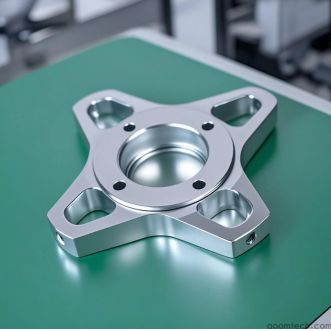
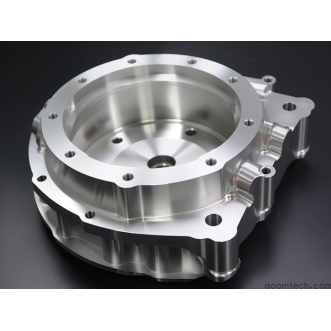
Milling uses rotating cutting tools to remove material and create complex shapes, flat surfaces, and slots. Tool selection and cutting parameters such as spindle speed, feed rate, and depth of cut must be carefully controlled to achieve precision and surface quality.
Turning
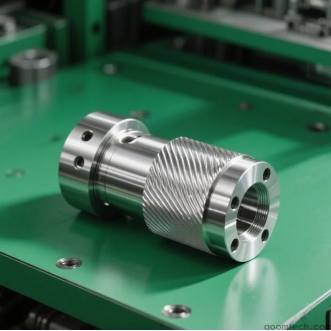
Turning is used for cylindrical parts such as shafts and rods. The workpiece rotates while a cutting tool shapes it. Maintaining concentricity and smooth surface finish is essential, especially for parts used in high-speed machinery or engines.
Drilling and Boring
Drilling creates holes, while boring refines and enlarges them to precise dimensions. Accurate hole placement is essential in assemblies, especially in electronics and mechanical systems where alignment is critical.
Quality Control
Quality control ensures that every part meets strict specifications. In-process inspections and final checks are performed using tools like calipers, micrometers, surface roughness testers, and Coordinate Measuring Machines (CMMs).
Any deviation is corrected immediately to maintain consistency and reliability in production.
Benefits of Custom CNC Machining for Precision Parts
High Precision
One of the main benefits of custom CNC machining for precision parts is extremely high accuracy. Computer-controlled systems ensure tight tolerances, which are essential in industries where safety and performance cannot be compromised.
Customization
This manufacturing method allows full customization of shapes, sizes, and features. It supports unique product designs and specialized applications that cannot be achieved through standard production methods.
Cost-Effectiveness for Small-Batch Production
For small or medium production runs, CNC machining is often more economical than traditional manufacturing methods. It reduces tooling costs and allows faster production of prototypes and limited-run parts.
Challenges in Custom CNC Machining for Precision Parts
Complex Geometries
Modern precision parts often include complex shapes and internal features. Multi-axis CNC machines help solve this challenge by allowing movement in several directions, enabling access to difficult surfaces.
Tool Wear and Breakage
Cutting tools wear out over time, especially when machining hard materials. Regular monitoring, proper tool selection, and optimized cutting conditions help reduce tool failure and maintain machining quality.
Surface Finish and Dimensional Accuracy
Vibration, heat, and tool deflection can affect surface quality and accuracy. Careful machine calibration and real-time adjustments are necessary to ensure consistent results.
How to Choose a Service Provider for Custom CNC Machining of Precision Parts
Experience and Expertise
When selecting a provider, experience is one of the most important factors. A skilled manufacturer understands complex machining requirements and can handle challenging projects efficiently. Reviewing past case studies and industry experience can help evaluate capability.
Quality Assurance System
A reliable provider should have a strong quality control system. This includes in-process inspection, final testing, and the use of advanced measurement equipment. A well-structured system ensures consistent product quality and reduces defect risks.
Cost and Turnaround Time
Cost-effectiveness should be balanced with quality. Comparing multiple quotes and evaluating delivery performance helps identify a reliable partner. On-time delivery is especially important for industries with strict production schedules.
Conclusion
Custom CNC Machining for Precision Parts is an essential manufacturing solution for industries that demand accuracy, reliability, and flexibility. By understanding the process of custom CNC machining for precision parts, businesses can make better decisions in design, material selection, and supplier choice.
The benefits of custom CNC precision part machining include high accuracy, customization, and cost efficiency for small batches. However, challenges such as complex geometries and tool wear require advanced technology and expertise.
When choosing a provider for custom CNC precision parts machining, experience, quality assurance, and delivery capability should always be prioritized. With the right partner, businesses can achieve high-performance components that support innovation and long-term success.
 How to Ensure Precision in CNC
 Small Batch Precision CNC Mach
 What surface finish can CNC ma
 CNC Machining Tolerance Settin