


How CNC Ensures Machining Accuracy: Methods and Technology
How We Actually Control Machining Accuracy in Our Shop
Machining accuracy isn't something you check at the end. It's something you build into every step of the process. At AOOM Technology, we have a systematic approach that guarantees micron-level tolerances for aerospace, medical, and automotive work.
Here's exactly how we do it.
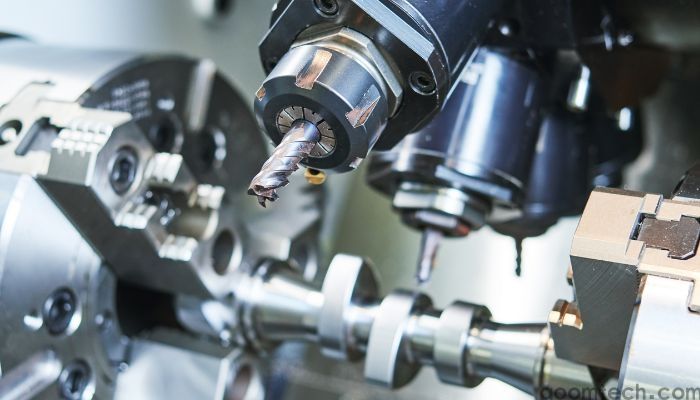
Machine Calibration and Rigidity
Every machine in our shop goes through regular CMM calibration. We run ballbar tests and laser interferometry to verify geometric accuracy down to ±0.005mm. Thermal compensation systems adjust for temperature changes during long runs.
Machine rigidity matters too. A stiff structure absorbs cutting forces without vibration. That's how we hold tolerances during heavy roughing passes, not just light finishing cuts.
Tooling That Doesn't Let You Down
Diamond-coated end mills and ceramic inserts stay sharp through extended production runs. We use dynamic tool presetters with 0.001mm resolution. When a tool wears, the system compensates automatically.
High-pressure coolant at 100 PSI prevents thermal deformation. Stainless steel and titanium generate heat fast. Without proper cooling, the part grows, the tolerance drifts, and you scrap material. We prevent that before it starts.
Process Optimization Through Simulation
Our engineers simulate every cut using Mastercam before production begins. Adaptive toolpaths reduce radial forces by 40%. We combine roughing and finishing strategies to minimize material stress. Real-time load monitoring adjusts feed rates dynamically during the cut.
One aerospace client's part had a deep pocket that caused chatter with every other supplier. We simulated the toolpath, added a stepover adjustment, and eliminated the chatter entirely. First article passed on the first check.
Closed-Loop Metrology
Renishaw in-process probes check critical dimensions during the cut. Post-process Zeiss CONTURA CMM inspection catches everything else. Statistical process control tracks CpK values above 1.67 for critical dimensions.
This closed loop means if something drifts, we catch it mid-run and correct it. Not after 500 parts are already scrap.
Send your CAD files to chen@aoomtech.com for a quote within 24 hours.
 CNC Machining for Defense and
 CNC Machining for Aerospace: M
CNC Machining for Medical Devi
CNC Machining for Aerospace: M
CNC Machining for Medical Devi
 CNC Precision Machining Parts: