


How to Choose the Right CNC Machining Manufacturer Partner
How to Choose the Right CNC Machining Manufacturer Partner
Choosing the right CNC (Computer Numerical Control) machining manufacturer partner is one of the most important decisions for any business involved in product development and manufacturing. The right partner can help you produce high-quality parts, reduce costs, and ensure on-time delivery. On the other hand, the wrong choice can lead to production delays, poor-quality components, and unexpected expenses that affect your entire supply chain.
This article explains how to choose the right CNC machining manufacturer partner in a practical and simple way. It is designed to help global readers understand the key decision factors, evaluation methods, and best practices for building a successful long-term partnership.
Introduction to Choosing a CNC Machining Manufacturer Partner
The Significance of a Good Partnership
A CNC machining manufacturer is more than just a supplier—they are a production partner. A reliable partner ensures that your designs are accurately turned into physical parts that meet technical requirements and quality standards.
A strong partnership can lead to:
Consistent product quality
Faster production cycles
Lower overall manufacturing costs
Better support during design changes and scaling
However, a poor choice can result in:
Production delays due to lack of capacity or poor planning
Increased costs from rework and scrap parts
Quality failures that damage your product reputation
Factors to Consider When Choosing a CNC Machining Manufacturer
Experience and Expertise
One of the most important factors in choosing a CNC machining manufacturer is their experience. Manufacturers with many years in the industry are more likely to handle complex technical challenges effectively.
You should check whether they have experience in your specific industry. For example, aerospace, automotive, and medical industries all require different standards and tolerances.
To evaluate experience, you can:
Request case studies of similar projects
Ask for customer references
Review their portfolio of past work
Range of Services
A strong CNC machining partner should offer a wide range of services such as milling, turning, drilling, and surface finishing. This helps reduce the need to work with multiple suppliers.
A one-stop service provider can improve efficiency by:
Reducing communication errors between suppliers
Shortening production timelines
Improving quality consistency across processes
Quality Control Measures
Quality control is essential in CNC machining. A reliable manufacturer should have strict inspection systems in place throughout production.
Key quality control tools and methods include:
In-process inspections using calipers and micrometers
Surface roughness testing
Final inspection using Coordinate Measuring Machines (CMM)
Look for manufacturers that document inspection results and regularly calibrate their measuring tools. This ensures consistent accuracy and traceability.
Equipment and Technology
Modern CNC machines play a key role in production efficiency and precision. Advanced equipment such as multi-axis machines and automated tool changers can significantly improve manufacturing performance.
Also, updated CAD/CAM software ensures accurate programming and reduces human error.
Advanced technology benefits include:
Higher machining accuracy
Faster production speed
Ability to produce complex geometries
Cost-effectiveness
Cost is important, but it should not be the only deciding factor. The cheapest option may lead to lower quality or hidden costs in the long run.
To evaluate cost-effectiveness, consider:
What services are included in the price
Lead times and delivery reliability
Quality consistency over time
Reputation and Customer Service
A manufacturer’s reputation reflects their reliability and customer satisfaction. You can evaluate this through online reviews, testimonials, and direct references.
Good customer service includes:
Fast and clear communication
Willingness to solve technical problems
Support during design and production changes
Evaluation Methods for CNC Machining Manufacturers
Request Quotes and Samples
One of the most effective evaluation methods of CNC machining manufacturers is requesting detailed quotes and product samples.
When sending a request for quotation (RFQ), include complete specifications such as material type, tolerances, and production quantity.
When reviewing samples, pay attention to:
Dimensional accuracy
Surface finish quality
Consistency across multiple parts
Conduct a Facility Visit
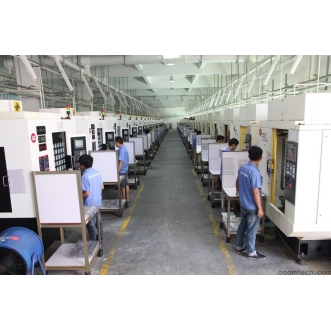
Visiting the manufacturer’s facility provides valuable insight into their real capabilities.
During a visit, observe:
Cleanliness and organization of the workshop
Condition and maintenance of machines
Skill level and professionalism of staff
Check Certifications and Compliance
Certifications show that a manufacturer follows industry standards. Common certifications include ISO 9001 for quality management and AS9100 for aerospace applications.
Always verify that certifications are valid and up to date. This ensures the manufacturer follows proper processes and quality systems.
Tips for a Successful Partnership with a CNC Machining Manufacturer
Clear Communication
Clear communication is the foundation of any successful partnership. Provide complete and detailed technical requirements from the beginning.
Important details include:
Part drawings and tolerances
Material specifications
Delivery deadlines
Expected production volume
Long-term Relationship Building
Building a long-term partnership allows manufacturers to better understand your needs and expectations. Over time, this can lead to better pricing, faster production, and improved quality.
To build strong relationships:
Provide regular feedback
Maintain consistent communication
Be open to collaborative problem-solving
Stay Informed and Involved
Staying involved in the production process helps prevent misunderstandings and delays. Regular updates from the manufacturer ensure that issues are addressed early.
Active involvement improves overall project control and product quality.
Conclusion: Finding the Ideal CNC Machining Manufacturer Partner
Summary and Key Takeaways
Understanding how to choose the right CNC machining manufacturer partner is essential for long-term manufacturing success. Key factors include experience, service range, quality control, technology, cost-effectiveness, and reputation.
Practical evaluation of CNC machining manufacturers should involve requesting quotes and samples, visiting facilities, and verifying certifications. At the same time, strong communication and collaboration are key tips for CNC machining manufacturer partnership.
A thoughtful selection process reduces risks and ensures stable production quality. For best results, businesses are encouraged to start with a small trial project before committing to large-scale cooperation.
 How to Ensure Precision in CNC
 Small Batch Precision CNC Mach
 What surface finish can CNC ma
 CNC Machining Tolerance Settin