


High Precision CNC Machining Customization
Many companies invest significant time and money into custom parts, only to receive components that fail to meet dimensional requirements, arrive behind schedule, or exceed budget expectations. Tight tolerances, complex geometries, and changing design requirements often make customization difficult. High Precision CNC Machining Customization helps solve these challenges by providing accurate, repeatable, and scalable manufacturing solutions for industries that cannot afford quality compromises.
Whether you are developing medical equipment, automotive systems, industrial machinery, or aerospace components, understanding the capabilities and limitations of CNC customization is essential for achieving the right balance between precision, cost, and production efficiency.
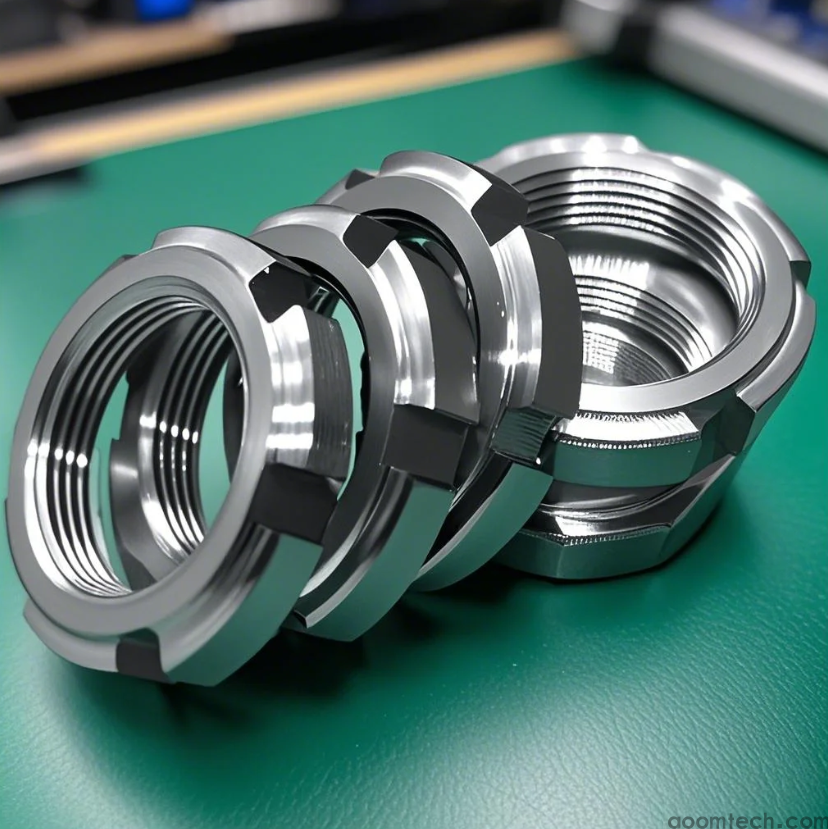
What Is High Precision CNC Machining Customization?
High Precision CNC Machining Customization refers to the process of manufacturing parts according to unique customer specifications while maintaining extremely tight tolerances and consistent quality. Unlike standard catalog components, customized CNC parts are designed to meet specific functional, dimensional, and performance requirements.
Modern CNC machining centers use advanced software, automated tool paths, and precision measurement systems to produce parts with complex features, intricate contours, and demanding surface finish requirements.
Common customized CNC components include:
Medical device components
Automotive engine and transmission parts
Robotics and automation equipment components
Aerospace structural parts
Electronics housings and heat sinks
Industrial machinery components
Why Precision Matters in Custom CNC Parts
One of the most common user concerns is achieving the required accuracy. Even a small dimensional deviation can cause assembly failures, excessive wear, vibration, or reduced product performance.
Professional CNC manufacturers control critical factors such as:
Machine calibration accuracy
Tool wear monitoring
Fixture stability
Thermal expansion management
Cutting parameter optimization
Material behavior during machining
These controls help ensure that custom parts meet strict tolerances and perform consistently in real-world applications.
High Precision CNC Machining Customization for Medical Devices
High precision CNC machining customization for medical devices requires exceptional accuracy and process control. Medical components often contain complex geometries, miniature features, and demanding surface finish requirements.
Examples include:
Surgical instrument components
Orthopedic implant parts
Diagnostic equipment housings
Medical robotics components
Custom prosthetic device parts
Medical manufacturers rely on CNC machining because it provides repeatable precision while maintaining compliance with strict industry standards. Detailed inspection procedures and traceable manufacturing records help ensure reliability and patient safety.
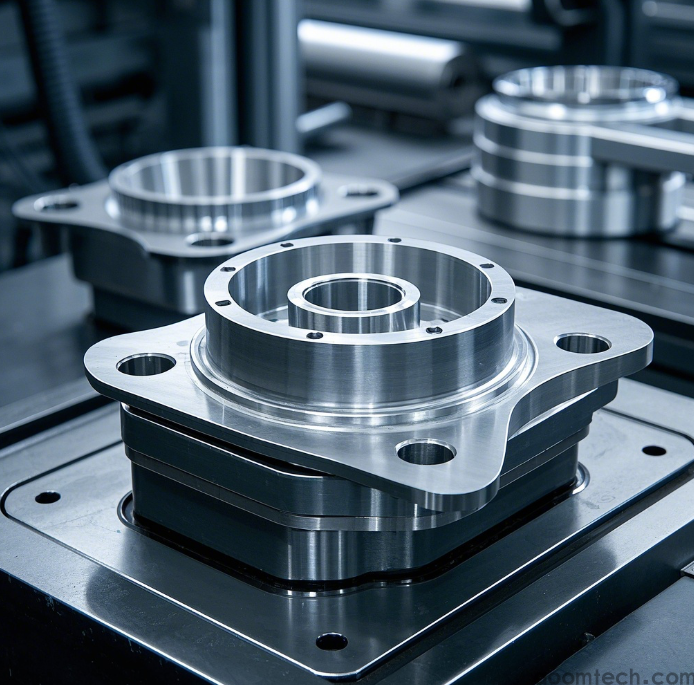
Customization in High Precision CNC Machining for Automotive Parts
Customization in high precision CNC machining for automotive parts plays a critical role in performance, durability, and safety. Automotive engineers often require customized components that cannot be sourced through standard suppliers.
Common examples include:
Engine brackets
Turbocharger components
Suspension parts
Transmission housings
Performance braking system components
Precision machining allows manufacturers to achieve tight tolerances that improve assembly quality, reduce vibration, and enhance overall vehicle performance. This becomes especially important in electric vehicles and high-performance automotive applications.
High Precision CNC Machining Customization for Complex Components
High precision CNC machining customization for complex components is often required when traditional manufacturing methods cannot achieve the desired geometry.
Complex parts may include:
Multi-surface components
Deep cavities
Thin-wall structures
Precision threaded features
Multi-axis contoured surfaces
Advanced 5-axis CNC machining enables multiple surfaces to be machined in a single setup, reducing cumulative errors and improving dimensional consistency. This approach also shortens production cycles and lowers the risk of part rejection.
Key Advantages of High Precision CNC Machining Customization
Excellent Accuracy
Modern CNC equipment can achieve extremely tight tolerances, making it suitable for demanding engineering applications.
Design Flexibility
Engineers can create customized features, unique geometries, and application-specific designs without major tooling investments.
Consistent Quality
Automated machining processes reduce human error and ensure repeatability across prototypes and production batches.
Material Versatility
CNC machining supports aluminum, stainless steel, titanium, brass, copper, engineering plastics, and many specialty materials.
Faster Product Development
Rapid prototyping and design revisions help shorten development cycles and accelerate product launches.
How to Reduce Customization Costs
Another major concern is cost. While customized precision parts can be expensive, several strategies help reduce overall project expenses.
Design parts with manufacturability in mind
Avoid unnecessarily tight tolerances
Choose suitable materials for the application
Reduce the number of setups required
Standardize features where possible
Order optimized production quantities
Working with an experienced CNC machining partner during the design stage often identifies cost-saving opportunities before production begins.
Limitations of High Precision CNC Machining Customization
Although CNC customization offers significant advantages, it is not the ideal solution for every application.
Very high-volume production may be more economical with casting or molding processes
Some extremely complex internal geometries may require additive manufacturing
Exotic materials can increase machining time and tooling costs
Ultra-tight tolerances may require additional inspection and finishing operations
Evaluating production volume, performance requirements, and budget helps determine whether CNC machining is the most suitable manufacturing method.
Conclusion
High Precision CNC Machining Customization provides manufacturers with the ability to produce highly accurate, reliable, and application-specific components across industries such as medical, automotive, aerospace, electronics, and industrial equipment. By addressing common challenges including precision requirements, customization flexibility, and cost control, CNC machining remains one of the most effective manufacturing solutions for modern engineering projects.
To learn more about custom CNC solutions, material selection, and precision manufacturing capabilities, visit our CNC Machining Services, Precision CNC Parts, and Custom CNC Manufacturing pages.
 CNC Machining for Aerospace: M
CNC Machining for Medical Devi
CNC Machining for Aerospace: M
CNC Machining for Medical Devi
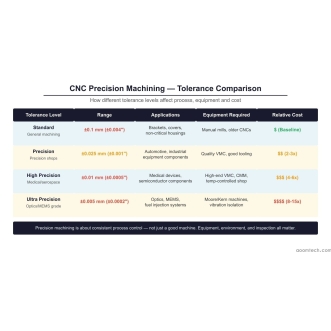 CNC Precision Machining Parts:
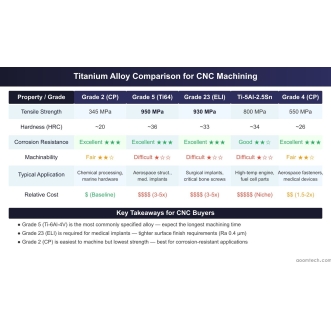 CNC Machining Titanium: Alloys