


CNC Machining for Aerospace: AS9100, Materials & Quality Standards Guide
You're designing a bracket for a satellite. Or a turbine blade for a jet engine. The material needs to survive extreme temperatures, the tolerances need to hold at 40,000 feet, and the documentation needs to satisfy AS9100 auditors. This is the reality of CNC machining for aerospace — where failure isn't an option and every part carries a paper trail.
Aerospace is different from any other industry I've worked with. The quality standards are tougher, the materials are harder to machine, and the certification requirements make automotive look simple. Here's what you need to know.
AS9100 and Aerospace Quality Standards
AS9100 is the aerospace-specific quality management standard, built on ISO 9001 with additional requirements for safety, reliability, and traceability. If you're supplying CNC machined parts to Boeing, Airbus, or their tier-1 suppliers, AS9100 certification is non-negotiable.
What AS9100 means for your CNC parts:
- Full traceability from raw material to finished part, with lot control
- First Article Inspection (FAI) per AS9102 — a complete dimensional and material report on the first production part
- Configuration management — every engineering change must be documented and approved
- Risk management throughout the production process
- Special process certifications (Nadcap) for heat treat, welding, surface treatment
- Counterfeit parts prevention — material must come from approved suppliers
My honest take: AS9100 certification isn't something a shop picks up in a weekend. It takes months of documentation, training, and audits. If your CNC supplier has AS9100, they've made a serious commitment to quality. If they don't, your aerospace customer will likely reject their parts.
Aerospace Materials — Tough to Machine, Critical to Get Right
Aerospace materials are selected for strength-to-weight ratio, fatigue resistance, and high-temperature performance. Unfortunately, these properties also make them difficult to machine.
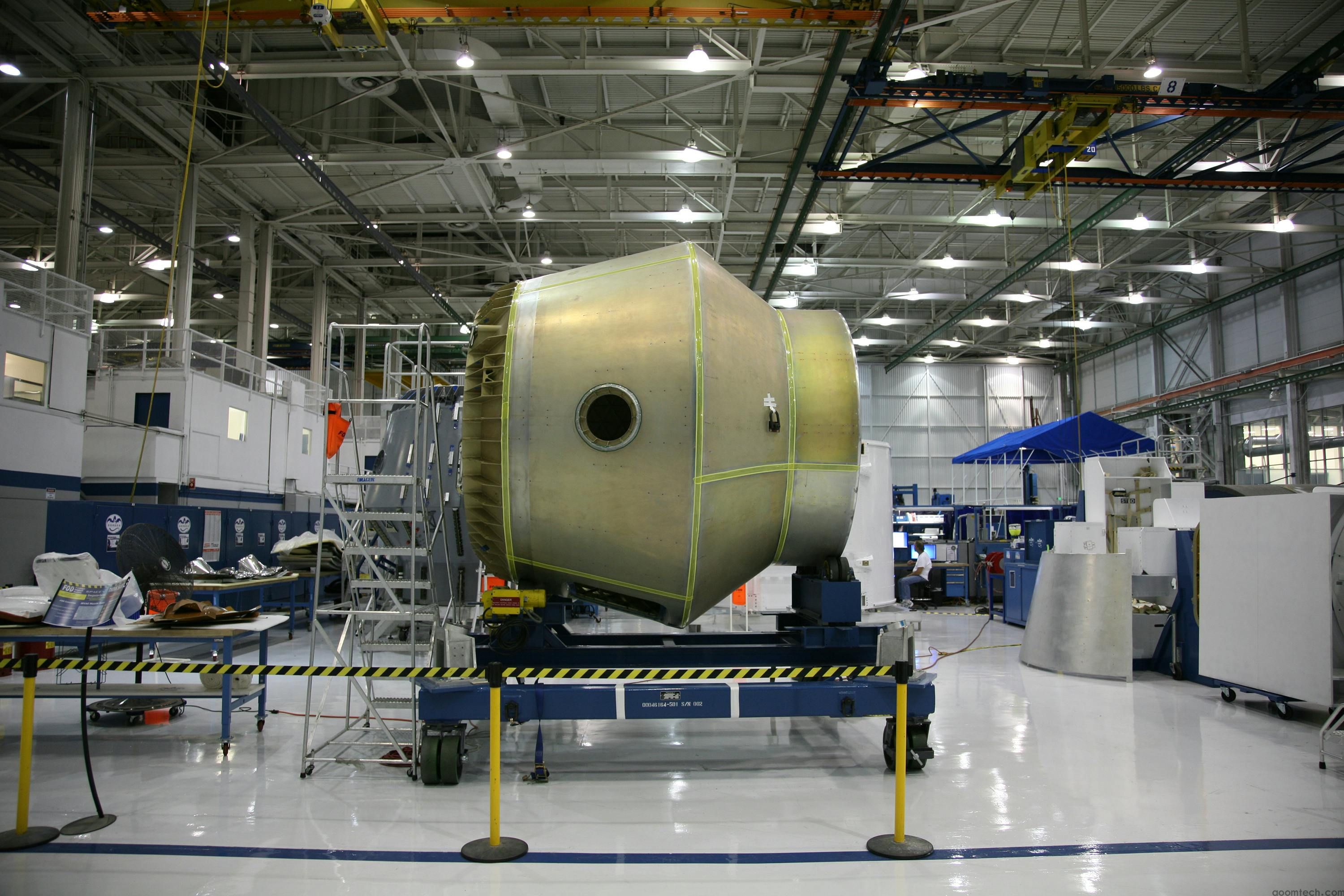
Aluminum 7075-T6 and 2024-T3. The most common aerospace aluminums. 7075 is stronger than 6061 and used in structural airframe components. 2024 has excellent fatigue resistance for wing skins and fuselage panels. Both machine well but are prone to burr formation — expect thorough deburring as a secondary operation.
Titanium Ti-6Al-4V (Grade 5). The backbone of aerospace structural components — landing gear, engine mounts, hydraulic systems. Half the weight of steel with excellent strength and corrosion resistance. Machining titanium is slow (40-60 m/min cutting speed), generates intense heat at the tool tip, and requires rigid setups with high-pressure coolant. Ball screw backlash in older VMCs shows immediately in titanium.
Inconel 718 and other nickel-based superalloys. Used in turbine discs, blades, and exhaust components where temperatures exceed 600°C. These alloys work-harden rapidly and retain strength at high temperatures, making them extremely difficult to machine. Typical cutting speeds are 20-40 m/min with ceramic or CBN tooling. Expect tool life measured in minutes, not hours.
Stainless steel 15-5PH and 17-4PH. Precipitation-hardening stainless steels used for structural fittings, brackets, and hydraulic components. Good corrosion resistance and high strength. Machine in the annealed condition before heat treatment for best results.
Here's the thing most buyers don't consider — material sourcing for aerospace is heavily restricted. Your supplier must buy from approved mills with certified material traceability. A 7075 plate from an uncertified source will be rejected at incoming inspection. We maintain approved supplier lists at AOOM and provide full MTRs with every shipment.
First Article Inspection (FAI) Per AS9102
FAI is the most important quality step in aerospace machining. Before production begins, the first part off the machine goes through a complete dimensional inspection — every feature on the drawing measured and recorded. The results are documented on an AS9102 form, which includes:
- Part number, revision level, and drawing number
- Material cert and heat treat cert references
- Dimensional report with actual measurements vs. print tolerances
- Characteristic designation (critical, major, minor per the drawing)
- CMM inspection results with deviation maps
- Surface finish measurements
- Special process certifications
FAI must be repeated when the design changes, the manufacturing process changes, or after a production gap of more than two years. I've seen programs delayed for weeks because the supplier didn't understand the AS9102 form requirements. Get it right the first time.
Aerospace Tolerance Requirements
Aerospace tolerances are tighter than commercial, but not uniformly. The key is knowing where tight tolerances are essential and where they're wasted.
Critical safety features (±0.005mm). Turbine blade airfoil profiles, bearing journal diameters, valve seat concentricity. These require temperature-controlled CMM inspection, statistical process control, and dedicated gaging. Not every aerospace shop can hold these tolerances.
Structural and mating features (±0.025mm). Bolt hole patterns, fitting interfaces, bearing bores. Achievable with good CNC equipment and regular tool changes. Common across most aerospace components.
Non-critical features (±0.1mm). Brackets, covers, fairings, non-structural components. Standard practice — no special controls needed beyond normal process monitoring.
A common question: "Can you hold ±0.01mm on a 500mm aluminum part for a satellite?" The answer is yes, but you need to account for thermal expansion — about 0.12mm per 10°C on 500mm of 7075. We compensate by measuring the part at a known temperature and applying offset corrections during CMM inspection.
Choosing an Aerospace CNC Partner
AS9100 certification is the starting point, not the whole story. Look for experience with your specific material — a shop that runs aluminum all day may struggle with Inconel. Ask about their FAI process and ask to see a sample AS9102 report. Visit the shop floor and look for temperature control, tooling organization, and material segregation systems. And check their Nadcap certifications for any special processes your parts require.
AOOM Technology provides CNC machining for aerospace applications across structural components, engine parts, and spacecraft hardware. We maintain AS9100-compatible quality systems, perform full AS9102 first article inspections, and document every step from material receiving to final inspection. If you need aerospace CNC parts with the traceability and quality your customer demands, contact AOOM today. We'll review your print, discuss your material and certification requirements, and give you a straight answer.
 CNC Machining for Aerospace: A
 CNC Machining for Medical Devi
 CNC Machining DFM: A Practical
 CNC Machining Finishing Option