


How to Choose a Suitable Manufacturer for CNC Machining Molds
How to Choose a Suitable Manufacturer for CNC Machining Molds
Choosing a reliable partner for CNC mold production is one of the most important decisions for companies in industries such as automotive, plastics, electronics, aerospace, and medical devices. The quality of the mold directly determines the quality, consistency, and cost efficiency of the final product.
A strong manufacturing partner ensures precision engineering, stable production timelines, and long-term reliability. In contrast, the wrong choice can lead to defective parts, production delays, unexpected costs, and damaged customer trust.
This article explains How to Choose a Suitable Manufacturer for CNC Machining Molds in a practical and structured way, including evaluation criteria for CNC mold manufacturers, steps in choosing a CNC mold machining firm, and challenges in selecting a CNC mold manufacturer with realistic solutions.
The Significance of Selecting the Right Manufacturer
CNC (Computer Numerical Control) machining is widely used for producing high-precision molds. These molds are used in processes such as plastic injection molding, die casting, and stamping. Even small errors in mold design or machining can result in large-scale production issues.
For example, in plastic injection molding, a well-machined mold produces consistent parts with smooth surfaces and correct dimensions. However, a poorly made mold can lead to defects such as warping, flash, uneven thickness, and frequent machine downtime. Over time, this increases rejection rates and production costs.
Therefore, selecting the right CNC mold manufacturer is not just a procurement decision—it is a long-term investment in product quality and production efficiency.
Evaluation Criteria for CNC Mold Manufacturers
Experience and Technical Expertise
Experience is one of the most reliable indicators of manufacturing capability. A manufacturer with many years in CNC mold machining is more likely to understand complex geometries, material behavior, and precision requirements.
When evaluating experience, consider:
Years of operation in CNC mold manufacturing
Industry specialization (automotive, electronics, medical, etc.)
Portfolio of completed mold projects
For instance, a manufacturer experienced in automotive molds will better understand durability requirements, heat resistance, and tight tolerances compared to a general-purpose workshop.
Equipment and Technology
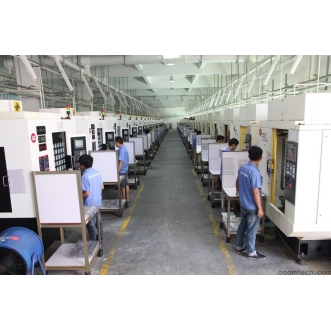
Modern CNC mold production depends heavily on advanced equipment. A capable manufacturer should operate high-speed CNC machining centers, five-axis machines, EDM (Electrical Discharge Machining) systems, and precision grinding tools.
Equally important is measurement and inspection technology. Coordinate Measuring Machines (CMMs) are essential for verifying dimensional accuracy. Without reliable inspection tools, even advanced machining equipment cannot guarantee quality.
Also consider the use of CAD/CAM software. This technology improves design accuracy, reduces machining errors, and shortens production cycles.
Quality Control System
A strong quality control system is essential for consistent mold performance. Reliable manufacturers implement inspection processes at every stage, including:
Raw material inspection
In-process dimensional checks
Surface finish evaluation
Final mold testing and validation
Certifications such as ISO 9001 demonstrate that the manufacturer follows standardized quality management systems. However, certification alone is not enough—practical implementation matters more.
Production Capacity and Flexibility
Production capacity determines whether a manufacturer can meet your volume requirements within deadlines. Some manufacturers specialize in large-scale production, while others focus on small-batch, high-precision molds.
Ask clear questions about:
Monthly and annual production capacity
Ability to scale production during peak demand
Compatibility with different mold sizes and complexities
Cost-Effectiveness
Cost is important, but it should never override quality. The lowest price often leads to higher long-term expenses due to repairs, defects, and production inefficiencies.
A professional approach is to evaluate total value, including:
Material costs
Machining and labor costs
Tooling and setup fees
After-sales support
Request detailed quotations to compare different suppliers fairly. This is a key part of evaluation criteria for CNC mold manufacturers.
Communication and Customer Support
Clear communication is essential for successful collaboration. A reliable manufacturer should provide timely updates, respond quickly to technical questions, and be open to design adjustments.
Good communication reduces misunderstandings and ensures smooth project execution. Dedicated account managers or engineering contacts are a strong advantage.
Steps in Choosing a CNC Mold Machining Firm
Step 1: Research and Shortlisting
Begin by identifying potential manufacturers through industry directories, professional networks, trade shows, and referrals. Focus on companies with proven experience in your industry.
Create a shortlist based on location, specialization, and technical capability.
Step 2: Request for Quotation (RFQ)
Send detailed RFQs including design drawings, material requirements, tolerance levels, expected quantity, and delivery timelines.
The response quality is an early indicator of professionalism. Clear, detailed, and timely replies reflect strong engineering capability.
Step 3: Technical Evaluation
Evaluate each manufacturer’s technical proposal. Compare machining methods, material selection, production timelines, and quality assurance plans.
This step is critical in steps in choosing a CNC mold machining firm, as it reveals whether the manufacturer truly understands your requirements.
Step 4: Factory Audit or Virtual Tour
If possible, visit the manufacturing facility. Observing equipment, workflow, and staff expertise provides valuable insight into real production conditions.
If a physical visit is not possible, request a virtual tour or video documentation of their workshop and inspection systems.
Step 5: Reference and Reputation Check
Ask for client references and review feedback from previous customers. Reliable manufacturers will have a history of successful long-term partnerships.
Online reviews and industry reputation can also help confirm reliability and consistency.
Step 6: Final Decision and Contract
After comparing all technical, financial, and operational factors, select the manufacturer that offers the best balance of quality, cost, and reliability.
Ensure the contract clearly defines specifications, delivery schedules, quality standards, and intellectual property protection clauses.
Challenges in Selecting a CNC Mold Manufacturer
Hidden Costs
One common issue is undisclosed costs such as tooling fees, mold modifications, or special surface treatments.
To avoid this, always request a full cost breakdown and confirm all potential charges before signing agreements.
Intellectual Property Protection
Mold designs often contain sensitive technical data. Without proper protection, there is a risk of design misuse or unauthorized replication.
Use non-disclosure agreements (NDAs) and ensure the manufacturer has secure data handling systems.
Delivery Delays
Delays can disrupt entire production schedules. Causes may include material shortages, machine breakdowns, or poor planning.
To reduce risk, establish clear timelines, milestone tracking, and regular progress reporting.
Conclusion: Making an Informed Decision
Understanding How to Choose a Suitable Manufacturer for CNC Machining Molds requires careful evaluation of technical capability, production capacity, cost structure, and communication quality.
By following structured evaluation criteria for CNC mold manufacturers, applying systematic steps in choosing a CNC mold machining firm, and preparing for common challenges in selecting a CNC mold manufacturer, businesses can significantly reduce risks and improve production outcomes.
A successful partnership with the right manufacturer is not just about one project—it builds a foundation for long-term efficiency, consistent quality, and competitive advantage in global markets.
 How to Ensure Precision in CNC
 Small Batch Precision CNC Mach
 What surface finish can CNC ma
 CNC Machining Tolerance Settin