


High-precision Aluminum Parts Mass CNC Machining Process
High-precision Aluminum Parts Mass CNC Machining Process
The High-precision Aluminum Parts Mass CNC Machining Process is a modern manufacturing method used to produce large quantities of precise aluminum components with consistent quality. It combines advanced digital design, automated machining, and strict quality control to meet the needs of industries such as aerospace, automotive, electronics, and industrial equipment.
This article explains the full process in simple language, including design, material selection, machining operations, quality control, and production-scale planning. It is designed to help readers understand how high-precision aluminum parts are manufactured efficiently and reliably in mass production.
Introduction to High-precision Aluminum Parts in Mass Production
High-precision aluminum parts are widely used because aluminum is lightweight, strong enough for many applications, and resistant to corrosion. It also has good thermal conductivity, making it suitable for heat-related applications such as electronic housings and engine components.
In industries like aerospace, aluminum parts help reduce the overall weight of aircraft while maintaining structural strength. In automotive engineering, they are used in engine systems, transmission parts, and chassis components. In electronics, aluminum is often used for heat sinks and protective casings.
The use of CNC machining allows manufacturers to produce these parts with extremely tight tolerances and repeatable accuracy, even in large production volumes.
Design Phase for High-precision Aluminum Parts Mass CNC Machining
Concept Development
The process begins with concept development. Engineers and designers work closely with clients or internal teams to define the function of the part. They identify performance requirements such as load capacity, temperature resistance, and environmental conditions.
For example, in automotive applications, parts must withstand vibration, heat, and continuous mechanical stress. In aerospace applications, weight reduction and fatigue resistance are critical factors.
CAD Design Creation
Designers use CAD (Computer-Aided Design) software to create a detailed 3D model of the part. This model includes exact dimensions, tolerances, surface finish requirements, and geometric features.
Accuracy at this stage is extremely important because the CAD file becomes the foundation for all machining operations. Any error in design can lead to assembly problems or functional failure during production.
Design in high-precision aluminum parts mass CNC machining requires careful attention to tolerance stacking, tool accessibility, and manufacturability to ensure efficient mass production.
Material Handling for High-precision Aluminum Parts Mass CNC Machining
Aluminum Alloy Selection
Choosing the correct aluminum alloy is essential for achieving the required performance. Different alloys offer different combinations of strength, machinability, and corrosion resistance.
6061 Aluminum Alloy: Commonly used for general applications due to its balance of strength and machinability.
7075 Aluminum Alloy: High-strength alloy often used in aerospace and high-stress environments.
5052 Aluminum Alloy: Known for excellent corrosion resistance, often used in marine environments.
The selection depends on the application, load conditions, cost constraints, and environmental exposure.
Material Inspection and Preparation
Before machining begins, raw aluminum materials must be carefully inspected. This ensures the material meets required quality standards.
Inspection methods may include visual checks, hardness testing, chemical composition analysis, and ultrasonic testing to detect internal defects such as cracks or voids.
After inspection, the material is cut into suitable sizes for CNC machining. Proper preparation helps reduce waste and improve production efficiency.
Machining Operations for High-precision Aluminum Parts Mass Production
Milling Operations
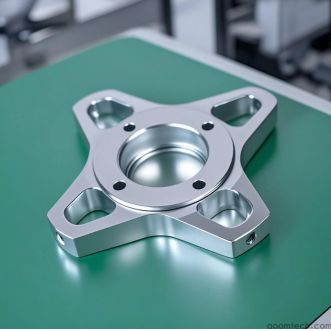
Milling is one of the most common CNC operations used for aluminum parts. A rotating cutting tool removes material to create flat surfaces, grooves, holes, and complex shapes.
Carbide end mills are often used because they provide high durability and excellent cutting performance on aluminum.
Key parameters include spindle speed, feed rate, and cutting depth. Aluminum allows relatively high cutting speeds, but overheating must be avoided to prevent material deformation.
Machining operations for high-precision aluminum parts mass production require stable tool paths and optimized cutting conditions to ensure consistency across thousands of parts.
Turning Operations
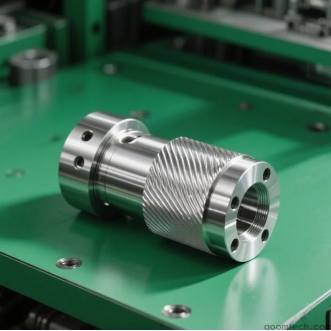
Turning is used to produce cylindrical parts. In this process, the workpiece rotates while a cutting tool shapes its outer surface.
Achieving high concentricity and smooth surface finish depends on tool geometry, machine stability, and proper cutting parameters. Carbide inserts are commonly used for durability and precision.
Drilling and Boring Operations
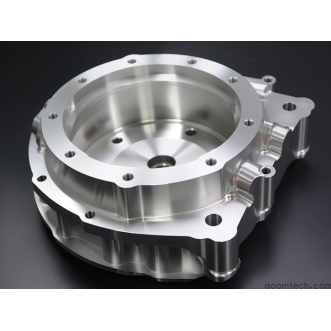
Drilling creates holes in the material, while boring is used to enlarge or refine existing holes to achieve precise dimensions.
Accurate hole positioning is critical in assembly applications. Even small deviations can affect product performance or cause assembly failure.
Proper spindle speed and feed rate selection help maintain hole quality and prevent tool wear or breakage.
Quality Control in High-precision Aluminum Parts Mass CNC Machining
In-process Inspection
In-process inspection ensures that machining quality is maintained during production. Operators regularly check dimensions, surface quality, and tool condition.
Tools such as calipers, micrometers, and optical measuring systems are used to verify accuracy. If deviations are detected, machine settings are adjusted immediately.
Quality control in high-precision aluminum parts mass CNC production is essential to prevent defects and reduce scrap rates.
Final Inspection
After machining is completed, each part undergoes final inspection. This includes checking dimensional accuracy, surface roughness, and structural integrity.
Coordinate Measuring Machines (CMMs) are commonly used for high-precision measurement. These machines can detect even micrometer-level deviations from design specifications.
Non-conforming parts are either reworked or rejected depending on the severity of the defect.
Production-scale Considerations for CNC Machining
Production Planning and Scheduling
Efficient production planning is essential for mass manufacturing. It involves scheduling machine time, tool changes, maintenance, and inspection cycles.
Well-organized planning reduces downtime and increases overall productivity. For example, grouping similar machining operations together can minimize tool change frequency.
Automation and Robotics Integration
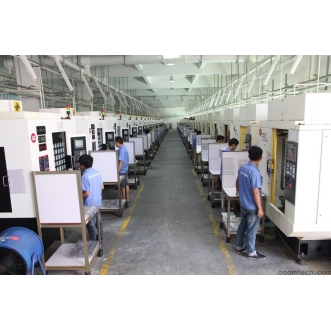
Automation plays a major role in modern CNC machining systems. Robotic arms and automated loading systems help move raw materials and finished parts efficiently.
Automated systems improve consistency, reduce human error, and increase production speed. They also allow machines to operate continuously with minimal supervision.
In large-scale production, automation is often combined with real-time monitoring systems to ensure stable output quality.
Conclusion: Mastering the High-precision Aluminum Parts Mass CNC Machining Process
The High-precision Aluminum Parts Mass CNC Machining Process is a complex but highly efficient manufacturing system. It integrates careful design, proper material selection, precise machining operations, strict quality control, and advanced production planning.
Success in this field depends on understanding each step and maintaining consistency throughout the production cycle. Even small improvements in design or machining strategy can significantly enhance productivity and reduce costs.
Key takeaways include:
Accurate CAD design is essential for manufacturability and precision.
Proper aluminum alloy selection ensures performance and durability.
Optimized machining parameters improve efficiency and surface quality.
Strict quality control reduces defects in mass production.
Automation increases consistency and production capacity.
By continuously improving processes and adopting modern CNC technologies, manufacturers can achieve reliable, scalable, and high-quality production of aluminum components for global industries.
 How to Ensure Precision in CNC
 Small Batch Precision CNC Mach
 What surface finish can CNC ma
 CNC Machining Tolerance Settin