


Production Process of CNC Machining for Small Parts
Production Process of CNC Machining for Small Parts
The Production Process of CNC Machining for Small Parts is a precise and structured workflow used to manufacture tiny but highly important components found in industries such as electronics, medical devices, automotive systems, and watches. Although these parts are small in size, they play a critical role in the performance and reliability of final products.
Understanding this process helps manufacturers, engineers, and even hobbyists improve quality, reduce waste, and ensure efficient production. For example, in a smartphone, small CNC-machined metal parts such as connectors, brackets, and screws ensure stable assembly and proper functionality of internal systems.
The Significance of Understanding the Process
Small parts are often overlooked due to their size, but they require extremely high precision. A small dimensional error can cause product failure or assembly issues. Understanding each step of CNC machining helps ensure consistent quality, better material use, and faster production cycles.
This knowledge is especially important in industries like medical manufacturing, where even a tiny deviation in a syringe component can affect patient safety and usability.
Design Phase in CNC Small Part Machining
Concept and Requirements Gathering
The process begins by identifying the function of the small part within the final product. Engineers gather requirements such as load capacity, size limits, material compatibility, and environmental conditions.
For example, a small medical device component must be made from biocompatible materials and designed for safe handling. Requirements are usually collected through collaboration between designers, engineers, and end-users, as well as industry standards and regulations.
CAD (Computer-Aided Design) Modeling
Once requirements are defined, engineers create a 3D model using CAD software. This model defines exact dimensions, shapes, and tolerances.
Accuracy is extremely important in this stage because any mistake in the CAD model will directly affect the final manufactured part. Best practices include using correct measurement units, verifying dimensions, and ensuring geometric alignment of all features.
Material Selection for Small Parts
Properties Consideration
Material selection depends on performance requirements such as strength, corrosion resistance, conductivity, and machinability.
For example:
Stainless steel is commonly used in medical small parts due to its durability and corrosion resistance.
Aluminum is used in lightweight electronics components.
Brass is often used for electrical connectors due to its conductivity.
Choosing the right material ensures long service life and reliable performance under working conditions.
Material Sourcing
After selecting the material, manufacturers source it from trusted suppliers. Quality certifications, material consistency, and availability are carefully checked.
Materials for small parts often come in the form of rods, sheets, or tubes. It is recommended to request samples before bulk purchasing and to build long-term relationships with reliable suppliers to maintain consistency in production.
CNC Programming for Small Part Production
Converting CAD to CNC Code
The CAD model is converted into CNC machine instructions using CAM software. This process generates toolpaths that define how cutting tools move during machining.
These toolpaths are based on geometry, machining type (milling, turning, drilling), and material properties. Any error in programming can lead to incorrect dimensions or tool damage.
Optimizing the Program
Optimization improves efficiency and quality. Engineers adjust cutting speed, feed rate, and cutting depth to achieve the best balance between productivity and precision.
Simulation tools are often used to test machining paths before actual production. This helps prevent errors, reduce tool wear, and avoid overheating during machining of small and delicate parts.
Machine Setup for Small Part CNC Machining
Selecting the Right CNC Machine
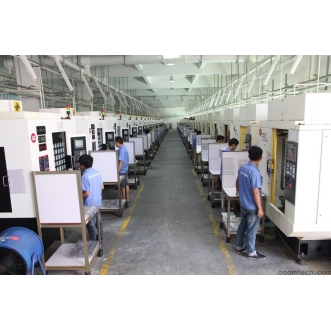
Choosing the correct machine depends on precision requirements, axis capability (3-axis or 5-axis), and machine size. Small parts often require high-precision compact CNC machines capable of tight tolerances.
Tooling and Fixturing
Proper tooling is essential for accuracy. Small cutting tools such as micro end mills and precision drills are commonly used.
Fixtures securely hold the workpiece in place during machining. A stable setup prevents vibration, improves accuracy, and ensures consistent results throughout production.
Machining Operations for Small Parts
Milling
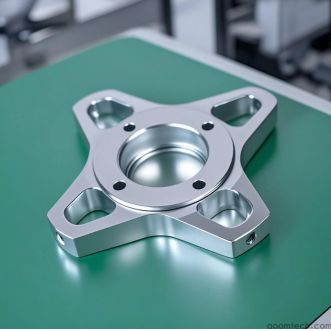
Milling is used to create flat surfaces, grooves, and complex shapes. For small parts, high spindle speeds and low feed rates are often used to avoid damaging delicate features.
Proper chip removal and tool selection are essential for maintaining surface quality and accuracy.
Turning
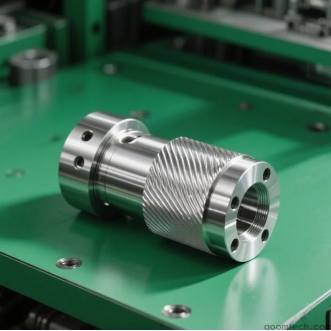
Turning is used for cylindrical components. The workpiece rotates while a cutting tool shapes its outer surface.
Maintaining concentricity and smooth surface finish is critical, especially for small diameter parts where even minor errors can cause imbalance or assembly issues.
Drilling and Boring
Drilling creates holes, while boring refines them to precise dimensions. Micro-drills are often used for very small holes.
Correct spindle speed and feed rate are essential to prevent tool breakage and ensure accurate hole placement.
Quality Control in Small Part CNC Machining
In-Process Inspection
During machining, parts are regularly inspected using measuring tools such as calipers, micrometers, and optical devices.
This step helps detect errors early, reducing waste and preventing defective batches. Surface finish and tool wear are also monitored continuously.
Final Inspection
After machining is completed, final inspection ensures that the part meets all design specifications.
Coordinate Measuring Machines (CMM) are often used to verify dimensional accuracy. Acceptance depends on tolerance limits and surface finish requirements defined during the design stage.
Finishing of Small Parts in CNC Machining
Deburring and Edge Finishing
Machining often leaves small burrs on edges. These must be removed to improve safety and functionality.
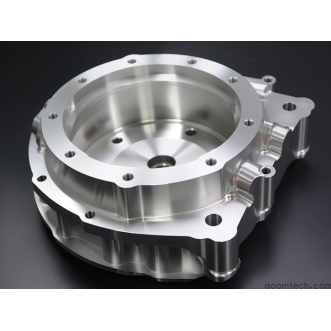
Methods include abrasive finishing, manual filing, or chemical deburring. Proper edge finishing also improves product appearance and assembly performance.
Surface Treatment
Surface treatments enhance durability and appearance. Common methods include anodizing, plating, and painting.
For example, anodizing is widely used for aluminum parts to improve corrosion resistance, while nickel plating is used for enhanced durability in harsh environments.
Conclusion: Mastering the Production Process of CNC Machining for Small Parts
The Production Process of CNC Machining for Small Parts is a detailed and highly controlled workflow that ensures precision and reliability from design to final finishing. Each stage—from requirement gathering and CAD modeling to machining and quality control—plays a vital role in achieving consistent results.
Key long-tail concepts such as design phase in CNC small part machining, quality control in small part CNC machining, and finishing of small parts in CNC machining highlight the importance of attention to detail throughout the process.
Continuous improvement, careful planning, and adherence to best practices are essential for producing high-quality small parts that meet modern industrial standards.
 How to Ensure Precision in CNC
 Small Batch Precision CNC Mach
 What surface finish can CNC ma
 CNC Machining Tolerance Settin