


CNC Machining Process for Iron Parts
CNC Machining Process for Iron Parts
Introduction to CNC Machining of Iron Parts
The Significance of CNC Machining for Iron Parts
CNC (Computer Numerical Control) machining of iron parts plays an important role in many modern industries. Iron is widely used because it is strong, durable, and relatively low in cost. These properties make it suitable for construction, automotive, machinery, and general manufacturing applications.
However, raw iron cannot be used directly in most products. It must be precisely shaped and finished to meet engineering requirements. This is where the CNC Machining Process for Iron Parts becomes essential. A well-controlled machining process ensures accuracy, strength, and consistency in every part produced.
For example, in a construction crane, carefully machined iron components help support heavy loads safely. In industrial machines, precision iron gears and brackets ensure smooth operation and reduce mechanical failure risks. Without accurate machining, even strong iron parts may fail in real-world applications.
The CNC Machining Process Stages
Design Phase
The first step in the CNC Machining Process for Iron Parts is design. Engineers and designers use CAD (Computer-Aided Design) software to create detailed 3D models of the part. These models define shape, size, tolerances, and functional requirements.
During this stage, engineers consider forces such as load, vibration, temperature, and wear. The design is also optimized for manufacturability to ensure the part can be efficiently produced using CNC machines.
Accurate design is critical. A poorly designed iron bracket, for example, may not support required weight or may not fit properly during assembly, leading to performance issues or safety risks.
Material Selection
Material selection is another key step in iron part machining. Different types of iron-based materials are used depending on application needs, including cast iron, wrought iron, and carbon steel.
Each material has different properties:
Cast iron: Excellent casting ability and vibration damping, often used for machine bases.
Wrought iron: Good ductility and corrosion resistance, suitable for decorative or structural uses.
Carbon steel: High strength and wear resistance, widely used in mechanical components.
Choosing the right material affects machining speed, tool wear, and final performance. For example, high-carbon steel may require slower cutting speeds and stronger cutting tools compared to softer iron types.
CNC Programming
After design and material selection, the CAD model is converted into a CNC program using CAM (Computer-Aided Manufacturing) software. This program contains detailed instructions for the machine.
It includes toolpaths, cutting speeds, feed rates, spindle speeds, and cutting depths. These parameters must be carefully optimized based on the type of iron and part geometry.
Incorrect programming can lead to serious issues such as incorrect dimensions, poor surface finish, or tool collisions. For example, a wrongly defined toolpath may cause a drilled hole to be off-center, affecting assembly accuracy.
Machine Setup and Tooling
In this step, the CNC machine is prepared for production. Operators install cutting tools, fixtures, and work-holding devices to secure the iron workpiece.
Carbide-tipped tools are commonly used because iron is strong and can cause significant tool wear. Machine settings such as spindle speed and feed rate are adjusted according to the CNC program.
Proper setup is essential. Incorrect tooling or machine calibration can result in poor surface finish, dimensional errors, or tool breakage.
Machining Operations
Milling
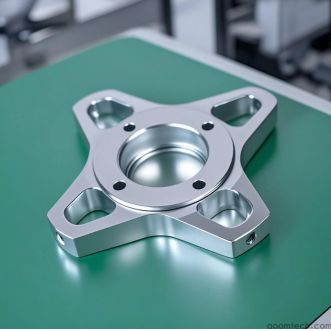
Milling is one of the most common operations in iron part production. A rotating cutting tool removes material to create flat surfaces, grooves, slots, and complex shapes.
Tool selection and cutting parameters must be carefully controlled. For iron, end mills with strong wear resistance and proper chip evacuation design are often used. Correct settings help ensure accuracy and surface quality.
Turning
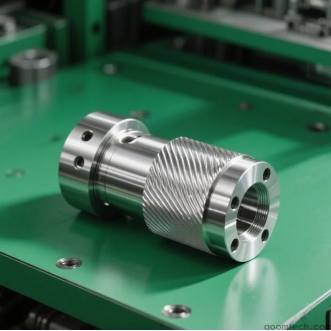
Turning is used for cylindrical iron parts such as shafts and bushings. The workpiece rotates while a cutting tool shapes its outer surface.
To achieve high precision, operators must control cutting speed and feed rate to avoid vibration or chatter. Carbide inserts are commonly used for stable performance and long tool life.
Drilling and Boring
Drilling creates holes, while boring refines and enlarges them to precise dimensions. These operations are critical for assembly and mechanical function.
Accurate hole positioning is essential. In applications like engine blocks or heavy machinery housings, even small errors can cause leaks, misalignment, or system failure.
Heat Treatment (If Applicable)
Some iron parts require heat treatment to improve mechanical properties such as hardness, strength, and toughness.
Common processes include:
Quenching: Increases hardness by rapid cooling.
Tempering: Reduces brittleness after quenching.
Annealing: Improves ductility and reduces internal stress.
Heat treatment can significantly affect performance, but improper treatment may lead to cracking, distortion, or reduced durability.
Quality Control
Quality control ensures that every iron part meets required specifications. This includes in-process checks and final inspection.
Measuring tools such as calipers, micrometers, and surface roughness testers are used to verify accuracy and surface quality.
Parts that do not meet standards are either reworked or rejected. Strict quality control is essential in industries where safety and precision are critical.
Finishing and Surface Treatment
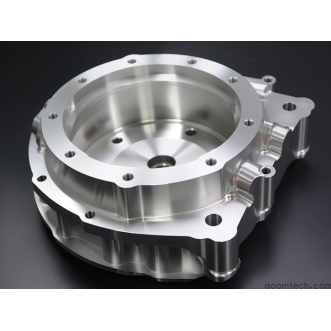
After machining, iron parts often undergo finishing processes such as grinding, polishing, and deburring to improve surface quality.
Surface treatments such as painting, galvanizing, or plating help prevent corrosion and extend service life. These treatments also improve appearance and performance in harsh environments.
Key Considerations in CNC Machining of Iron Parts
Chip Management
Iron machining often produces long and tough chips. If not controlled, these chips can damage tools or affect surface finish.
Solutions include using high-pressure coolant, chip-breaker tools, and optimized cutting parameters to ensure efficient chip removal.
Tool Wear
Iron is abrasive and can cause significant tool wear. Continuous monitoring is necessary to maintain machining quality.
Using high-quality carbide tools, adjusting cutting conditions, and replacing worn tools in time can reduce defects and improve efficiency.
Corrosion Protection
Iron is highly prone to corrosion, especially in humid environments. Proper surface treatment and storage are essential.
Protective coatings, anti-rust oils, and controlled storage conditions help extend the lifespan of iron parts.
Benefits of CNC Machining for Iron Parts
High Precision
CNC machining provides excellent accuracy and repeatability. Tight tolerances ensure parts fit correctly and function reliably in complex systems.
For example, in heavy machinery, precise iron components improve efficiency and reduce mechanical wear.
Customization
The CNC Machining Process for Iron Parts allows full customization. Engineers can produce parts with unique shapes, sizes, and specifications based on specific application needs.
This flexibility supports innovation across industries such as automotive, construction, and industrial equipment manufacturing.
Cost-Effectiveness for Medium to Large Batches
Once programming is complete, CNC machining becomes highly efficient for repeated production. This reduces unit cost and improves productivity for medium and large production runs.
Challenges in CNC Machining of Iron Parts
Meeting Tight Tolerances
Many iron parts require extremely tight tolerances. Even small deviations can affect assembly or performance.
To manage this, manufacturers use regular calibration, real-time monitoring, and skilled operators to maintain accuracy.
Surface Finish Requirements
Achieving smooth surface finishes on iron can be difficult due to its hardness and tool wear effects.
Solutions include optimized cutting parameters, proper tool selection, and post-processing techniques like grinding or polishing.
Conclusion
Summary of the CNC Machining Process for Iron Parts
The CNC Machining Process for Iron Parts involves several important stages, including design, material selection, programming, machining, heat treatment, quality control, and finishing. Each step plays a vital role in ensuring the final product meets performance and safety requirements.
Understanding the steps in CNC machining iron parts process helps manufacturers produce reliable and high-quality components. Key considerations in iron parts CNC machining such as chip control, tool wear, and corrosion prevention must also be carefully managed.
Overall, CNC machining offers high precision, strong customization ability, and cost efficiency for industrial production. By mastering these processes and continuously improving techniques, manufacturers can achieve better results and long-term reliability in iron part production.
 How to Ensure Precision in CNC
 Small Batch Precision CNC Mach
 What surface finish can CNC ma
 CNC Machining Tolerance Settin