


Professional CNC Machining Services for Stainless Steel Parts
Professional CNC Machining Services for Stainless Steel Parts
Professional CNC Machining Services for Stainless Steel Parts play a vital role in modern manufacturing industries. They enable the production of high-precision, durable, and custom-made components used in demanding environments. Stainless steel is widely chosen for its strength, corrosion resistance, and long service life, making it ideal for industries such as food processing, medical equipment, chemical processing, and marine engineering.
Introduction to Professional CNC Machining Services for Stainless Steel Parts
The demand for precision-engineered components continues to grow across global industries. Stainless steel parts are especially important because they can withstand harsh conditions while maintaining performance and safety.
The significance of professional CNC machining for stainless steel parts lies in its ability to deliver highly accurate and consistent components. CNC (Computer Numerical Control) machining uses automated, computer-controlled tools to produce parts according to exact digital designs.
For example, in the food processing industry, stainless steel components are used in mixers, conveyors, and storage tanks because they are hygienic and easy to clean. In the chemical industry, they resist corrosion from aggressive substances, ensuring long-term reliability.
The Process of Professional CNC Machining for Stainless Steel Parts
Design and Engineering
The process begins with design and engineering. Engineers use CAD (Computer-Aided Design) software to create detailed 3D models of stainless steel parts. These models define every dimension, tolerance, and functional requirement.
At this stage, engineers consider:
The part’s function and load requirements
The working environment (temperature, chemicals, pressure)
Manufacturing feasibility
Good design is critical. A poorly designed part may lead to assembly issues or failure during operation. For example, a poorly designed stainless steel valve could cause leakage in a pipeline system.
Material Selection
Choosing the right stainless steel grade is an important step in the process of professional CNC machining for stainless steel components.
Different stainless steel alloys offer different properties:
304 stainless steel: Common, good corrosion resistance, cost-effective
316 stainless steel: High resistance to chemicals and saltwater
321 stainless steel: Better performance in high-temperature environments
The selection depends on the application. For example, marine equipment often uses 316 stainless steel due to saltwater exposure.
CNC Programming
Once the design is finalized, it is converted into CNC code using CAM (Computer-Aided Manufacturing) software. This code controls the machine movements.
The CNC program includes:
Tool paths
Cutting speeds
Feed rates
Depth of cut
Precise programming ensures accuracy. Incorrect settings can lead to poor surface finish, incorrect dimensions, or tool damage.
Machine Setup and Tooling
Before machining begins, technicians prepare the CNC machine. This includes installing cutting tools, fixtures, and workholding devices.
For stainless steel machining, carbide tools are commonly used due to their hardness and wear resistance.
Proper setup ensures:
Stable machining conditions
High precision output
Reduced tool wear and breakage
Machining Operations
Milling
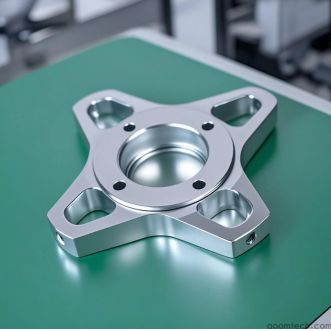
Milling is used to remove material using a rotating cutting tool. It creates flat surfaces, slots, and complex shapes.
When machining stainless steel, tools with strong wear resistance and optimized chip evacuation are essential. Cutting parameters must be carefully controlled to avoid overheating and tool damage.
Turning
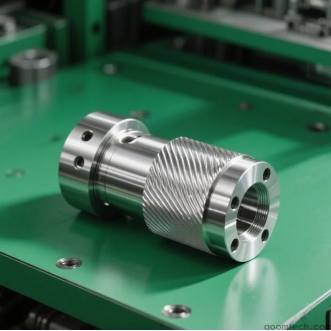
Turning is used to produce cylindrical parts such as shafts and bushings. The workpiece rotates while the cutting tool shapes it.
Key factors in turning include:
Maintaining concentricity
Preventing vibration and chatter
Achieving smooth surface finish
Drilling and Boring
Drilling creates holes, while boring improves hole accuracy and surface finish. These operations are essential for assembly and mechanical function.
Inaccurate drilling in stainless steel heat exchangers, for example, can lead to leakage and system failure.
Heat Treatment (If Applicable)
Some stainless steel parts require heat treatment to improve hardness, strength, or durability.
Common processes include:
Annealing – improves softness and machinability
Quenching – increases hardness
Tempering – balances hardness and toughness
Incorrect heat treatment can negatively affect performance, making parts too brittle or too soft.
Quality Control
Quality control is essential in professional CNC machining services for stainless steel parts.
Inspection is carried out at different stages using tools such as calipers, micrometers, and surface roughness testers.
Quality checks include:
Dimensional accuracy
Surface finish quality
Tool wear monitoring
Non-conforming parts are either reworked or rejected to ensure reliability and safety.
Finishing and Surface Treatment
Finishing processes improve appearance and performance. Stainless steel parts may undergo:
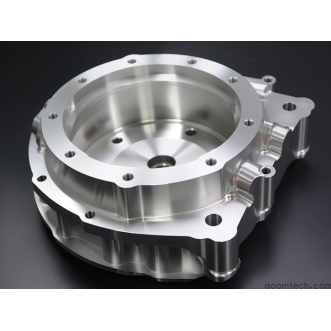
Grinding and polishing for smooth surfaces
Deburring to remove sharp edges
Passivation to improve corrosion resistance
Electropolishing for enhanced cleanliness and shine
Benefits of Professional CNC Machining Services for Stainless Steel Parts
High Precision
One of the biggest advantages of CNC machining is accuracy. Computer-controlled systems ensure tight tolerances and consistent quality, which is essential for complex assemblies.
High-precision stainless steel components improve product performance and reduce mechanical failure.
Customization
Custom CNC machining allows manufacturers to produce parts based on specific designs and requirements. This flexibility supports innovation across industries.
For example, custom stainless steel components are widely used in specialized medical devices and industrial machinery.
Cost-Effectiveness for Small-Batch Production
Professional CNC machining is especially cost-effective for small production runs. It reduces tooling costs and allows fast prototyping.
This helps companies bring new products to market faster while maintaining quality standards.
Challenges in CNC Machining Stainless Steel Parts
Tool Wear
Stainless steel is tough and causes faster tool wear. Using high-quality carbide tools and optimizing cutting parameters helps extend tool life.
Chip Evacuation
Stainless steel chips are often difficult to break and remove. Poor chip evacuation can cause overheating and damage.
Solutions include high-pressure coolant systems and chip-breaking tool designs.
Work Hardening
Stainless steel can become harder during machining, making further cutting difficult. This is known as work hardening.
Proper feed rates, cutting speeds, and cooling systems help reduce this effect.
How to Choose the Right CNC Machining Service Provider
Experience and Expertise
Choose a provider with proven experience in stainless steel machining. Experienced manufacturers understand material behavior and can prevent common issues.
Quality Assurance System
A reliable provider should follow strict quality control procedures and hold certifications such as ISO 9001.
Range of Capabilities
The best suppliers offer multiple machining services including milling, turning, drilling, and finishing. This ensures all production needs can be met in one place.
Transparent Pricing
Clear and detailed quotations help customers understand costs related to materials, machining, and finishing. Transparency builds trust and prevents misunderstandings.
Customer Reviews and References
Checking customer feedback helps evaluate reliability and product quality. References from past clients provide real-world insight into performance and service consistency.
Conclusion
Professional CNC Machining Services for Stainless Steel Parts are essential for producing high-quality, durable, and precise components used in critical industries. From design and material selection to machining, finishing, and quality control, each step plays a vital role in ensuring performance and reliability.
Understanding the process of professional CNC machining for stainless steel components, the benefits of professional CNC for stainless steel parts, and the key factors in choosing a professional CNC machining service helps businesses make better decisions and achieve better manufacturing results.
With the right provider, companies can achieve consistent quality, cost efficiency, and long-term product reliability in even the most demanding applications.
 How to Ensure Precision in CNC
 Small Batch Precision CNC Mach
 What surface finish can CNC ma
 CNC Machining Tolerance Settin