


CNC Machining Process for Pistons: Expert Manufacturing
What Piston Machining Demands
Pistons live a hard life. High heat, high pressure, constant reciprocation at thousands of RPM. The CNC machining process for pistons has to be precise, because a bad piston doesn't just fail — it takes the engine with it. At AOOM Technology, we machine pistons for automotive, marine, and industrial applications. The specs are tight and the margin for error is zero.
Critical Features on a Piston
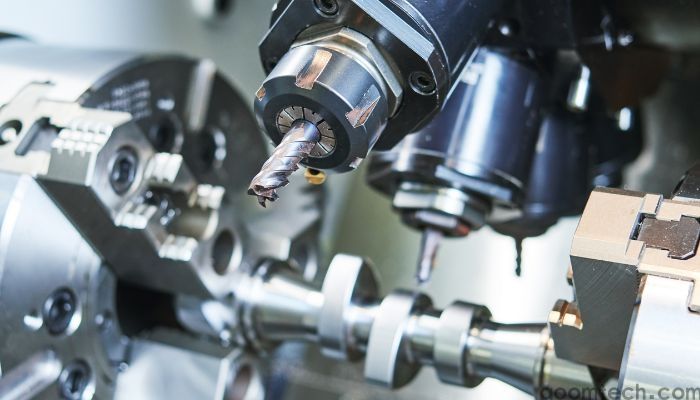
Three features make or break a piston: the ring grooves, the skirt profile, and the pin bore. Ring grooves must be concentric to within .005mm or compression leaks. The skirt profile is an oval — machined with specific cam and barrel shapes that change under heat expansion. Pin bore position controls the entire wrist pin alignment.
We had a customer reject his previous supplier's pistons because the ring groove runout was .015mm — triple what we hold as standard. We requoted with the same design and held .004mm on every groove. No more rejects.
Materials for Different Duty Cycles
4032 aluminum for high-silicon content — great for street engines. 2618 for racing — lower silicon but better high-temperature strength. For extreme applications, we machine forged steel pistons with full crown hard anodizing. Each alloy needs different tooling and different heat-treat sequences.
We recently ran a batch of 2618 pistons for a racing team. The customer spec. called for 10 micron skirt clearance. We held 8 microns consistently across 48 pistons. That kind of consistency comes from knowing the material shrink rates through every process step.
Process Sequence We Use
Rough turning the blank, solution heat treat, finish turn OD, machine ring grooves with form tools, drill and ream pin bore, CNC mill the piston crown, then final inspection. Between operations, parts are staged to control thermal growth. We don't rush the sequence.
Quality Checks That Protect Your Engine
Every piston gets CMM dimensional verification. Surface roughness on the skirt is checked with profilometry. Hardness is verified after heat treat. We keep batch records so you can trace every piston back to its raw material lot.
Send your CAD files to chen@aoomtech.com for a quote within 24 hours.
 CNC Machining for Defense and
 CNC Machining for Aerospace: M
CNC Machining for Medical Devi
CNC Machining for Aerospace: M
CNC Machining for Medical Devi
 CNC Precision Machining Parts: