


CNC Machining Process for High-performance Precision Screws
CNC Machining Process for High-performance Precision Screws
The CNC Machining Process for High-performance Precision Screws is a modern manufacturing method used to produce screws that require extremely high accuracy, strength, and reliability. These screws are widely used in aerospace, automotive, electronics, medical devices, and industrial machinery. In these fields, even a very small error in screw size or thread quality can lead to product failure, safety risks, or reduced performance.
By using CNC (Computer Numerical Control) technology, manufacturers can produce precision screws with consistent quality, tight tolerances, and excellent durability. This process helps ensure that critical systems operate safely and efficiently under demanding conditions.
The Significance of CNC in High-performance Precision Screw Production
High-performance precision screws are essential fastening components in advanced engineering systems. They are designed to handle high loads, vibration, temperature changes, and corrosive environments. Industries such as aerospace and automotive rely on these screws for safety-critical assemblies.
CNC machining provides a stable and controlled manufacturing process that ensures each screw meets strict engineering standards. With this technology, manufacturers can achieve high accuracy in thread geometry, surface finish, and dimensional consistency. As a result, CNC-machined screws improve reliability, safety, and long-term performance of complex products.
Advantages of CNC for High-performance Precision Screw Machining
High Precision Manufacturing
CNC machining delivers extremely high precision in screw production. Every movement of the cutting tool is controlled by computer programming, ensuring consistent thread pitch, diameter, and shape.
For example, in aerospace engine assemblies, CNC-machined precision screws are used to secure vibration-sensitive components. Their exact dimensions help maintain tight and stable connections even under extreme vibration and temperature conditions. This level of accuracy reduces the risk of loosening or mechanical failure.
Customization Capability
One major advantage of CNC machining is the ability to produce customized screw designs. Different applications may require special thread profiles, unique head shapes, or non-standard lengths.
For example, in automotive engineering, a high-torque transmission system may require a special precision screw with an unusual thread angle to improve load distribution. CNC technology allows manufacturers to easily program and produce these custom designs without needing entirely new tooling systems.
Repeatability
CNC machining ensures excellent repeatability in production. Once a program is created and tested, it can be reused to manufacture thousands of identical screws with consistent quality.
For instance, an electronics manufacturer producing large quantities of devices relies on CNC-machined screws to ensure every unit fits perfectly during assembly. This consistency improves production efficiency and reduces assembly errors, leading to higher product reliability.
Steps in CNC Machining High-performance Precision Screws
Design and CAD/CAM Programming
The process begins with CAD (Computer-Aided Design), where engineers create a detailed 3D model of the screw. This model includes dimensions, thread structure, and performance requirements such as load capacity and corrosion resistance.
Next, CAM (Computer-Aided Manufacturing) software converts the design into machine instructions. These instructions define tool paths, cutting speeds, feed rates, and spindle speeds.
For example, when designing a high-torque industrial screw, engineers may need to adjust tool paths carefully to maintain thread strength and avoid stress concentration. Proper programming ensures smooth machining and accurate final geometry.
Material Selection and Preparation
Material selection is critical for high-performance precision screws. Common materials include stainless steel, alloy steel, and titanium. Each material offers different benefits such as strength, corrosion resistance, or lightweight properties.
For example, titanium is often used in aerospace applications due to its high strength-to-weight ratio. However, it requires slower cutting speeds and stronger tools due to its hardness.
Before machining, materials are cut to size and may undergo heat treatment like annealing to improve machinability and reduce internal stress.
Machining Operations
Turning
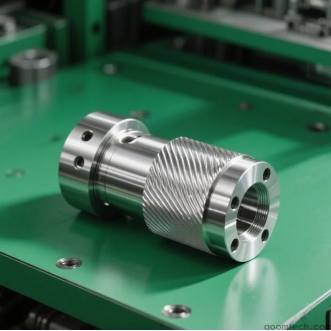
Turning is the main process used to shape the screw body. The workpiece rotates while a cutting tool removes material to form the correct diameter and smooth surface.
Carbide tools are commonly used for durability. Cutting speed and feed rate must be carefully adjusted depending on material hardness. Harder materials often require slower speeds to reduce tool wear and maintain accuracy.
Thread Cutting
Thread cutting is one of the most important steps in screw production. It defines how the screw engages with a mating part.
Methods such as single-point threading are used in CNC machining. The tool must follow precise synchronized movements to form accurate thread pitch and profile.
Proper setup ensures strong, smooth threads that can withstand mechanical stress without stripping or deformation.
Head Formation
The screw head is formed using milling or specialized machining operations depending on the design, such as flat head, hex head, or socket head.
Accuracy in head geometry is essential for tool engagement and torque application. A poorly formed head can cause installation issues or mechanical failure.
Heat Treatment and Surface Finishing
Heat treatment improves mechanical properties such as hardness, toughness, and wear resistance. After machining, screws may be heat treated to enhance performance in demanding environments.
Surface finishing processes such as zinc plating or PTFE coating are applied to improve corrosion resistance and reduce friction.
For example, zinc-plated precision screws used in outdoor machinery can resist rust and maintain long-term durability even in humid or wet environments.
Benefits of CNC-machined High-performance Precision Screws
Enhanced Product Performance
Accurate CNC machining ensures that screws fit perfectly and maintain strong fastening performance. This reduces loosening, vibration issues, and mechanical failure.
For example, in high-end automotive engines, CNC-machined screws help maintain secure connections between engine components, improving efficiency and stability.
Cost-effectiveness in the Long Run
Although CNC machining may require higher initial investment, it reduces long-term costs by minimizing defects, rework, and maintenance.
Companies using CNC-machined precision screws often experience fewer product failures and longer service life, leading to overall cost savings.
Quick Turnaround for Small-batch Production
CNC machining is ideal for both mass production and small-batch manufacturing. It allows fast setup and easy program adjustments.
For example, startups developing prototypes can quickly obtain small batches of custom precision screws without waiting for expensive tooling changes.
Challenges in CNC Machining High-performance Precision Screws
Meeting Tight Tolerances
High-performance screws require extremely tight tolerances. Even minor deviations in thread pitch or diameter can cause assembly issues.
For example, a small programming error may result in thread mismatch, requiring adjustments in machine settings and re-calibration.
Tool Wear and Breakage
Hard materials such as titanium or hardened steel can cause rapid tool wear. This increases production costs and may interrupt manufacturing schedules.
For instance, threading tools may need frequent replacement when machining high-strength alloys.
Complex Thread Profiles
Some applications require non-standard or complex thread designs. These require advanced programming and careful testing to ensure accuracy and performance.
Developing these profiles often involves multiple trial runs to achieve the correct geometry.
Quality Control in CNC Machining High-performance Precision Screws
Dimensional Inspection
Dimensional inspection ensures that each screw meets design specifications. Tools such as micrometers, calipers, and thread gauges are used to measure critical dimensions.
For example, in-process inspection can detect size deviations early, allowing immediate corrections before large batches are produced incorrectly.
Thread Quality Inspection
Thread quality is checked using specialized gauges and optical inspection systems. This ensures proper thread engagement and mechanical strength.
If defects are found, additional machining adjustments are made to correct the issue before final production.
Material Integrity Inspection
Non-destructive testing methods such as ultrasonic testing are used to detect internal defects like cracks or voids.
For example, detecting an internal crack early prevents defective screws from being used in critical aerospace or medical applications.
Conclusion: Achieving Excellence in CNC Machining of Precision Screws
The CNC Machining Process for High-performance Precision Screws plays a vital role in modern manufacturing industries. It ensures high accuracy, strong mechanical performance, and reliable mass production capabilities.
By understanding the advantages of CNC for high-performance precision screw machining, the steps in CNC machining high-performance precision screws, the benefits of CNC-machined high-performance precision screws, the challenges in CNC machining high-performance precision screws, and the importance of quality control in CNC machining high-performance precision screws, manufacturers can significantly improve product quality and efficiency.
In today’s competitive industrial environment, optimizing CNC processes is essential for producing reliable and high-performance fastening solutions that meet global engineering standards.
 How to Ensure Precision in CNC
 Small Batch Precision CNC Mach
 What surface finish can CNC ma
 CNC Machining Tolerance Settin