


5-Axis CNC Precision Machining
5-Axis CNC Precision Machining
Many engineers, procurement managers, and product developers understand that 5-axis machining can produce highly complex parts, but they often struggle to determine whether it is the right solution for their project. Questions about machining costs, achievable tolerances, production efficiency, and supplier capabilities are common. Finding a manufacturer with genuine 5-axis expertise can be challenging, especially when part quality and delivery schedules are critical.
5-Axis CNC Precision Machining has become one of the most advanced manufacturing technologies available today. It allows manufacturers to machine complex geometries with exceptional accuracy while reducing setup time and improving overall production efficiency. Understanding how the process works, where it excels, and its limitations can help businesses make more informed manufacturing decisions.
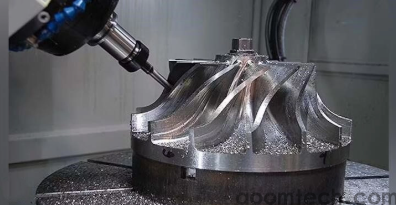
What Is 5-Axis CNC Precision Machining?
5-Axis CNC Precision Machining is a manufacturing process in which a cutting tool moves across five different axes simultaneously. Traditional 3-axis machines move along the X, Y, and Z axes. A 5-axis machine adds two rotational axes, allowing the cutting tool or workpiece to approach the material from multiple angles.
This capability enables manufacturers to produce complex parts in a single setup that would otherwise require multiple operations on conventional machines.
Typical applications include:
Aerospace structural components
Medical implants and surgical instruments
Injection mold and die components
Automotive performance parts
Precision industrial equipment
Turbine and impeller components
How the 5-Axis Machining Process Works
The process begins with a detailed CAD model. Engineers use CAM software to generate optimized toolpaths that guide the machine through complex cutting operations.
A typical workflow includes:
Part design and engineering review
CAD/CAM programming
Material preparation
Machine setup and calibration
Multi-axis machining operations
In-process inspection
Final quality verification
Because multiple surfaces can be machined during a single setup, the process reduces repositioning errors and improves dimensional consistency.
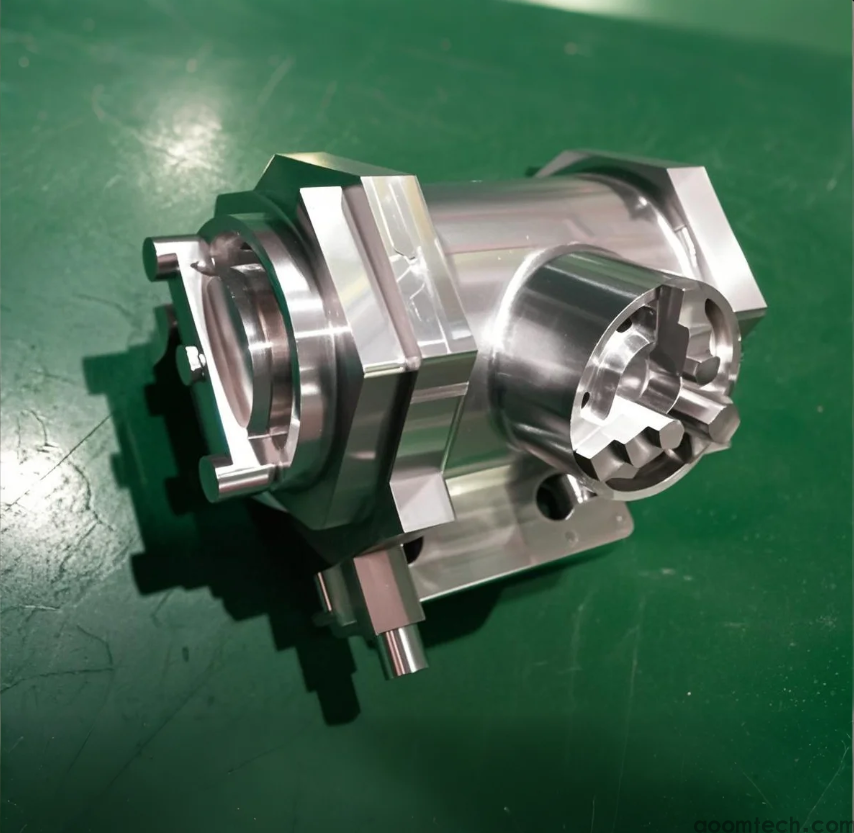
Key Benefits of 5-Axis CNC Precision Machining
Superior Accuracy
Reducing the number of setups minimizes cumulative machining errors. This leads to improved dimensional accuracy and tighter tolerances.
Complex Geometry Capability
5-axis systems can machine intricate surfaces, deep cavities, undercuts, and contoured features that are difficult or impossible to produce using conventional machining methods.
Improved Surface Finish
Continuous tool engagement allows smoother cutting paths and better surface quality, often reducing the need for secondary finishing operations.
Faster Production Cycles
Single-setup machining eliminates multiple fixture changes and reduces overall machining time.
Lower Risk of Part Errors
Fewer setups mean fewer opportunities for alignment issues and positioning mistakes.
Advantages of 5-Axis CNC Precision Machining in Aerospace
Advantages of 5-axis CNC precision machining in aerospace are particularly significant because aerospace components often contain complex geometries and require extremely tight tolerances.
Common aerospace applications include:
Engine components
Turbine blades
Structural brackets
Airframe components
Fuel system parts
Avionics housings
5-axis machining allows aerospace manufacturers to produce lightweight yet strong components while maintaining strict dimensional requirements and reducing material waste.
5-Axis CNC Precision Machining for Complex Mold Manufacturing
5-axis CNC precision machining for complex mold manufacturing has become increasingly important as product designs continue to grow more sophisticated.
Mold manufacturers often need to produce:
Deep cavity molds
Complex curved surfaces
Multi-angle features
High-gloss mold surfaces
Precision tooling inserts
Using 5-axis technology allows molds to be machined with fewer setups, reducing polishing requirements and shortening lead times for mold production.
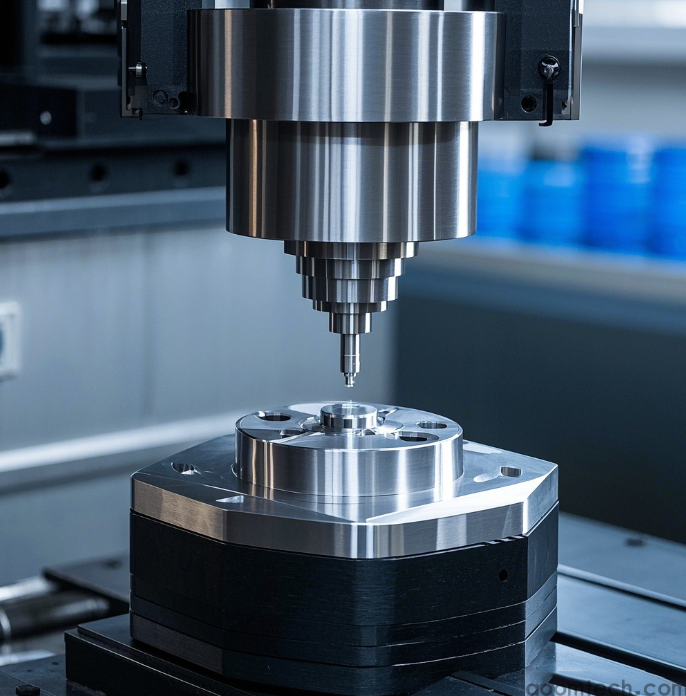
Applications of 5-Axis CNC Precision Machining in Medical Device Production
Applications of 5-axis CNC precision machining in medical device production continue to expand as medical products become more advanced and customized.
Common medical applications include:
Orthopedic implants
Dental components
Surgical instruments
Medical robotics parts
Diagnostic equipment components
Medical manufacturers benefit from the ability to machine complex shapes while maintaining the high levels of precision required for patient safety and regulatory compliance.
Is 5-Axis Machining Cost-Effective?
Many buyers initially focus on the higher hourly machine rates associated with 5-axis machining. However, evaluating cost-effectiveness requires considering the entire manufacturing process.
5-axis machining often reduces total project costs by:
Reducing the number of setups
Shortening production cycles
Improving first-pass quality
Reducing fixture costs
Minimizing secondary operations
Lowering scrap rates
For highly complex parts, the overall manufacturing cost may be lower than producing the same component on multiple conventional machines.
Limitations of 5-Axis CNC Precision Machining
Although highly capable, 5-axis machining is not always the best solution for every project.
Potential limitations include:
Higher machine and programming costs
Greater operator skill requirements
Longer programming times for complex parts
Not always necessary for simple geometries
Higher initial setup costs for small production runs
For straightforward parts, conventional 3-axis or 4-axis machining may provide a more economical solution.
How to Choose a Skilled 5-Axis Machining Provider
Finding the right supplier is one of the biggest challenges for buyers seeking high-precision machining services.
When evaluating a provider, consider:
Years of 5-axis machining experience
Engineering and programming expertise
Inspection and metrology capabilities
Industry certifications
Project portfolio and case studies
Material expertise
Production capacity
Quality management systems
A qualified supplier should be able to provide technical recommendations that improve manufacturability while maintaining performance requirements.
Quality Control in 5-Axis Precision Machining
Precision machining requires robust quality assurance procedures throughout production.
Professional manufacturers typically implement:
First article inspections
Coordinate Measuring Machine (CMM) verification
GD&T inspections
Surface roughness testing
In-process dimensional monitoring
Final inspection documentation
These controls ensure consistent quality across prototypes, low-volume production, and large manufacturing runs.
Conclusion
5-Axis CNC Precision Machining offers unmatched flexibility, accuracy, and efficiency for manufacturing complex components across industries such as aerospace, medical devices, automotive, and mold making. While the technology requires specialized expertise and advanced equipment, the benefits often outweigh the costs for parts with demanding geometries and tight tolerances.
If you are evaluating advanced machining solutions, explore our 5-Axis CNC Machining Services, Precision CNC Machining, Aerospace Machining Solutions, and Custom Mold Manufacturing pages to learn more about our capabilities and engineering support.
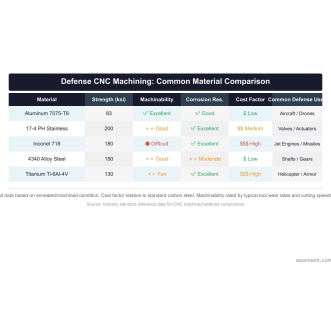 CNC Machining for Defense and
 CNC Machining for Aerospace: M
CNC Machining for Medical Devi
CNC Machining for Aerospace: M
CNC Machining for Medical Devi
 CNC Precision Machining Parts: