


Advantages of CNC Machining Precision Hardware Components
Advantages of CNC Machining Precision Hardware Components
Introduction to the Advantages of CNC Machining Precision Hardware Components
CNC (Computer Numerical Control) machining has changed the way precision hardware components are made. It uses computer-controlled machines to cut, shape, and form parts with very high accuracy. These components are widely used in industries such as aerospace, medical equipment, electronics, automotive systems, and industrial machinery.
Compared with traditional manual manufacturing, CNC machining offers clear improvements in precision, efficiency, design flexibility, material use, and quality control. Understanding these Advantages of CNC Machining Precision Hardware Components is important for engineers, manufacturers, and product designers who want better performance, lower cost, and more reliable production.
The Significance of CNC Machining for Precision Hardware
Precision hardware components must meet strict performance requirements. Even small errors can affect the safety or function of a product. CNC machining helps solve this problem by using digital instructions instead of manual control.
Because of this, CNC machining improves product quality, reduces human error, and supports large-scale production. It is now a key technology in modern manufacturing systems where accuracy and consistency are essential.
Precision-related Advantages
High-level Precision
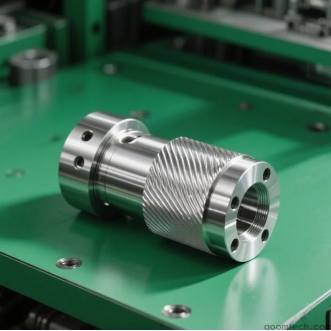
CNC machining can produce extremely precise parts, often within a few thousandths of an inch. The machine follows exact computer instructions, which allows very tight tolerances.
This level of precision is especially important in industries like aerospace and medical devices. For example, aircraft engine parts must fit perfectly to ensure safety and performance. Even a small deviation can lead to system failure, which is why high precision is critical.
Precision advantages of CNC in hardware components ensure that every part meets strict engineering standards and works reliably in complex systems.
Consistent Precision
Once a CNC program is created, it can produce thousands of identical parts with the same accuracy. Unlike manual machining, there is no variation caused by human error.
This consistency is essential in industries such as automotive manufacturing and electronics production. For example, car engine parts or circuit board housings must be interchangeable to support mass production and reliable assembly.
Production-efficiency Advantages
Automated Processes
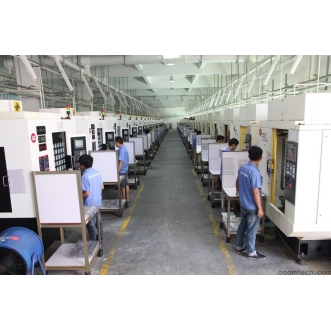
CNC machines can operate automatically once the setup is complete. They can run continuously with minimal human supervision.
This automation increases production speed and reduces labor costs. In industries producing large volumes of precision hardware, CNC machining significantly shortens production time and improves workflow efficiency.
Production-efficiency benefits of CNC for precision hardware include faster turnaround times and stable output quality even in high-demand manufacturing environments.
Reduced Setup Times
Traditional machining often requires manual retooling when changing designs. CNC machining only requires updating the program.
This reduces setup time and allows manufacturers to switch between different product designs quickly. It is especially useful for small-batch production or custom orders where flexibility is important.
As a result, manufacturers can respond faster to market changes and customer needs.
Flexibility in Design
Complex Geometry Capability
CNC machines, especially multi-axis systems, can produce highly complex shapes that are difficult or impossible with manual methods.
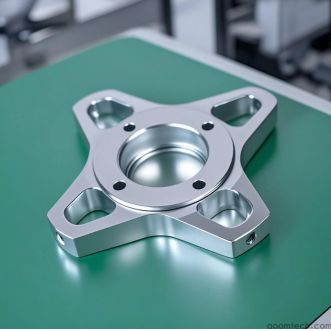
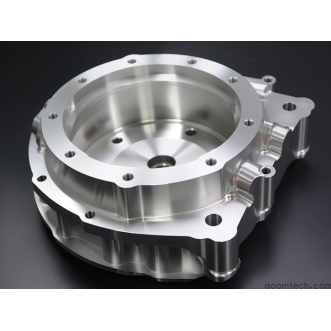
They can create internal cavities, curved surfaces, and fine details with high accuracy. For example, turbine blades in power plants and compact electronic connectors require advanced geometry that CNC machining can easily achieve.
This makes CNC ideal for modern precision hardware design, where performance and space efficiency are both important.
Design Modification Ease
CNC machining allows fast design changes. Engineers can update CAD (Computer-Aided Design) models and generate new machining programs quickly.
This supports rapid prototyping and product development. For example, a medical device manufacturer can test multiple design versions in a short time, improving innovation speed and product performance.
Material-compatibility Advantages
Wide Range of Material Compatibility
CNC machining works with many materials, including steel, aluminum, titanium, plastics, composites, and some ceramics.
This flexibility allows manufacturers to choose materials based on strength, weight, corrosion resistance, or electrical properties. For example, titanium is often used in aerospace due to its strength and light weight, while aluminum is popular for electronics because of its conductivity and ease of machining.
Optimal Material Utilization
CNC machining is highly efficient in material usage. Computer-controlled toolpaths reduce unnecessary cutting and waste.
This is especially valuable when working with expensive materials like titanium or specialized alloys. By reducing waste, manufacturers can lower production costs while maintaining high quality.
Quality-control Advantages
Integrated Quality Control Systems
Modern CNC machines often include sensors and monitoring systems that track machining conditions in real time.
These systems can monitor tool wear, cutting speed, vibration, and temperature. If something goes wrong, the machine can automatically adjust or stop to prevent defects.
This ensures stable production quality and reduces the risk of defective precision hardware components.
Quality-control advantages of CNC in precision hardware machining help manufacturers maintain high standards and reduce production errors.
Traceability and Documentation
CNC machining systems record all production data, including design files, tool paths, and machine settings.
This documentation allows full traceability of each component. If a quality issue occurs, manufacturers can review the production history to identify the cause.
It also supports compliance with industry standards and improves long-term process optimization.
Conclusion: Harnessing the Advantages of CNC Machining for Precision Hardware Components
Summary and Key Takeaways
The Advantages of CNC Machining Precision Hardware Components include high precision, consistent production, efficient automation, flexible design capabilities, wide material compatibility, and strong quality control systems. These benefits make CNC machining one of the most reliable methods for producing modern precision hardware.
For manufacturers and engineers, the key to success is not only using CNC technology, but also continuously improving processes, optimizing designs, and adopting advanced machining systems.
By fully utilizing these advantages, businesses can improve product quality, reduce costs, and stay competitive in global manufacturing markets.
 How to Ensure Precision in CNC
 Small Batch Precision CNC Mach
 What surface finish can CNC ma
 CNC Machining Tolerance Settin