


What precision can 3-axis CNC machining achieve
What precision can 3-axis CNC machining achieve
Precision is one of the most important factors in modern manufacturing. When people ask What precision can 3-axis CNC machining achieve, they are really asking how accurately a machine can produce a part according to a digital design. In simple terms, precision decides whether parts fit together properly, function smoothly, and meet engineering requirements.
3-axis CNC (Computer Numerical Control) machining is widely used in industries such as automotive, aerospace, electronics, and consumer goods. Understanding its precision capabilities helps engineers, manufacturers, and designers choose the right process for their projects and avoid costly errors.
The Significance of Precision in 3-axis CNC Machining
Precision in 3-axis CNC machining refers to how closely the finished part matches the original CAD design. High precision ensures parts assemble correctly, reduce friction, and maintain performance over time. Even small deviations can cause mechanical failure in demanding applications.
For manufacturers, understanding precision is essential for quality control, cost management, and product reliability. For engineers and designers, it helps define realistic tolerances during the design stage.
Factors Influencing the Precision of 3-axis CNC Machining
Machine Quality and Calibration
The quality of the CNC machine directly affects precision. High-end 3-axis CNC machines use rigid frames, precision ball screws, and linear guides that reduce vibration and positioning errors.
Regular calibration is equally important. Calibration ensures each axis moves exactly as programmed. Advanced methods such as laser interferometers are often used to measure and correct positional errors, improving long-term accuracy and repeatability.
Tooling and Tool Wear
Cutting tools play a major role in machining accuracy. A sharp, high-quality tool produces clean cuts, while a worn tool can cause dimensional errors and poor surface finish.
Tool wear gradually changes the cutting geometry, which affects precision. Manufacturers often use tool monitoring systems to track wear and replace or re-sharpen tools at the right time. Proper tool selection based on material and geometry is also essential.
Material Properties
Different materials behave differently during machining. Hard materials can cause tool deflection, while softer materials may deform under cutting pressure. Thermal expansion is another key factor, especially during high-speed machining, where heat can slightly change part dimensions.
To manage these effects, machinists adjust cutting speed, feed rate, and use cooling systems to maintain stability and accuracy.
Programming and CAM Software
CAM (Computer-Aided Manufacturing) software determines how the tool moves during machining. Accurate toolpath generation is essential for achieving high precision.
Optimized toolpaths reduce vibration, improve surface finish, and minimize dimensional errors. Proper tolerance settings and advanced features such as adaptive clearing and toolpath smoothing significantly improve machining accuracy.
Typical Precision Ranges in 3-axis CNC Machining
Dimensional Precision
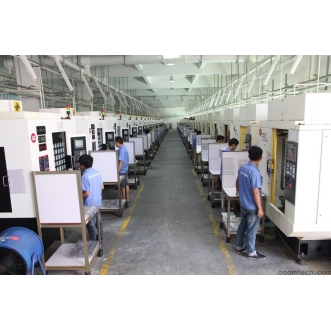
In standard 3-axis CNC machining, typical dimensional tolerance is around ±0.05 to ±0.1 mm for most materials and general applications. This level is suitable for many industrial parts.
With high-end machines, skilled operators, and optimized processes, tighter tolerances of ±0.01 to ±0.02 mm can be achieved. This is used in industries requiring higher accuracy, such as aerospace components or precision fixtures.
Surface Finish Precision
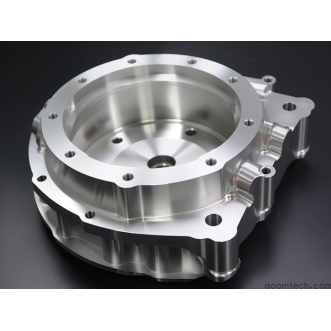
Surface finish is usually measured in Ra (roughness average). Standard machining typically achieves Ra 0.8 to 3.2 μm.
With fine machining strategies, appropriate tooling, and reduced feed rates, surface finishes of Ra 0.2 to 0.4 μm are possible. Smoother surfaces are important for sealing surfaces, sliding components, and aesthetic parts.
Applications Where 3-axis CNC Machining Precision is Sufficient
General-purpose Mechanical Parts
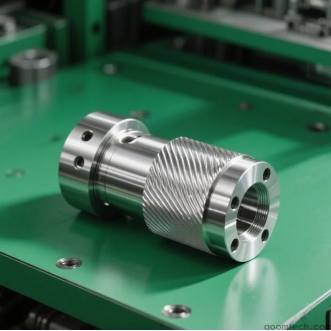
3-axis CNC machining is widely used for brackets, housings, shafts, and gears. These parts require reliable dimensional accuracy but do not always demand ultra-high precision.
For example, accurately machined holes and shaft diameters ensure proper assembly and smooth mechanical operation.
Prototyping and Small-batch Production
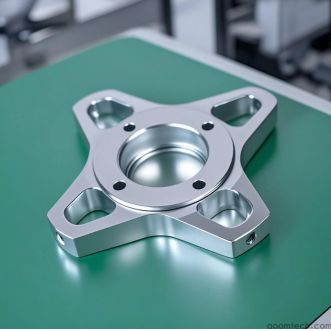
3-axis CNC machining is ideal for prototyping because it produces accurate parts quickly and cost-effectively. Designers can test form, fit, and function before moving into mass production.
This flexibility makes it a preferred choice in product development cycles.
Some Consumer Goods Manufacturing
Many consumer products use CNC machining for components such as furniture parts, kitchen tools, and electronic enclosures.
In these applications, precision is important for appearance and usability, but requirements are less strict compared to aerospace or medical industries.
How to Optimize Precision in 3-axis CNC Machining
Proper Machine Maintenance
Regular maintenance is essential for maintaining accuracy. This includes cleaning the machine, lubricating moving parts, checking alignment, and inspecting for wear or damage.
A simple maintenance routine includes:
Checking and tightening bolts
Cleaning linear guides and removing debris
Lubricating mechanical components
Performing periodic axis calibration
Optimal Tool Selection and Management
Choosing the right tool improves both precision and surface quality. Carbide tools are often used for hard materials, while tool geometry must match the machining operation.
Proper storage prevents tool damage, and regular inspection ensures tools remain sharp and accurate. Replacing or re-sharpening tools at the right time is critical for consistent results.
Fine-tuning of Programming and Parameters
Programming accuracy has a direct impact on machining results. Cutting speed, feed rate, and depth of cut must be carefully adjusted based on material and design requirements.
In many cases, test cuts are used to refine parameters. For harder materials, reducing feed rate can improve dimensional accuracy and surface finish.
Conclusion: Understanding and Leveraging 3-axis CNC Machining Precision
To summarize, What precision can 3-axis CNC machining achieve depends on multiple factors, including machine quality, tooling, material properties, and programming accuracy. In general, standard precision ranges from ±0.05 to ±0.1 mm, while high-end setups can reach ±0.01 to ±0.02 mm.
Surface finishes can vary from Ra 0.8–3.2 μm in standard machining to Ra 0.2–0.4 μm in optimized conditions.
Understanding factors affecting 3-axis CNC machining precision, recognizing typical precision ranges in 3-axis CNC machining, and applying methods for optimizing precision in 3-axis CNC machining allows manufacturers to achieve reliable and cost-effective results.
For complex projects or tight tolerance requirements, consulting experienced CNC engineers and maintaining strict process control can significantly improve final outcomes.
 How to Ensure Precision in CNC
 Small Batch Precision CNC Mach
 What surface finish can CNC ma
 CNC Machining Tolerance Settin