


How to Choose a Reliable CNC Machining Service Provider
How to Choose a Reliable CNC Machining Service Provider
Choosing the right manufacturing partner is one of the most important decisions in any product development or production project. Understanding How to Choose a Reliable CNC Machining Service Provider can help you reduce risks, control costs, and ensure consistent part quality. Whether you are building prototypes or scaling to mass production, the right provider directly affects your success.
Understand Your Project Needs
Part Complexity and Quantity
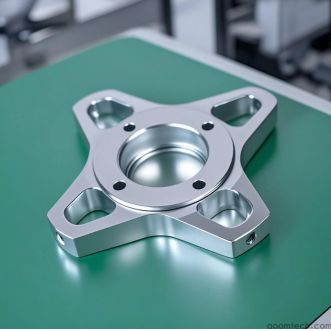
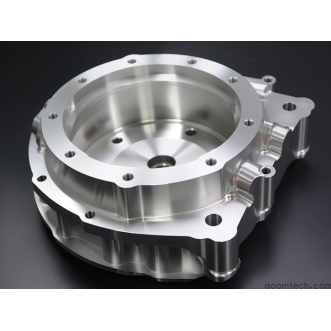
Before selecting a service provider, it is essential to clearly define the complexity of your parts. Components with complex geometries such as multiple cavities, deep pockets, undercuts, or freeform curves require advanced machining capabilities and multi-axis equipment.
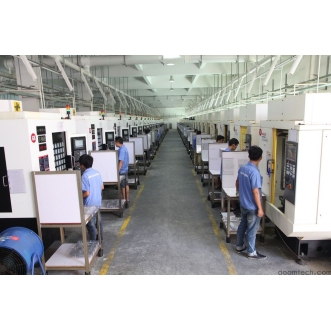
Quantity is equally important. Small-batch or prototype orders need flexible production and quick turnaround, while high-volume production requires stable capacity, automation, and consistent output quality. For example, aerospace components often require high precision and low volume, while automotive parts usually demand large-scale production with stable repeatability.
Understanding these factors early helps you narrow down providers that match your production scale and technical difficulty.
Precision and Tolerance Requirements
Precision is a core factor when selecting a CNC partner. Tight tolerances such as ±0.05mm or stricter require advanced machines, skilled operators, and stable quality systems. Industries like aerospace, medical devices, and electronics often depend on extremely accurate machining results.
If a part deviates from its tolerance range, it may not fit correctly during assembly, leading to system failure or costly rework. For instance, a slightly oversized shaft may cause friction or prevent proper installation in a mechanical system.
Clearly defining tolerance requirements helps you avoid working with providers who cannot meet your technical expectations.
Evaluate Provider's Technical Capabilities
Machine Types and Axes
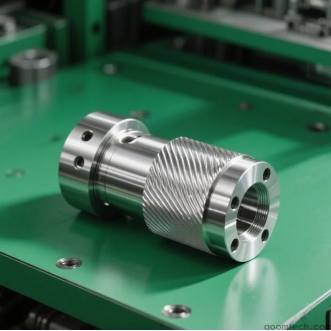
A reliable CNC machining service provider should offer a wide range of equipment. CNC lathes are used for cylindrical components such as shafts and bushings. CNC milling machines handle flat surfaces, slots, and complex 3D shapes.
Advanced multi-axis machines, such as 4-axis and 5-axis systems, allow machining from multiple directions in a single setup. This improves accuracy and reduces setup errors.
For example, a 5-axis machine is ideal for producing complex impellers or aerospace turbine blades, where multiple angles and curved surfaces must be machined precisely without repositioning the part.
Precision and Repeatability
When evaluating capabilities of CNC machining service providers, consistency is just as important as precision. A strong provider must be able to repeatedly produce identical parts within tight tolerances.
Repeatability ensures that every part in a batch performs the same function without variation. Poor repeatability may result in assembly issues, such as gears with inconsistent tooth profiles causing vibration or noise.
You can evaluate this by reviewing sample parts, case studies, and quality reports, or by requesting small trial production runs before committing to large orders.
Examine Quality Assurance Measures
In-Process Quality Control
A dependable CNC supplier must implement strict in-process quality checks. This includes using precision tools such as calipers, micrometers, height gauges, and coordinate measuring machines (CMMs).
Regular inspections during machining help detect tool wear, dimensional drift, or surface finish problems early. For example, identifying tool wear during production of a high-precision bracket can prevent an entire batch of defective parts.
This proactive approach reduces waste and ensures stable production quality.
Final Inspection and Testing
Strong quality assurance in choosing a CNC machining service includes a comprehensive final inspection process. After machining, parts should be fully checked for dimensions, surface quality, and functional performance.
Non-destructive testing methods such as ultrasonic testing or magnetic particle inspection can detect internal defects that are not visible on the surface.
Depending on the application, additional tests may include pressure testing for hydraulic components or hardness testing for structural parts. These steps ensure the final product meets engineering and safety requirements.
Review Experience and Expertise
Industry Experience
A provider with experience in your industry will better understand your standards and requirements. Automotive, aerospace, electronics, and medical industries all have unique compliance rules and quality expectations.
For example, an automotive-focused supplier is more familiar with durability testing and mass production consistency, while a medical supplier understands strict regulatory and cleanliness standards.
Requesting case studies or past project references is an effective way to verify industry experience.
CNC Machining Expertise
Technical expertise is another key factor. A skilled provider understands CNC programming, tool selection, cutting strategies, and process optimization.
This expertise allows them to improve efficiency and reduce machining errors. For example, optimized toolpaths can significantly reduce machining time for complex parts while maintaining accuracy.
Experienced engineers can also suggest design improvements that reduce manufacturing difficulty and cost.
Consider Cost-Effectiveness and Delivery
Cost Transparency
A trustworthy provider should offer clear and detailed pricing. Transparent quotations typically include material costs, machining time, tooling charges, finishing processes, and additional services.
This helps you compare suppliers more effectively and understand exactly what you are paying for. When requesting a quote, always ask for an itemized breakdown to avoid hidden costs.
Delivery Time and Reliability
Timely delivery is critical in any production schedule. Delays in machining can affect assembly lines, product launches, and customer commitments.
A reliable provider should offer realistic lead times and demonstrate the ability to meet deadlines consistently. It is also important to understand how they handle unexpected issues such as machine breakdowns or material shortages.
Late delivery of machined components can delay entire product systems, especially in industries with tightly synchronized production schedules.
Assess Customer Service and Communication
Responsiveness
Good communication is a key indicator of professionalism. A reliable provider should respond quickly to inquiries, provide clear technical explanations, and keep you updated throughout the production process.
Slow or unclear communication can lead to misunderstandings, design errors, or production delays. Early interactions often reflect how they will communicate during long-term projects.
Collaboration and Flexibility
Strong customer service in selecting a CNC machining service provider includes willingness to collaborate. A good provider should be open to design optimization suggestions, schedule adjustments, and engineering feedback.
For example, they may recommend modifying a part design to reduce machining complexity, which lowers cost without affecting performance.
Flexible and collaborative providers help improve both product quality and production efficiency.
Conclusion
Understanding How to Choose a Reliable CNC Machining Service Provider requires evaluating multiple factors, including technical capability, quality control systems, industry experience, cost transparency, and communication quality.
By carefully reviewing these areas and applying structured evaluation methods, you can reduce production risks and build a long-term partnership with a trustworthy manufacturing provider. In today’s competitive manufacturing environment, selecting the right CNC partner is not just a technical decision—it is a strategic advantage.
 How to Ensure Precision in CNC
 Small Batch Precision CNC Mach
 What surface finish can CNC ma
 CNC Machining Tolerance Settin