
Complete Pricing Guide for CNC Machining in 2026
How to Ensure Precision in CNC Machined Parts
Precision is the foundation of high-quality CNC manufacturing. Even a small error in machining can lead to part failure, assembly problems, or performance loss. Understanding How to Ensure Precision in CNC Machined Parts helps manufacturers, engineers, and buyers achieve reliable results in real production environments.
Machine Selection and Calibration
Choosing the right CNC machine is the first and most important step for achieving precision. Different machines have different accuracy levels, stability, and capabilities.
Choosing the Right CNC Machine
Key factors include:
Accuracy specifications: High-precision machines offer tighter tolerances and better repeatability.
Number of axes: 3-axis machines are suitable for simple parts, while 5-axis machines are better for complex geometries requiring high precision.
Machine rigidity: A rigid machine reduces vibration and tool deflection, which directly improves dimensional accuracy and surface quality.
Machine Calibration for Precision in CNC Machining
Regular calibration ensures that the machine performs as designed. Without calibration, even a high-end machine can produce inaccurate parts over time.
Calibration should include:
Axis calibration: Check linear movement accuracy using laser calibration systems or ball bar tests.
Spindle calibration: Verify spindle runout to ensure stable cutting conditions.
Tool changer alignment: Ensure tools are picked and positioned consistently without offset errors.
Basic Calibration Checklist
Check axis positioning accuracy weekly or monthly
Inspect spindle runout and vibration levels
Verify tool length offsets and tool holder wear
Test repeatability using standard reference parts
Proper calibration directly improves stability and reduces cumulative machining errors, ensuring consistent precision across production batches.
Tooling Considerations
Tool selection plays a major role in machining accuracy. Poor tooling can cause vibration, tool wear, and dimensional errors.
Tooling for Precision in CNC Parts
Different tools are designed for different operations:
End mills: Used for milling flat surfaces and complex shapes.
Drills: Used for accurate hole-making operations.
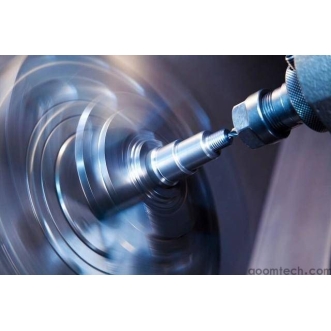
Turning tools: Used for cylindrical parts in CNC lathes.
Tool Material and Coating
Carbide tools are widely used in high-precision machining because they offer excellent hardness and heat resistance. Tool coatings such as TiAlN or TiN reduce friction, improve tool life, and maintain cutting stability.
Tool Wear Monitoring
Tool wear is one of the biggest threats to precision. Worn tools can cause poor surface finish and dimensional drift.
Common signs of tool wear include:
Increased cutting force or machine load
Poor surface finish or visible tool marks
Dimensional changes in finished parts
Timely tool replacement is essential to maintain consistent machining accuracy and avoid scrap parts.
Material Selection and Preparation
Material properties directly affect machining precision. Each material behaves differently under cutting conditions.
How Materials Affect Precision
Hardness: Hard materials increase tool wear and may reduce accuracy.
Thermal expansion: Materials that expand with heat can cause dimensional changes during machining.
Ductility: Highly ductile materials may deform instead of cutting cleanly.
Material Selection Guidelines
Choose materials based on function and machining requirements. For example, aluminum alloys are easier to machine with high precision, while stainless steel and titanium require more controlled cutting conditions.
Material Preparation
Proper preparation improves stability during machining:
Annealing: Softens material and reduces internal stress.
Stress relieving: Prevents deformation during and after machining.
These steps reduce internal stress-related distortion and improve final dimensional accuracy.
Programming and Design
Accurate CNC programming and good design practices are essential for achieving high precision in production.
Programming for Precision
Using CAD/CAM software correctly helps generate accurate tool paths. Key settings include:
Correct feed rate and spindle speed
Optimized depth of cut
Smooth tool path transitions
Advanced CAM strategies help reduce vibration and avoid unnecessary tool load changes.
Design Considerations
Good design improves manufacturability and precision. Simple and well-structured designs reduce machining errors.
Examples of design improvements:
Avoid sharp internal corners (use fillets instead)
Reduce deep cavities that require long tools
Maintain consistent wall thickness to avoid distortion
Better design leads to more stable machining and higher dimensional accuracy.
Quality Control and Inspection
Strict inspection is necessary to confirm that parts meet required tolerances. This is a key step in quality control for precision in CNC-machined components.
Measurement Tools
Calipers: For general dimensional checks
Micrometers: For high-precision measurement
Coordinate Measuring Machines (CMM): For full 3D accuracy verification
In-Process Inspection
Checking parts during production helps detect errors early. This reduces waste and ensures consistent quality throughout the batch.
Non-Destructive Testing (NDT)
Advanced methods such as ultrasonic testing or X-ray inspection can detect internal defects that are not visible on the surface.
Basic Inspection Checklist
Verify critical dimensions after each machining stage
Check surface finish quality
Confirm tolerance compliance using CMM reports
Inspect for cracks, burrs, or internal defects
Conclusion
Achieving high precision in CNC machining requires a complete system approach. Machine condition, tooling, material choice, programming, and inspection all work together. By applying proper machine calibration for precision in CNC machining, using the right tools, selecting stable materials, and enforcing strict inspection standards, manufacturers can significantly improve accuracy and reliability.
In modern manufacturing, precision is not achieved by chance—it is achieved through control, consistency, and continuous improvement.
References
ISO 230-1: Test code for machine tools – Geometric accuracy of machines
SME (Society of Manufacturing Engineers) – CNC machining best practices
Sandvik Coromant – Metal cutting and tooling technical guides
How to Ensure Precision in CNC Machined Parts
Precision is the foundation of high-quality CNC manufacturing. Even a small error in machining can lead to part failure, assembly problems, or performance loss. Understanding How to Ensure Precision in CNC Machined Parts helps manufacturers, engineers, and buyers achieve reliable results in real production environments.
Machine Selection and Calibration
Choosing the right CNC machine is the first and most important step for achieving precision. Different machines have different accuracy levels, stability, and capabilities.
Choosing the Right CNC Machine
Key factors include:
Accuracy specifications: High-precision machines offer tighter tolerances and better repeatability.
Number of axes: 3-axis machines are suitable for simple parts, while 5-axis machines are better for complex geometries requiring high precision.
Machine rigidity: A rigid machine reduces vibration and tool deflection, which directly improves dimensional accuracy and surface quality.
Machine Calibration for Precision in CNC Machining
Regular calibration ensures that the machine performs as designed. Without calibration, even a high-end machine can produce inaccurate parts over time.
Calibration should include:
Axis calibration: Check linear movement accuracy using laser calibration systems or ball bar tests.
Spindle calibration: Verify spindle runout to ensure stable cutting conditions.
Tool changer alignment: Ensure tools are picked and positioned consistently without offset errors.
Basic Calibration Checklist
Check axis positioning accuracy weekly or monthly
Inspect spindle runout and vibration levels
Verify tool length offsets and tool holder wear
Test repeatability using standard reference parts
Proper calibration directly improves stability and reduces cumulative machining errors, ensuring consistent precision across production batches.
Tooling Considerations
Tool selection plays a major role in machining accuracy. Poor tooling can cause vibration, tool wear, and dimensional errors.
Tooling for Precision in CNC Parts
Different tools are designed for different operations:
End mills: Used for milling flat surfaces and complex shapes.
Drills: Used for accurate hole-making operations.
Turning tools: Used for cylindrical parts in CNC lathes.
Tool Material and Coating
Carbide tools are widely used in high-precision machining because they offer excellent hardness and heat resistance. Tool coatings such as TiAlN or TiN reduce friction, improve tool life, and maintain cutting stability.
Tool Wear Monitoring
Tool wear is one of the biggest threats to precision. Worn tools can cause poor surface finish and dimensional drift.
Common signs of tool wear include:
Increased cutting force or machine load
Poor surface finish or visible tool marks
Dimensional changes in finished parts
Timely tool replacement is essential to maintain consistent machining accuracy and avoid scrap parts.
Material Selection and Preparation
Material properties directly affect machining precision. Each material behaves differently under cutting conditions.
How Materials Affect Precision
Hardness: Hard materials increase tool wear and may reduce accuracy.
Thermal expansion: Materials that expand with heat can cause dimensional changes during machining.
Ductility: Highly ductile materials may deform instead of cutting cleanly.
Material Selection Guidelines
Choose materials based on function and machining requirements. For example, aluminum alloys are easier to machine with high precision, while stainless steel and titanium require more controlled cutting conditions.
Material Preparation
Proper preparation improves stability during machining:
Annealing: Softens material and reduces internal stress.
Stress relieving: Prevents deformation during and after machining.
These steps reduce internal stress-related distortion and improve final dimensional accuracy.
Programming and Design
Accurate CNC programming and good design practices are essential for achieving high precision in production.
Programming for Precision
Using CAD/CAM software correctly helps generate accurate tool paths. Key settings include:
Correct feed rate and spindle speed
Optimized depth of cut
Smooth tool path transitions
Advanced CAM strategies help reduce vibration and avoid unnecessary tool load changes.
Design Considerations
Good design improves manufacturability and precision. Simple and well-structured designs reduce machining errors.
Examples of design improvements:
Avoid sharp internal corners (use fillets instead)
Reduce deep cavities that require long tools
Maintain consistent wall thickness to avoid distortion
Better design leads to more stable machining and higher dimensional accuracy.
Quality Control and Inspection
Strict inspection is necessary to confirm that parts meet required tolerances. This is a key step in quality control for precision in CNC-machined components.
Measurement Tools
Calipers: For general dimensional checks
Micrometers: For high-precision measurement
Coordinate Measuring Machines (CMM): For full 3D accuracy verification
In-Process Inspection
Checking parts during production helps detect errors early. This reduces waste and ensures consistent quality throughout the batch.
Non-Destructive Testing (NDT)
Advanced methods such as ultrasonic testing or X-ray inspection can detect internal defects that are not visible on the surface.
Basic Inspection Checklist
Verify critical dimensions after each machining stage
Check surface finish quality
Confirm tolerance compliance using CMM reports
Inspect for cracks, burrs, or internal defects
Conclusion
Achieving high precision in CNC machining requires a complete system approach. Machine condition, tooling, material choice, programming, and inspection all work together. By applying proper machine calibration for precision in CNC machining, using the right tools, selecting stable materials, and enforcing strict inspection standards, manufacturers can significantly improve accuracy and reliability.
In modern manufacturing, precision is not achieved by chance—it is achieved through control, consistency, and continuous improvement.
References
ISO 230-1: Test code for machine tools – Geometric accuracy of machines
SME (Society of Manufacturing Engineers) – CNC machining best practices
Sandvik Coromant – Metal cutting and tooling technical guides
 How to Ensure Precision in CNC
 Small Batch Precision CNC Mach
 What surface finish can CNC ma
 CNC Machining Tolerance Settin