


What Can CNC Precision Machining Products Be Used For? A Detailed Look
Where You Find Precision Machined Parts
Honestly, everywhere. CNC precision machining is the invisible backbone of modern manufacturing. The phone in your pocket, the car you drive, the medical equipment in a hospital — all of them rely on precision-machined components. The parts might be small, but they're critical.
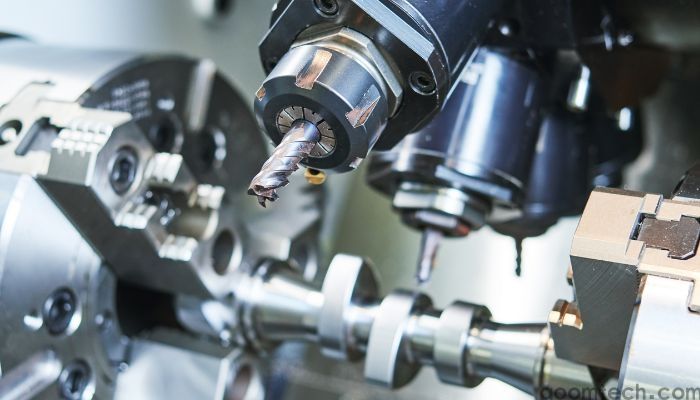
Powering Electronics
The electronics industry consumes huge volumes of CNC precision parts. Everything is getting smaller and more powerful, and that demands tighter tolerances.
Phone and laptop casings. That sleek unibody aluminum feel? It's often machined from a single block of aluminum. The process creates a rigid shell that protects delicate internal circuits while dissipating heat.
Heat sinks. The finned components that keep processors cool are precision-cut to maximize surface area. Every millimeter of fin geometry is optimized for airflow and thermal transfer.
Connectors and shields. Tiny parts that maintain signal integrity inside devices. They need to fit perfectly and block electromagnetic interference.
The common thread: perfect fit, thermal management, and the premium feel consumers expect.
Driving Auto and Aerospace
This is where precision machining gets serious. A failure here isn't an inconvenience — it's a safety risk.
Engine components. Valves, pistons, turbocharger housings. These parts endure extreme heat and pressure. Dimensional stability under those conditions is non-negotiable.
Landing gear parts. They absorb enormous force on every landing. Strength and precision are critical. No room for error.
Fuel system components. Leaks are not an option. Precision sealing surfaces and thread forms are essential for safety and efficiency.
The alloy compositions differ between automotive and aerospace, but the machining principles are the same. Both demand uncompromising quality and reliability.
Life-Saving Medical Devices
This might be the most critical application of all. Sterility, biocompatibility, and flawless operation make CNC machining the standard for medical manufacturing.
Implants. Knee replacements, spinal screws, dental implants — these are machined to match patient anatomy. The surfaces must be compatible with bone and tissue growth.
Surgical instruments. Scalpels, forceps, retractors. They need to be sharp, durable, and easy to sterilize repeatedly without degrading.
Diagnostic equipment. MRI machines, CT scanners, blood analyzers — their internal components must be precise to deliver accurate diagnostic results.
In this field, the link between a perfectly machined part and a human life is direct. That's a responsibility we take seriously at AOOM Technology.
Beyond the Big Three
CNC precision parts show up in less obvious places too. High-end watches, custom bicycle components, premium pen bodies. Robotics joints and actuators. Solar panel frames and wind turbine components. Oil and gas exploration tools.
If your project involves moving parts, tight spaces, high pressures, or a need for extreme reliability, CNC precision machining is the answer. The real challenge isn't finding a use for it — it's finding a partner who delivers consistent quality on time.
Send your CAD files to chen@aoomtech.com for a quote within 24 hours.
 CNC Machining Aluminum vs Stee
 Small Batch Precision CNC Mach
 How to Ensure Precision in CNC
 How to Calculate CNC Machining