


CNC Machining Process for High-Precision Stainless Steel Parts
CNC Machining Process for High - Precision Stainless Steel Parts
The CNC Machining Process for High - Precision Stainless Steel Parts is a critical manufacturing method used to produce components that require extremely tight tolerances, excellent surface finish, and long-term reliability. CNC (Computer Numerical Control) machining uses programmed instructions to control cutting tools, enabling consistent and repeatable production of complex stainless steel parts.
This process is widely used in industries such as aerospace, medical devices, automotive engineering, and electronics. These industries depend on stainless steel components because of their corrosion resistance, mechanical strength, and ability to perform in demanding environments.
Introduction to CNC Machining of High - Precision Stainless Steel Parts
The Significance of High - Precision Stainless Steel Parts and Their Machining
High - precision stainless steel parts play an essential role in systems where failure is not an option. In aerospace applications, for example, these components are used in engine systems, fuel control units, and structural assemblies. Even a small dimensional error can affect safety and performance.
Stainless steel is chosen for its durability, corrosion resistance, and strength. However, it is also more challenging to machine compared to softer metals. CNC machining solves this problem by providing controlled cutting paths, stable repeatability, and high accuracy. This makes it possible to produce parts that meet strict engineering standards.
Design Phase for High - Precision Stainless Steel Parts
Concept Development
The CNC process begins with concept development. Engineers and designers work closely with clients to define the part’s purpose, performance expectations, and operating environment.
For example, in medical implants, the design must ensure biocompatibility, precise anatomical fit, and long-term stability inside the human body. In industrial applications, designers must consider temperature resistance, pressure loads, and corrosion exposure.
Key design considerations include:
Dimensional tolerances and accuracy requirements
Mechanical load and stress conditions
Environmental exposure (heat, moisture, chemicals)
Expected service life of the part
CAD Design Creation
After concept approval, engineers use CAD (Computer-Aided Design) software to create a detailed 3D model. This model defines every aspect of the part, including dimensions, geometry, and surface finish requirements.
The CAD model serves as the foundation for the entire machining process. Any design error at this stage can lead to production defects, assembly issues, or functional failure. Therefore, accuracy in CAD modeling is essential for successful CNC production.
Long-tail keyword focus: design in CNC machining of high - precision stainless steel parts requires precise modeling, simulation, and validation before manufacturing begins.
Material Handling for High - Precision Stainless Steel Parts
Stainless Steel Grade Selection
Selecting the correct stainless steel grade is essential for performance and machinability. Different grades offer different mechanical and chemical properties.
For example:
304 stainless steel – widely used, good corrosion resistance, and easier to machine
316 stainless steel – improved resistance to chlorides and harsh chemical environments
The selection depends on application requirements such as corrosion exposure, mechanical strength, temperature conditions, and cost constraints. In marine or chemical environments, 316 is often preferred due to its superior resistance.
Long-tail keyword focus: material handling for high - precision stainless steel CNC machining includes proper grade selection to ensure performance and durability.
Material Inspection
Before machining begins, stainless steel material must undergo strict inspection. This ensures that the raw material meets required standards and is free from defects.
Common inspection methods include:
Visual inspection for surface defects or cracks
Chemical composition testing
Hardness testing for mechanical properties
Ultrasonic testing for internal flaws
Rejecting defective material at this stage prevents costly machining errors and ensures final product reliability.
Machining Operations for High - Precision Stainless Steel Parts
Milling Operations
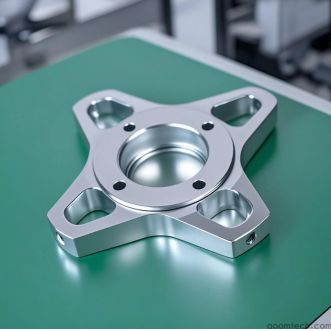
Milling is a key CNC operation where a rotating cutting tool removes material to create complex shapes, slots, and flat surfaces.
Carbide end mills are commonly used due to their hardness and wear resistance. Since stainless steel generates heat during cutting, machining parameters must be carefully controlled.
Important milling parameters include:
Spindle speed (usually lower for stainless steel)
Feed rate (controlled to prevent tool wear)
Depth of cut (optimized for stability)
Proper parameter control helps prevent overheating, tool damage, and poor surface finish.
Turning Operations
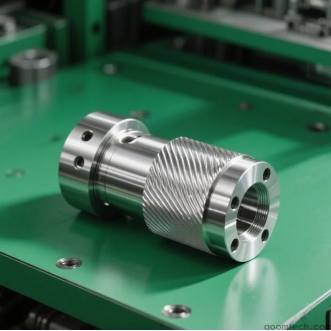
Turning is used to produce cylindrical parts. In this process, the workpiece rotates while the cutting tool removes material from the outer surface.
Carbide inserts are commonly used for stainless steel turning due to their durability. Achieving high concentricity and smooth surface finish depends on correct tool geometry and stable machining conditions.
Vibration (chatter) must be minimized, as it can negatively affect surface quality and dimensional accuracy.
Drilling and Boring Operations
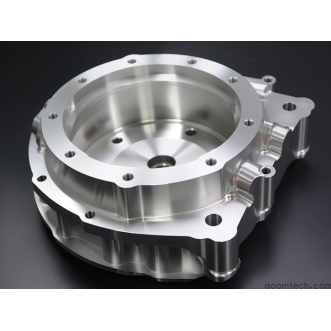
Drilling creates holes, while boring refines and enlarges them to achieve precise tolerances.
Because stainless steel is tough and heat-resistant, proper tool selection and cutting conditions are essential. High-quality drill bits with coated carbide tips are often used.
Accurate hole placement is critical because even small deviations can cause assembly failure in mechanical systems.
Quality Control in CNC Machining of High - Precision Stainless Steel Parts
In-Process Inspection
Quality control is integrated throughout the machining process. In-process inspection ensures that errors are detected early before they become costly problems.
Common inspection tools include:
Calipers and micrometers for dimensional checks
Optical measuring systems for precision evaluation
Surface roughness testers for finish quality
If deviations are detected, CNC programs or machining parameters are adjusted immediately to correct the issue.
Long-tail keyword focus: quality control in high - precision stainless steel part CNC production ensures consistency, accuracy, and compliance with design specifications.
Final Inspection
After machining is complete, a final inspection is conducted to verify that the part meets all design requirements.
Coordinate Measuring Machines (CMMs) are commonly used to measure complex geometries with extremely high precision. This step ensures dimensional accuracy, surface finish quality, and structural integrity.
Parts that fail inspection may be reworked if possible, or rejected if they cannot meet specifications.
Conclusion: Mastering the CNC Machining Process for High - Precision Stainless Steel Parts
Producing reliable and accurate components through the CNC Machining Process for High - Precision Stainless Steel Parts requires careful execution at every stage—from design and material selection to machining and quality control.
Each step plays a critical role in ensuring final product quality:
Design defines performance and manufacturability
Material selection ensures strength and durability
Machining operations shape the part with precision
Quality control guarantees compliance with specifications
To achieve consistent results, manufacturers should invest in operator training, adopt modern CNC technologies, and maintain detailed production records. Continuous improvement and adherence to engineering standards such as ISO quality systems and machining best practices are essential for long-term success in precision manufacturing.
 How to Ensure Precision in CNC
 Small Batch Precision CNC Mach
 What surface finish can CNC ma
 CNC Machining Tolerance Settin