


CNC Machining Process for Medical Stainless Steel Parts
Introduction to CNC Machining of Medical Stainless Steel Parts
The CNC Machining Process for Medical Stainless Steel Parts plays a critical role in modern healthcare manufacturing. Medical stainless steel components are widely used in surgical tools, implantable devices, diagnostic equipment, and precision medical instruments. These parts must meet extremely strict standards for accuracy, cleanliness, and safety.
Stainless steel is chosen because of its strong corrosion resistance, excellent mechanical strength, and good biocompatibility. For example, a surgical scalpel blade or forceps must remain sharp, sterile, and resistant to repeated sterilization cycles. Even a small machining error can affect patient safety and device performance.
Pre-Machining Considerations for Medical Stainless Steel Parts
Material Selection
One of the most important pre - machining considerations for medical stainless steel CNC parts is selecting the correct material grade. The most commonly used medical grades are 304L and 316L stainless steel.
316L stainless steel: Excellent corrosion resistance, especially in chloride-rich environments such as body fluids. Commonly used for implants and surgical tools.
304L stainless steel: Good corrosion resistance and cost-effective, often used in non-implant medical equipment.
The chemical composition, hardness, and biocompatibility of the material directly affect machining performance. For implantable parts, 316L is preferred due to its long-term stability inside the human body.
Part Design Review
A thorough design review is essential before machining begins. Medical parts must balance functional performance and manufacturability. Engineers typically use CAD/CAM software to simulate the machining process and detect design issues early.
Important design considerations include:
Avoiding sharp internal corners that can cause stress concentration
Maintaining uniform wall thickness to prevent deformation
Adding fillets and radii to improve strength and machinability
Ensuring proper draft angles for easier part release (when applicable)
CNC Machining Operations for Medical Stainless Steel Parts
Milling Operations
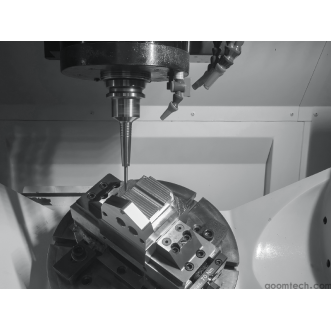
Milling in medical stainless steel part CNC machining is commonly used to create flat surfaces, complex 3D geometries, slots, and pockets. Due to the toughness of stainless steel, carbide end mills are widely used.
Key machining parameters include spindle speed, feed rate, and depth of cut. For rough milling, lower spindle speeds help reduce tool wear and prevent overheating. For finishing, higher speeds with lighter cuts produce smooth surface finishes required for medical applications.
Proper toolpath programming is also essential. Efficient toolpaths reduce vibration, improve surface quality, and extend tool life.
Turning Operations
Turning is used for cylindrical medical components such as pins, rods, and threaded parts. In this process, the workpiece rotates while a cutting tool removes material.
Carbide inserts are commonly used due to their wear resistance. Proper setup includes accurate tool alignment, stable tailstock support, and continuous coolant application to prevent heat buildup.
Precise control of feed rate and cutting speed ensures tight tolerances and high-quality surface finishes, which are essential in medical applications.
Drilling and Boring Operations
Drilling is used to create holes for screws, fluid channels, or assembly features. Boring is used to refine and enlarge these holes to achieve precise dimensions.
For stainless steel, specialized drill bits are required to prevent work hardening and burr formation. Techniques such as peck drilling help break chips and improve hole quality.
Coolant usage is especially important to reduce heat and maintain accuracy. Proper drilling technique ensures smooth internal surfaces and precise hole alignment.
Tooling and Fixturing for Medical Stainless Steel Parts
Tool Selection
Tool selection is a critical factor in the CNC Machining Process for Medical Stainless Steel Parts. Carbide tools are preferred because they provide excellent hardness and wear resistance.
Tool geometry must also be carefully chosen. For example:
Positive rake angles improve cutting efficiency in finishing operations
Negative rake angles provide stronger cutting edges for rough machining
Optimized helix angles help improve chip evacuation
Regular tool inspection and replacement are necessary to maintain consistent machining quality and avoid tool failure during production.
Fixturing Design
A stable fixturing system ensures the workpiece remains firmly fixed during machining. This is especially important for medical parts where accuracy is critical.
Common fixturing methods include:
Custom mechanical fixtures with multiple support points
Vacuum chucks for flat or thin components
Magnetic fixtures for ferromagnetic stainless steel grades
Proper alignment between fixture and machine axes ensures dimensional accuracy and repeatability across production batches.
Quality Control in Medical Stainless Steel CNC Machining
In-Process Inspection
Quality control in medical stainless steel CNC machining begins during production. In-process inspection helps detect errors early and reduces waste.
Common inspection tools include calipers, micrometers, and coordinate measuring machines (CMMs). Operators typically check:
Dimensional accuracy of machined features
Surface roughness after finishing operations
Hole depth and alignment in drilled features
If deviations are detected, machining parameters are adjusted immediately to maintain consistency.
Final Inspection
Final inspection ensures that every part meets strict medical standards. This includes dimensional checks, visual inspection, and performance validation.
In some cases, biocompatibility and corrosion resistance tests are required, especially for implantable components. These may include cytotoxicity testing or simulated body fluid corrosion testing.
Only parts that meet all specifications are approved for medical use.
Post-Machining Processes for Medical Stainless Steel Parts
Deburring and Edge Finishing
After machining, parts often contain burrs or sharp edges that must be removed. This step is essential for both safety and functionality.
Common methods include manual deburring, abrasive finishing, and mechanical edge rounding. Smooth edges reduce injury risk and improve assembly performance in medical devices.
Surface Treatment
Surface treatment enhances corrosion resistance, cleanliness, and biocompatibility. Common treatments include:
Passivation: Creates a protective oxide layer to improve corrosion resistance
Electropolishing: Smooths surface finish and removes micro-contaminants
Coating: Adds additional protection depending on application requirements
The choice of treatment depends on the part’s medical application and exposure environment.
Conclusion
The CNC Machining Process for Medical Stainless Steel Parts requires precision, strict material control, advanced machining strategies, and comprehensive quality assurance. From material selection and design optimization to machining, inspection, and surface treatment, every step plays a vital role in ensuring safety and performance.
By following proper engineering practices and pre - machining considerations for medical stainless steel CNC parts, manufacturers can produce reliable, high-quality components that meet the demanding standards of the medical industry.
 Process of Custom High-Precisi
 CNC Machining Parameter Settin
 5 Key Tips for CNC Machining o
 Small-batch Precision Parts 5-