


CNC Machining of Guide Sleeves
CNC Machining of Guide Sleeves
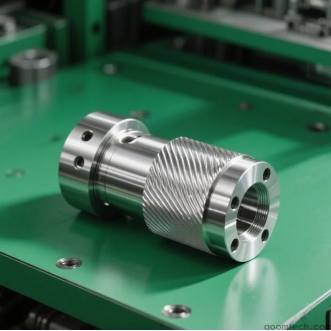
CNC Machining of Guide Sleeves is a key manufacturing process used to produce high-precision components that help guide moving parts in mechanical systems. Guide sleeves reduce friction, maintain alignment, and improve the stability of machine motion. They are widely used in automotive systems, aerospace equipment, industrial automation, and precision machinery.
By using CNC (Computer Numerical Control) technology, manufacturers can achieve high accuracy, repeatability, and efficiency. This ensures that guide sleeves meet strict performance requirements and deliver long service life in demanding environments.
The significance of CNC for guide sleeve production lies in its ability to produce consistent quality parts with tight tolerances. CNC-machined guide sleeves improve machine reliability, reduce maintenance needs, and support smooth operation in critical systems.
Processes in CNC Machining Guide Sleeves
Design and CAD/CAM Programming
The process begins with CAD (Computer-Aided Design), where engineers create a detailed 3D model of the guide sleeve. This design includes inner and outer diameters, length, tolerance levels, and functional requirements based on its application.
Next, CAM (Computer-Aided Manufacturing) software converts the design into CNC machine instructions. Programmers define toolpaths, cutting speeds, feed rates, and spindle speeds based on material type and geometry complexity.
For example, in a high-speed automated production line, a complex guide sleeve design with internal lubrication grooves may require multi-axis CNC programming. Special attention is needed to avoid tool collisions and maintain precise alignment between internal and external surfaces.
Long-tail keyword: processes in CNC machining guide sleeves ensure accurate translation from design to production.
Material Selection and Preparation
Material selection is critical for performance and machinability. Common materials include alloy steel, stainless steel, brass, and engineering polymers. Each material offers different wear resistance, friction behavior, and cost efficiency.
Before machining, materials may be cut to size and heat-treated (such as annealing) to reduce hardness and improve machinability. For example, high-strength alloy steel provides excellent durability but requires slower cutting speeds and stronger cutting tools compared to brass or aluminum.
Impact on machining: harder materials increase tool wear and require more rigid machining setups, while softer materials allow faster production but may reduce wear resistance in final use.
Machining Operations
Turning
Turning is the primary operation for shaping guide sleeves. It creates both the inner and outer cylindrical surfaces using carbide-tipped inserts.
Cutting parameters must be carefully controlled. Harder materials often require lower cutting speeds and optimized feed rates to prevent tool wear and maintain surface quality. Softer materials can be machined at higher speeds but still require stable clamping to avoid vibration.
Drilling and Boring (if applicable)
Some guide sleeves require lubrication holes or alignment features. Drilling is performed using HSS or carbide drill bits, while boring tools refine hole accuracy.
Coolant is essential to reduce heat and improve chip removal. Proper feed pressure helps prevent tool breakage and ensures smooth hole walls. Boring is often used as a finishing step to achieve tight tolerances.
Milling (if additional features exist)
If the guide sleeve includes keyways, slots, or special grooves, milling is required. Carbide end mills are used to create these features with precision.
Proper tool selection, spindle speed, and feed rate settings are necessary to avoid chatter and ensure clean edges. Multi-axis CNC machines may be used for complex geometries.
Finishing Operations
Finishing processes improve accuracy and surface quality. Grinding is often used to achieve tight dimensional tolerances and smooth surfaces. Polishing reduces friction and improves motion performance.
For example, in a precision optical positioning system, a ground and polished guide sleeve ensures ultra-smooth movement of guided components, reducing vibration and improving accuracy.
Tooling for CNC Guide Sleeve Machining
Turning Tools
Carbide-tipped turning inserts are widely used for both roughing and finishing. Different geometries are selected based on material hardness and required surface finish.
For example, a sharp-edged finishing insert may be chosen for brass guide sleeves to achieve a mirror-like surface, while a stronger, wear-resistant insert is used for hardened steel applications.
Long-tail keyword: tooling for CNC guide sleeve machining ensures stable and efficient production.
Drill Bits and Boring Bars
HSS drill bits with coatings such as titanium nitride (TiN) improve tool life and reduce friction. Carbide boring bars provide high rigidity and accuracy for internal diameter finishing.
For example, a TiN-coated drill bit can be used to create precise lubrication holes in a brass guide sleeve without burr formation or dimensional deviation.
Milling Tools
Carbide end mills are selected based on feature size and depth. Short-flute end mills offer better rigidity for deep slots, while longer tools are used for extended reach applications.
For example, a keyway in a steel guide sleeve can be machined using a 4-flute carbide end mill, ensuring clean edges and consistent dimensions.
Quality Control in CNC Machining Guide Sleeves
Dimensional Inspection
Dimensional accuracy is checked using calipers, micrometers, and coordinate measuring machines (CMM). These tools ensure that the guide sleeve meets strict tolerance requirements.
For example, in-process inspection may detect diameter deviation caused by tool wear. Early correction prevents scrap production and ensures consistent quality.
Long-tail keyword: quality control in CNC machining guide sleeves is essential for reliable performance.
Surface Finish Inspection
Surface quality is evaluated using visual inspection and surface roughness testers. A poor surface finish increases friction and reduces service life.
For example, if tool marks are detected during inspection, additional polishing or adjustment of cutting parameters can restore the required smoothness.
Material Integrity Inspection
Non-destructive testing methods such as ultrasonic testing or magnetic particle inspection are used to detect internal defects.
For example, ultrasonic testing may reveal internal cracks in a guide sleeve before installation, preventing potential failure in critical machinery.
Challenges in CNC Machining Guide Sleeves
Maintaining Dimensional Accuracy
Long or thin guide sleeves are sensitive to thermal expansion, vibration, and tool deflection. These factors can lead to dimensional errors.
For example, during machining of a long guide sleeve, heat buildup caused slight expansion, resulting in out-of-tolerance dimensions. This issue was solved by improving coolant flow and applying tool compensation settings.
Long-tail keyword: challenges in CNC machining guide sleeves often involve precision control under thermal stress.
Tool Wear and Breakage
Hard materials significantly increase tool wear. Carbide tools may lose sharpness quickly or break under high cutting loads.
For example, during machining of a hardened alloy steel sleeve, a turning insert wore out prematurely, increasing production time and cost due to frequent tool changes.
Surface Finish Requirements
Achieving a smooth surface is difficult when balancing productivity and tool life. Incorrect parameters can lead to rough finishes or vibration marks.
For example, initial machining may produce visible tool marks, requiring adjustments in cutting speed and a final polishing process to meet specifications.
Conclusion: Mastering CNC Machining for Guide Sleeves
Summary and Key Takeaways
CNC Machining of Guide Sleeves is a precise and essential process that supports the performance and reliability of many mechanical systems. From design and material selection to machining, tooling, and quality control, every step plays an important role in ensuring final product quality.
Understanding processes in CNC machining guide sleeves, selecting proper tooling for CNC guide sleeve machining, applying strict quality control in CNC machining guide sleeves, and addressing challenges in CNC machining guide sleeves are all key to success.
Manufacturers who focus on precision, proper process control, and continuous improvement can produce high-quality guide sleeves that meet modern industrial demands. Start optimizing your CNC machining process today to achieve better accuracy, durability, and efficiency.
 How to Ensure Precision in CNC
 Small Batch Precision CNC Mach
 What surface finish can CNC ma
 CNC Machining Tolerance Settin