


How to Machine Aerospace Parts with CNC
How to Machine Aerospace Parts with CNC
Introduction to Machining Aerospace Parts with CNC
Understanding How to Machine Aerospace Parts with CNC is essential for manufacturers who need high precision, safety, and reliability. The aerospace industry demands parts that perform under extreme conditions, including high pressure, temperature changes, and constant vibration. CNC (Computer Numerical Control) machining provides a reliable and efficient way to produce these complex components with consistent accuracy.
Aerospace CNC-machined parts are used in aircraft structures, engines, landing systems, and spacecraft assemblies. These parts directly affect flight safety, fuel efficiency, and overall performance. Even a very small machining error can lead to serious consequences, so strict control is required throughout the process.
The Significance of CNC in Aerospace Part Machining
CNC machining plays a key role in aerospace manufacturing because it can produce highly accurate and repeatable parts. It reduces human error and allows complex geometries to be produced with tight tolerances. This is especially important in aerospace, where every component must meet strict engineering and safety standards.
Pre-Machining Considerations for Aerospace CNC Parts
Design and Engineering
Good design is the foundation of successful aerospace machining. In pre-machining considerations for aerospace CNC parts, engineers must ensure that the part design is suitable for CNC production. This includes selecting proper wall thickness, avoiding unnecessary complexity, and planning tool access.
For example, a wing rib can be designed with smooth internal pockets and simplified geometry to reduce tool changes. This also helps improve chip evacuation and reduces machining time while maintaining strength and performance.
Material Selection
Material choice is critical in aerospace manufacturing. Common materials include titanium alloys, aluminum alloys, and high-strength steels. Each material has different machining behavior.
Titanium is strong and lightweight but has low thermal conductivity, which causes heat to stay in the cutting zone. This leads to faster tool wear and requires slower cutting speeds and special cooling strategies. Aluminum is easier to machine and is often used for structural components where weight reduction is important.
CNC Machining Processes for Aerospace Components
Design and CAD/CAM Programming
The process begins with CAD (Computer-Aided Design) software, where a precise 3D model of the aerospace part is created. After that, CAM (Computer-Aided Manufacturing) software converts the design into a CNC program.
In CNC machining processes for aerospace components, programmers define toolpaths, cutting speeds, feed rates, and spindle speeds based on material and geometry. For example, a turbine compressor blade requires complex multi-axis toolpaths to achieve smooth aerodynamic surfaces and tight dimensional control.
Machining Operations
Milling
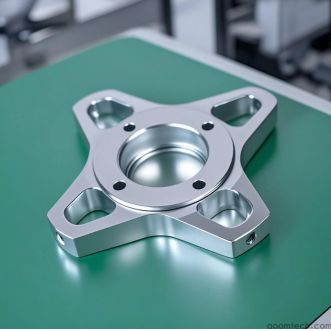
Milling is widely used in aerospace machining to create complex shapes, flat surfaces, pockets, and contours. Ball-nose end mills are used for curved surfaces, while flat end mills are used for slots and cavities.
Surface finish is very important in aerospace parts because it affects airflow and fatigue resistance. Cutting speed and feed rate must be carefully controlled to achieve smooth finishes without damaging the material.
Turning
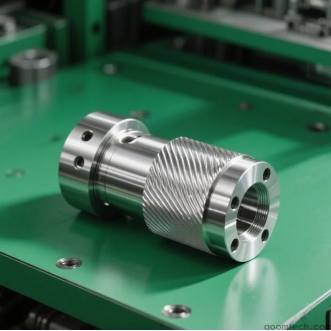
Turning is used for cylindrical aerospace components such as shafts, engine housings, and fastener parts. The workpiece rotates while the cutting tool removes material.
Carbide inserts are commonly used for turning hard materials like titanium. Precise control ensures concentricity and dimensional accuracy, which are critical for engine performance and structural stability.
Drilling and Boring
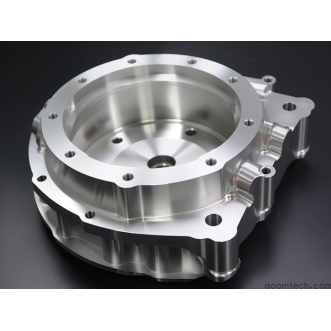
Drilling creates holes for bolts, fasteners, and fluid channels. Boring is used to refine and enlarge holes to precise dimensions. In aerospace machining, hole accuracy is extremely important for assembly strength and alignment.
Proper coolant usage helps reduce heat and improves tool life. Incorrect drilling can cause misalignment or stress concentration, which may affect safety.
Finishing Operations
After machining, finishing processes improve durability and performance. These include polishing, anodizing, and protective coatings.
For example, turbine blades may receive thermal barrier coatings to protect them from extreme heat, increasing service life and efficiency.
Tooling Selection for Aerospace Part CNC Machining
Cutting Tools
Tool selection is critical in aerospace manufacturing. Carbide tools are preferred because they can handle hard materials and maintain sharp edges under high stress. High-speed steel tools may be used for softer materials or simpler operations.
In tooling selection for aerospace part CNC machining, choosing the correct tool geometry and coating can significantly improve surface quality and reduce wear.
Drill Bits and Boring Bars
Drill bits used in aerospace must be highly precise and durable. Coatings such as titanium nitride (TiN) help reduce friction and extend tool life.
Rigid boring bars are required to maintain accuracy during hole finishing. Poor tool stability can lead to vibration and dimensional errors.
Quality Control in Aerospace Part CNC Machining
In-Process Inspection
Quality control is continuous in aerospace manufacturing. In quality control in aerospace part CNC machining, measurements are taken during production using tools like calipers, micrometers, and coordinate measuring machines (CMM).
If a deviation is detected early, machining parameters can be adjusted immediately to avoid producing defective parts. This reduces waste and improves efficiency.
Final Inspection and Testing
After machining, each part undergoes strict inspection. This includes dimensional checks, surface finish evaluation, and internal defect testing.
Non-destructive testing methods such as ultrasonic testing and X-ray inspection are commonly used. For example, a small internal crack found during final inspection can prevent a part from being used in an aircraft engine, ensuring safety.
Challenges in Machining Aerospace Parts with CNC
High-Precision Requirements
Aerospace components require extremely tight tolerances. Even a small dimensional error can affect aircraft safety and performance. For example, a minor defect in a landing gear component could lead to failure during landing stress.
Material-Specific Challenges
Different materials create different machining difficulties. Titanium can generate excessive heat, causing tool wear and dimensional instability. Composite materials may suffer from delamination if not machined correctly.
These challenges require optimized cutting parameters, proper tool selection, and effective cooling strategies.
Cost-Effectiveness in Small-Batch Production
Aerospace parts are often produced in small quantities, which increases production cost per unit. Manufacturers must improve efficiency through optimized programming, reduced setup time, and modular tooling systems.
For example, reusing tool setups across similar parts can significantly reduce production costs without affecting quality.
Conclusion: Mastering Aerospace Part Machining with CNC
Summary and Key Takeaways
Successfully understanding How to Machine Aerospace Parts with CNC requires attention to design, material selection, machining processes, tooling, and quality control. Each stage plays an important role in ensuring the final part meets strict aerospace standards.
By applying proper machining strategies and maintaining strict inspection processes, manufacturers can produce reliable and high-performance aerospace components. Continuous improvement in process planning and tool selection will further enhance efficiency and quality in aerospace CNC machining projects.
 How to Ensure Precision in CNC
 Small Batch Precision CNC Mach
 What surface finish can CNC ma
 CNC Machining Tolerance Settin