


CNC Machining Manufacturer for Non-standard Parts
CNC Machining Manufacturer for Non-standard Parts
Introduction to CNC Machining Manufacturer for Non-standard Parts
In modern industries, many products require special components that are not available as standard or off-the-shelf parts. This is where a CNC Machining Manufacturer for Non-standard Parts becomes essential. These manufacturers provide customized machining solutions to produce unique components based on specific customer designs and requirements.
Non-standard parts are widely used in aerospace, automotive, machinery, electronics, medical devices, and many other fields. CNC machining supports innovation by allowing engineers to turn complex ideas into real, functional components. Without these manufacturers, many advanced systems would not work properly or efficiently.
The Significance of CNC Machining Manufacturers for Non-standard Parts
CNC machining manufacturers play a key role in product development and industrial innovation. They help companies create parts that cannot be produced through mass production methods. By using computer-controlled machines, they ensure accuracy, consistency, and flexibility in production.
These manufacturers also help reduce design limitations. Engineers can design parts based on performance needs rather than manufacturing constraints, which improves overall system efficiency and functionality.
Benefits of Using a CNC Non-standard Parts Manufacturer
Customization Capability
One of the main advantages is high-level customization. CNC machining allows manufacturers to produce parts exactly based on customer drawings and specifications. This is especially important for industries like aerospace, where every component must meet strict design requirements.
For example, a custom-designed satellite bracket must fit precise space and weight limitations. CNC machining makes it possible to achieve these complex requirements with high accuracy.
Precision and Quality
CNC machining ensures extremely high precision because it is controlled by computer programs. This reduces human error and improves consistency. In industries such as medical equipment manufacturing, precision is critical for safety and performance.
For instance, a surgical instrument component must meet tight tolerance levels to function correctly. CNC machining ensures these requirements are consistently achieved.
Short Lead Times
Compared to traditional manufacturing methods, CNC machining often offers shorter production times. Once the design and programming are completed, production can begin quickly and efficiently.
This is especially useful in prototyping industries. For example, an electronics company developing a new device can receive CNC-machined non-standard parts quickly, helping them stay on schedule and speed up product testing.
Processes in CNC Machining Non-standard Parts
Design and CAD/CAM Programming
The process begins with a detailed design provided by the client. Engineers may also help optimize the design for manufacturability. CAD (Computer-Aided Design) software is used to create a 3D model of the part.
Next, CAM (Computer-Aided Manufacturing) software converts the model into machine instructions. These instructions define toolpaths, cutting speeds, and machining strategies. For complex parts such as multi-faceted connectors, careful programming is required to ensure accuracy and efficiency.
Material Selection and Preparation
Choosing the right material is critical for performance and durability. Common materials include aluminum, steel, titanium, plastics, and composites. The selection depends on the part’s function, working environment, and cost requirements.
For high-strength applications, harder materials may require slower cutting speeds and stronger tools. Proper preparation may also include cutting raw materials to size, heat treatment, and inspection before machining begins.
Machining Operations
Milling
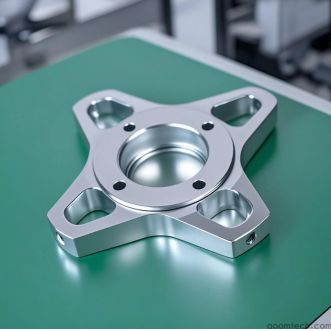
Milling is used to create flat surfaces, grooves, and complex 3D shapes. Different cutting tools such as end mills and ball-nose mills are selected depending on the design. For curved surfaces, ball-nose milling helps achieve smooth finishes and accurate geometry.
Turning
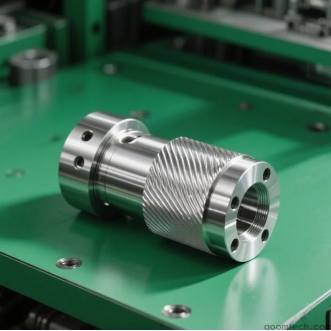
Turning is used for cylindrical parts such as shafts and bushings. The workpiece rotates while the cutting tool removes material. Carbide tools are often used for machining harder metals to ensure durability and precision.
Drilling and Boring
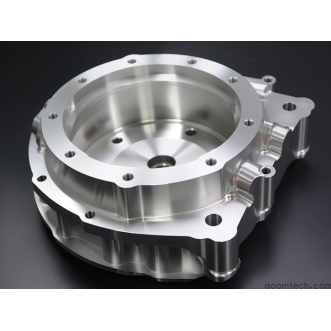
Drilling creates holes, while boring refines them to precise dimensions. These processes are important for assembly and fastening functions. Proper coolant use and controlled feed rates help maintain accuracy and tool life.
Finishing Operations
After machining, finishing processes improve the final quality of the part. These may include polishing, deburring, heat treatment, or protective coating. For example, anti-corrosion coatings are often applied to parts used in marine environments to increase durability and lifespan.
Advantages of CNC in Non-standard Part Production
Flexibility in Design Changes
CNC machining offers excellent flexibility. If design changes are needed, the digital program can be quickly updated. This is very useful during prototyping or product development stages.
This flexibility helps reduce development time and allows engineers to improve designs without restarting the entire production process.
Repeatability
Once a CNC program is finalized, the machine can produce identical parts repeatedly with consistent quality. This is important for replacement parts and batch production.
For example, manufacturers can produce non-standard replacement components for older machines while maintaining the same quality standards across all units.
Challenges Faced by CNC Non-standard Parts Manufacturers
Complex Design Interpretation
Understanding complex drawings can be challenging, especially when specifications are unclear. Misinterpretation may lead to production errors. Clear communication between clients and manufacturers is essential to avoid mistakes.
Cost Management
Custom production often involves higher costs due to specialized tooling, programming, and material requirements. Manufacturers must balance cost efficiency with quality requirements.
Benefits of using a CNC non-standard parts manufacturer often depend on optimizing both production efficiency and material usage.
Meeting Tight Deadlines
Complex designs and machine maintenance issues can sometimes cause delays. Manufacturers must plan carefully and prepare backup solutions to ensure on-time delivery of parts.
Choosing a Reliable CNC Machining Manufacturer for Non-standard Parts
Experience and Expertise
Experience is one of the most important factors. A skilled manufacturer is more likely to handle complex designs and technical challenges effectively.
For example, experienced manufacturers in aerospace projects often solve difficult machining problems by applying advanced techniques and engineering knowledge.
Quality Assurance
A strong quality control system ensures that every part meets required standards. This includes in-process inspection, final testing, and the use of calibrated measuring equipment.
Quality certification also provides confidence that the manufacturer follows international standards.
Communication and Customer Service
Good communication helps ensure that projects run smoothly. A reliable manufacturer keeps clients informed throughout the production process and responds quickly to questions or changes.
Strong communication often leads to long-term partnerships and successful project outcomes.
Conclusion: Selecting the Right CNC Machining Manufacturer for Non-standard Parts
Choosing a CNC Machining Manufacturer for Non-standard Parts requires careful evaluation of experience, quality control, communication, and production capability. Understanding the full process—from design and programming to machining and finishing—helps businesses make better decisions.
Key factors such as precision, customization, and reliability all play an important role in success. By considering the processes in CNC machining non-standard parts, the advantages of CNC in non-standard part production, and the challenges faced by CNC non-standard parts manufacturers, companies can select the right partner for their needs.
Start evaluating manufacturers carefully to ensure your next project achieves the best balance of quality, cost, and delivery time.
 How to Ensure Precision in CNC
 Small Batch Precision CNC Mach
 What surface finish can CNC ma
 CNC Machining Tolerance Settin