


CNC Machining of Precision Automotive Parts
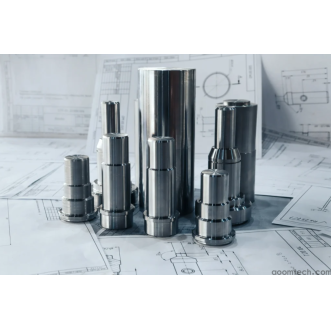
In the manufacturing of automobiles, the precision of parts is directly related to the performance and safety of the entire vehicle. CNC machining can control lathes or milling machines through computer programs to achieve precise cutting of complex parts. When using CNC machining for precision automotive parts (CNC Machining of Precision Automotive Parts), the size and shape of each part must strictly comply with the design requirements to ensure the smooth operation of the vehicle and compliance with safety performance standards. For example, key components such as engine blocks, transmission gears, and brake calipers must meet extremely strict tolerance standards; otherwise, they will affect engine performance, fuel economy, and driving safety.
CNC machining can stably produce a large number of parts with high consistency. Automated machine tools can operate continuously, with minimal errors when repeatedly processing the same batch of parts. This is of great significance to the automotive industry: a huge number of automobiles are produced globally every year, requiring millions of precision parts. The repeatability and consistency of CNC machining ensure good "interchangeability" of parts during mass production, eliminating the need for additional adjustments during assembly and improving production efficiency and product reliability.
Accuracy Requirements for CNC Machining of Automotive Parts
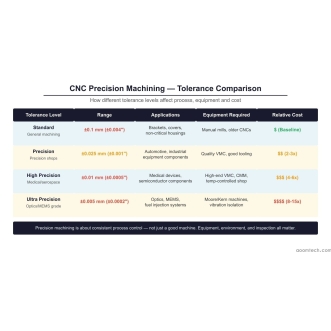
Different automotive parts have varying accuracy requirements. Key power components (such as engine pistons, crankshafts, camshafts, etc.) typically require extremely tight tolerances—such as 0.01 millimeters or even higher—to ensure the engine operates efficiently without abnormal wear. In contrast, tolerances for some non-structural parts can be slightly looser. Accuracy should be defined based on the part’s application scenario to avoid increasing costs for unnecessarily high precision. A common approach is to apply tight tolerances to critical dimensions and standard tolerances to non-critical dimensions.
The automotive industry often uses relevant standards to guide part tolerances, such as ISO 2768 and ISO 286. The former applies to parts with general tolerances, while the latter includes specialized tolerances for threads and other features. For automobile manufacturers, if design drawings specify particularly strict accuracy requirements, suppliers must have corresponding testing equipment (such as coordinate measuring machines) to verify dimensions. In short, understanding the meaning of precision requirements for automotive parts in CNC machining and ensuring parts meet performance requirements are the top priorities when selecting CNC machining and designing parts.
Challenges Faced in CNC Machining of Precision Automotive Parts
Many challenges arise during the CNC machining of automotive parts, and understanding these issues helps address them proactively:
Complex part design: Modern automotive part designs are often complex in shape, featuring hard-to-machine characteristics such as curves, chamfers, and deep holes. This requires the use of multi-axis CNC machine tools and professional tool design; otherwise, it is difficult to complete machining in a single clamping.
Material hardness and thermal sensitivity: Some automotive parts are made of high-strength steel, titanium alloys, or high-temperature resistant alloys—materials that are hard and prone to thermal deformation during cutting. For example, engine exhaust manifolds are often made of cast iron or stainless steel, which cause significant tool wear. Heat-sensitive materials also require high-pressure cooling and special cutting strategies to control cutting temperatures.
Tool wear and parameter control: When machining hard materials and complex contours, tools are prone to wear, which not only affects machining accuracy but may also cause dimensional deviations in workpieces. Optimizing machining parameters (rotational speed, feed rate, etc.) is critical. Inappropriate parameters can lead to tool vibration or material hardening, reducing machining efficiency.
Inspection and quality control: In high-precision machining processes, timely inspection of machined parts is necessary to confirm they fall within tolerance ranges. Many automotive parts have complex shapes, and traditional measuring tools are insufficient to detect all defects. This requires automated testing equipment (such as CMMs, laser scanners, etc.) to ensure quality.
Production cost and efficiency: Precision machining is generally costly, including investments in high-end tools and strict inspection requirements. For large production volumes, the balance between machining efficiency and cost must also be considered. In time-sensitive scenarios, the machining cycle for complex parts may be long, requiring advance planning of process flows.
How to Select a Reliable CNC Machining Service Provider
For automotive parts, choosing the right machining supplier is crucial. The following points serve as references:
Industry experience: Seek machining manufacturers with automotive industry experience, as they better understand the special requirements and industry standards for automotive parts. An ideal supplier should have years of machining experience and a mature quality management system (such as IATF 16949, ISO 9001 certifications) to ensure consistent product quality.
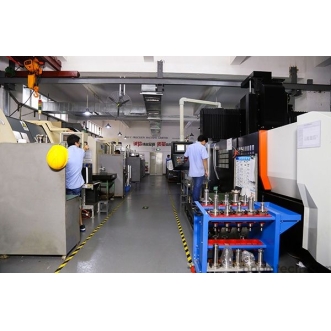
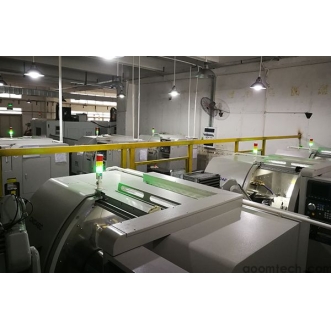
Machining capability and equipment: Verify that the manufacturer has processing equipment and technologies that meet your needs. For example, check if it is equipped with multi-axis CNC machine tools for complex parts and if it can process required materials (aluminum alloy, steel, titanium alloy, etc.). Understand its part size capabilities, tools, and testing equipment to ensure it can meet your part’s accuracy requirements.
Quality control: Excellent suppliers have systematic quality management processes. They use equipment such as Coordinate Measuring Machines (CMMs) to measure and inspect parts and provide comprehensive inspection reports for products. During communication, inquire about their quality control measures and error rates.
Delivery capability: Understand the manufacturer’s delivery cycle and production capacity. The automotive industry often has strict delivery deadlines, so suppliers need sufficient production capacity and a rapid response mechanism. If possible, refer to reviews or cases from other customers to confirm if the supplier delivers on time while maintaining quality.
Communication and service: Choosing a manufacturer with smooth communication is important. Good service providers offer manufacturing feasibility feedback during the design phase, identifying and improving potential machining issues in advance. Evaluate their communication channels and response speed to ensure problems can be resolved promptly.
Summary
CNC machining technology provides the automotive industry with a manufacturing solution that meets strict accuracy requirements, supporting the production of high-performance, safe, and reliable parts. By controlling tolerances and repeat positioning accuracy, CNC machining ensures the precise fit of part assemblies, thereby enhancing vehicle performance and safety. However, during implementation, challenges such as complex part shapes, hard materials, and high costs must be addressed. When selecting a machining service provider, focus on its industry experience, equipment capabilities, quality management system, and response speed—combined with sample testing—to ensure it truly has the ability to produce parts with the required accuracy and quality.
After comprehensively considering these factors, enterprises can achieve a reasonable balance of cost and delivery while ensuring quality and accuracy, enabling CNC precision machining to truly improve the manufacturing efficiency and product competitiveness of automotive components.
 How to Choose a CNC Machining
 CNC Machining of Precision Aut
 Tips for CNC Machining Titaniu
 CNC Precision Machining Parts