


High Precision Medical Part CNC Machining
High Precision Medical Part CNC Machining
Introduction
High Precision Medical Part CNC Machining plays a critical role in modern healthcare manufacturing. Medical devices such as implants, surgical instruments, and diagnostic equipment require extremely tight tolerances and stable performance. Even a very small machining error can affect patient safety or device function. For this reason, medical CNC machining is one of the most demanding fields in precision manufacturing.
The Significance of High Precision in Medical Parts
Patient Safety and Device Functionality
High precision is essential for patient safety. Medical devices must work reliably inside or on the human body. For example, a poorly fitted implant may cause pain, infection, or long-term complications. In surgical instruments, inaccurate dimensions can reduce surgical accuracy and increase risk during operations.
Devices such as infusion pumps also rely on precision to deliver accurate medication doses. In robotic surgery systems, even microscopic machining errors can affect movement accuracy. Therefore, High Precision Medical Part CNC Machining directly supports safe and effective healthcare outcomes.
Material Selection for Medical Parts
Biocompatibility and Mechanical Properties
One of the most important factors in medical manufacturing is material selection for high-precision medical part CNC machining. Materials must be biocompatible, meaning they do not cause harmful reactions in the human body.
Common materials include:
Titanium – widely used for implants due to its strength and excellent biocompatibility
Stainless steel – used in surgical tools for durability and corrosion resistance
Medical-grade polymers – used in flexible devices like catheters
Each material affects machining differently. For example, titanium has high strength and low thermal conductivity, which makes heat control more difficult during machining. Stainless steel is tough and can cause tool wear, requiring optimized cutting parameters.
CNC Machining Processes for Medical Parts
Milling Operations
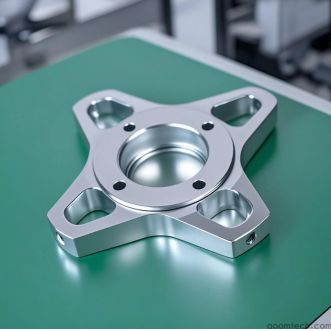
Milling is widely used in CNC machining processes for medical parts. It allows manufacturers to create complex shapes, flat surfaces, and precise internal features.
Examples include surgical instrument housings and implant components with internal channels. High-precision CNC milling machines with multi-axis control are often required to achieve tight tolerances. Tool selection, such as micro end mills or coated carbide cutters, is critical for accuracy and surface quality.
Turning Operations
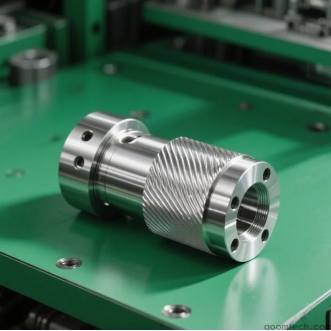
Turning is commonly used for cylindrical medical components such as needles, shafts, and implant bodies. CNC lathes provide precise rotational control, ensuring consistent diameter and smooth surface finish.
Proper chucking and tool alignment are essential to maintain concentricity. Even small vibrations during turning can lead to defects, making machine stability a key factor in High Precision Medical Part CNC Machining.
Drilling and Boring
Drilling and boring are used to create accurate holes in medical parts. These holes may guide fluid flow in catheters or allow mechanical assembly in implants.
Precision is critical in hole diameter, depth, and position. Poor drilling accuracy can lead to leakage, misalignment, or device failure. High-quality boring tools are often used to improve internal surface finish and dimensional accuracy.
Tooling for High-Precision Medical Part Machining
Specialized Cutting Tools
Medical CNC machining requires specialized cutting tools designed for high accuracy and long tool life. Carbide tools are commonly used because of their hardness and wear resistance.
Advanced coatings such as diamond-like carbon (DLC) reduce friction and improve surface finish quality. Micro end mills are used for very small features in miniature medical devices.
Tool Maintenance and Replacement
Tool condition directly affects machining quality. Regular inspection is necessary to detect wear or damage early. A worn tool can cause poor surface finish and dimensional errors.
Best practices include:
Regular cleaning to remove material buildup
Frequent inspection under magnification
Timely replacement based on usage and wear conditions
Quality Assurance in High-Precision Medical Part Machining
In-Process Quality Control
Quality assurance in high-precision medical part machining requires continuous monitoring during production. Measuring tools such as calipers, micrometers, and coordinate measuring machines (CMMs) are used to verify dimensions.
Early detection of errors helps prevent large-scale production of defective parts and reduces manufacturing waste.
Final Inspection and Testing
Final inspection ensures that all medical components meet strict performance and safety standards. This includes:
Dimensional accuracy checks
Surface finish inspection
Mechanical strength testing
Biocompatibility testing
These steps confirm that each part is suitable for medical use and meets regulatory requirements.
Meeting Regulatory Requirements
Medical Device Regulations
Medical machining must follow strict global regulations to ensure safety and effectiveness. In the United States, the :contentReference[oaicite:0]{index=0} sets strict requirements for medical device manufacturing, including material control, process validation, and quality systems.
International standards such as those developed by the :contentReference[oaicite:1]{index=1} also guide manufacturers in ensuring consistent quality and safety in medical production.
Compliance is not optional—it is a fundamental requirement for entering the medical device market.
Conclusion
High Precision Medical Part CNC Machining is essential for producing safe, reliable, and effective medical devices. From material selection to machining processes, tooling, quality control, and regulatory compliance, every step must be carefully managed. Manufacturers who focus on precision, process control, and strict standards can deliver medical components that meet the highest expectations of the healthcare industry.
 How to Ensure Precision in CNC
 Small Batch Precision CNC Mach
 What surface finish can CNC ma
 CNC Machining Tolerance Settin