


Key Considerations for Mass Production of Precision CNC Machining
Key Considerations for Mass Production of Precision CNC Machining
Mass production in CNC machining requires more than just fast machines. It demands stable processes, strict quality control, and well-planned resources. This article explains the Key Considerations for Mass Production of Precision CNC Machining, helping manufacturers and engineers achieve consistent quality, high efficiency, and cost control in large-scale production.
1. Equipment and Machinery
High-Capacity and High-Precision Machines
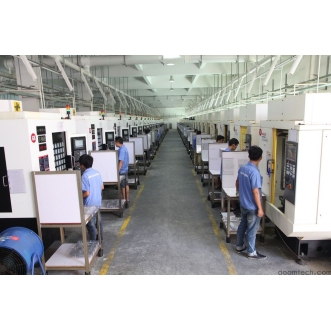
For mass production, CNC machines must run continuously while keeping tight tolerances. High rigidity, stable structure, and advanced spindle systems are essential to prevent vibration and maintain accuracy over long production cycles.
In industries like automotive and aerospace, even small dimensional errors can affect performance. That is why equipment considerations in mass-production precision CNC machining focus on machine durability, thermal stability, and positioning accuracy. Machines with high repeatability ensure every part meets the same specification.
Automation and Integration
Automation is a key factor in modern production lines. Robotic arms, pallet changers, and automatic loading/unloading systems reduce human error and improve cycle time.
Robotic part handling improves consistency
Automated tool changers reduce downtime
Integrated machining cells increase production efficiency
A well-integrated system allows continuous operation, which is essential for high-volume production.
2. Material Selection and Management
Consistent Material Quality
Material consistency directly affects machining accuracy. Differences in hardness, grain structure, or composition can lead to variations in finished parts.
In aerospace and medical industries, strict material standards are required. Reliable suppliers and regular testing help ensure stable input quality for production runs. This is a core part of material management for mass-produced precision CNC parts.
Material Cost-Effectiveness
While quality is critical, cost efficiency is also important in mass production. Engineers often evaluate alternative materials that meet performance requirements at a lower cost.
Examples include:
Using aluminum alloys instead of stainless steel for lightweight structures
Selecting improved engineering plastics for non-load-bearing components
Substituting high-cost alloys with optimized mid-range materials
The goal is to balance performance, reliability, and total production cost.
3. Tooling and Tool Management
Durable and Precision-Oriented Tools
In mass production, cutting tools must withstand long hours of continuous machining. Carbide tools, coated end mills, and diamond-coated cutters are commonly used for durability and precision.
For hardened steel or high-strength materials, advanced tool coatings reduce wear and maintain sharp cutting edges, ensuring consistent part quality over time.
Tool-Life Prediction and Replacement
Tool failure can cause defects and downtime. Therefore, predicting tool life is essential for stable production.
Monitoring cutting force and vibration levels
Tracking machining time per tool
Using predictive maintenance systems
A well-planned tool replacement strategy reduces scrap rates and improves overall efficiency in high-volume manufacturing.
4. Quality Assurance and Control
In-Process Quality Checks
Quality must be controlled during production, not only at the end. In-process inspection helps detect issues early before large batches are affected.
Tools such as CMMs (Coordinate Measuring Machines), micrometers, and surface roughness testers are commonly used. This approach is essential for quality control in mass-production precision CNC machining.
Typical issues detected early include:
Dimensional drift caused by tool wear
Surface finish degradation
Fixture misalignment
Final Inspection and Statistical Process Control
Final inspection ensures every part meets specifications before shipment. However, long-term stability requires Statistical Process Control (SPC).
SPC uses data analysis and control charts to monitor process stability. When trends shift outside control limits, corrective actions are taken before defects increase.
This is a key part of maintaining consistent mass-production precision CNC machining quality systems.
5. Process Optimization and Standardization
Machining Process Optimization
Optimizing cutting parameters improves both efficiency and quality. Speed, feed rate, and depth of cut must be carefully balanced.
Simulation software is often used to test machining strategies before production starts. This reduces trial-and-error costs and improves cycle time.
Optimization helps achieve faster production without reducing precision.
Process Standardization
Standard operating procedures (SOPs) ensure every operator follows the same workflow. This reduces variation and improves repeatability.
Standard machine setup procedures
Uniform tool change methods
Documented inspection steps
Standardization is essential for scaling production while maintaining consistent quality across all shifts and operators.
Conclusion
Successful mass production depends on a stable system combining machines, materials, tools, quality control, and optimized processes. By applying these Key Considerations for Mass Production of Precision CNC Machining, manufacturers can achieve high efficiency, lower defect rates, and consistent product quality across large production volumes.
 How to Ensure Precision in CNC
 Small Batch Precision CNC Mach
 What surface finish can CNC ma
 CNC Machining Tolerance Settin