


How to Choose a Reliable CNC Machining Supplier for High-Volume Precision Parts
How to Choose a Reliable CNC Machining Supplier for High-Volume Precision Parts
Choosing the right manufacturing partner is critical when you need large quantities of precision components. A small mistake in supplier selection can lead to delayed delivery, inconsistent quality, and increased production costs. This guide explains How to Choose a Reliable CNC Machining Supplier for High-Volume Precision Parts in a practical and easy-to-understand way for global buyers.
Understand Your Part Requirements
Precision and Tolerance Demands
Before selecting a supplier, you must clearly define your precision and tolerance requirements. Tolerance refers to how much variation is allowed in the final part dimensions. In high-demand industries such as aerospace, medical, and automotive, tolerances can be extremely tight, often around ±0.05mm or even less.
For example, an automotive engine component must fit perfectly with other parts to ensure safe and efficient operation. If tolerances are not controlled, it can lead to vibration, wear, or even system failure. Therefore, suppliers must have advanced CNC equipment and skilled operators to meet these strict requirements.
Understanding these requirements is the first step in evaluating capabilities of CNC machining suppliers for high-volume precision parts.
Part Complexity and Quantity
High-volume production is not only about quantity—it is also about complexity. Many modern parts include intricate geometries, thin walls, deep cavities, or internal channels. These designs require advanced machining strategies and multi-axis CNC machines.
For instance, a high-volume production of custom-designed heat exchangers involves complex internal flow channels. A supplier without experience in such parts may struggle with consistency and efficiency.
At the same time, high-volume orders require stable production capacity. A reliable supplier must be able to produce thousands or even millions of identical parts while maintaining consistent quality over long production cycles.
Evaluate Supplier Capabilities
Machine Capacity and Types
A strong CNC supplier should have a wide range of machines to support different production needs. For high-volume precision parts, the following equipment is especially important:
High-speed machining centers – Improve material removal efficiency and reduce cycle time.
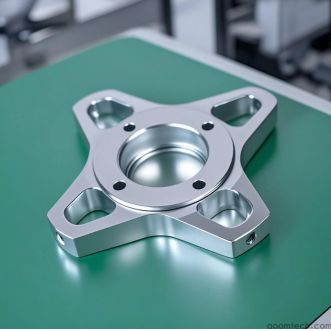
5-axis CNC machines – Allow complex geometries to be produced in a single setup.
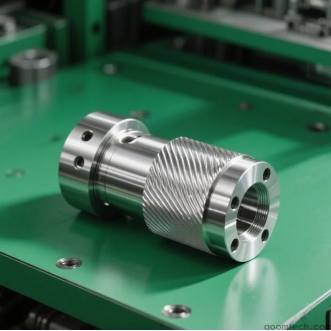
Precision CNC lathes – Essential for cylindrical parts like shafts and connectors.
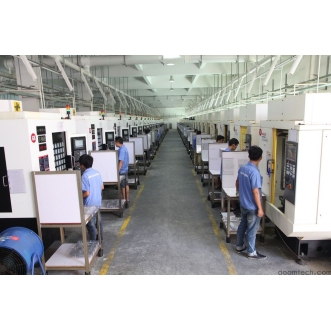
A supplier with multiple advanced machines can balance workload, reduce bottlenecks, and ensure continuous production. This is a key factor when selecting a partner for large-scale manufacturing.
Automation and Efficiency
Automation plays a major role in modern high-volume manufacturing. Suppliers that invest in automation systems can significantly improve productivity and consistency.
Examples of automation include robotic arms for loading and unloading parts, automatic pallet systems, and integrated production lines. These systems reduce human error and ensure stable quality during long production runs.
For example, a fully automated CNC production cell can run 24/7 with minimal operator intervention, greatly increasing output while maintaining precision standards.
Check Quality Assurance Measures
In-Process Quality Control
Reliable suppliers use strict in-process inspection systems to ensure quality during production. This includes measuring parts at different stages using tools such as calipers, micrometers, and Coordinate Measuring Machines (CMM).
Early detection of issues is essential in high-volume production. For example, if tool wear causes a slight dimensional deviation in a batch of precision shafts, in-process inspection allows the supplier to correct the problem before thousands of defective parts are produced.
This approach is central to quality assurance in choosing a high-volume precision parts CNC supplier.
Final Inspection and Statistical Process Control
Final inspection ensures every part meets specifications before shipment. However, for high-volume production, inspection alone is not enough. Suppliers should also use Statistical Process Control (SPC).
SPC uses data analysis to monitor production stability. Control charts help identify trends such as tool wear or machine drift before they cause defects.
For example, during mass production of precision gears, SPC can track tooth dimensions and alert engineers when variations begin to move outside control limits. This helps maintain consistent quality across thousands of parts.
Review Experience and Expertise
Industry-Specific Experience
Experience in your industry is extremely valuable. A supplier familiar with aerospace, automotive, or medical standards will better understand your technical and regulatory requirements.
For example, an aerospace-focused supplier will already understand strict material traceability, heat treatment requirements, and documentation standards. This reduces risk and improves production efficiency.
Always request case studies or references to confirm industry experience before making a decision.
High-Volume Precision Machining Expertise
High-volume production requires more than just machines—it requires process expertise. Skilled suppliers know how to optimize machining paths, manage tooling life, and maintain consistency over long production runs.
For example, advanced tool management systems can track tool wear and automatically schedule replacements. This prevents quality issues caused by worn cutting tools and ensures stable output across large batches.
Consider Cost-Effectiveness and Delivery
Cost Transparency and Optimization
A trustworthy supplier should provide clear and transparent pricing. A detailed quotation should include:
Material costs
Machining costs
Tooling and setup costs
Surface treatment or secondary processes
When comparing suppliers, always ensure you are reviewing the same technical requirements. The cheapest option is not always the best if it sacrifices quality or reliability.
Good suppliers may also suggest cost-saving improvements, such as alternative materials or optimized machining strategies, without reducing product performance.
Delivery Time and Reliability
In high-volume production, delivery schedules are extremely important. A delay in one component can disrupt an entire assembly line or product launch.
Reliable suppliers should provide realistic lead times and demonstrate strong on-time delivery performance. It is also important to ask about contingency plans, such as backup machines or production capacity reserves.
For example, if a batch of precision components arrives late, it can delay final assembly of industrial equipment, causing financial losses and customer dissatisfaction.
Assess Customer Service and Communication
Responsiveness
Communication quality is often overlooked but very important. A reliable supplier should respond quickly to technical questions, quotation requests, and production updates.
Slow communication can lead to misunderstandings, design errors, or production delays. During early discussions, evaluate how fast and clearly the supplier responds.
This is an essential part of customer service in selecting a high-volume precision parts machining supplier.
Collaboration and Flexibility
Strong suppliers act as long-term partners, not just manufacturers. They should be open to design feedback, process optimization, and schedule adjustments when needed.
For example, a supplier may suggest modifying a part design to reduce machining time while maintaining full functionality. This type of collaboration can significantly reduce costs and improve production efficiency.
Flexibility is especially important in high-volume production, where small improvements can lead to large savings over time.
Conclusion
Selecting the right manufacturing partner is a strategic decision that directly affects product quality, cost, and delivery performance. By carefully evaluating technical capability, quality systems, experience, cost structure, and communication, you can successfully identify the best partner for your needs.
In summary, How to Choose a Reliable CNC Machining Supplier for High-Volume Precision Parts depends on balancing precision requirements, production capacity, quality control systems, and long-term cooperation potential. A well-chosen supplier becomes not just a vendor, but a key part of your supply chain success.
 How to Ensure Precision in CNC
 Small Batch Precision CNC Mach
 What surface finish can CNC ma
 CNC Machining Tolerance Settin