


What Tolerance Can You Achieve with CNC Bar Machining? A Practical Guide
What Tolerance Can You Achieve with CNC Bar Machining?
I've been in meetings where everyone nods confidently about tolerances, but nobody actually knows what's achievable. Then the parts come back out of spec, and suddenly everyone has opinions.
Let me give you straight answers based on what we actually produce in our shop, not what the marketing materials say.
The Realistic Numbers
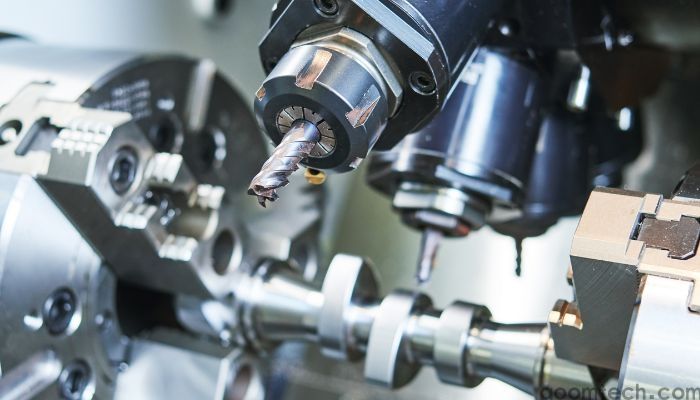
For standard CNC bar machining, you can expect ±0.025 mm to ±0.05 mm (±0.001 to ±0.002 inches). That's a reliable range for most materials and geometries. We hit these numbers every day on aluminum, brass, steel, and plastics.
The material makes a big difference. Aluminum bar stock is forgiving and dimensionally stable. Brass is even better. Stainless steel? It fights back. The heat and work-hardening make it harder to hold tight numbers, especially on longer parts.
Part length is another factor people underestimate. A short, stubby part is easy to hold to tight tolerances. A long, skinny bar that's 200 mm long with a 10 mm diameter? Much harder. Vibration and deflection become real problems at high length-to-diameter ratios.
What Affects Bar Machining Precision
Machine condition is number one. A Swiss-type lathe in good calibration is a precision instrument. A worn-out machine with play in the bearings won't hold anything tight. We calibrate our machines weekly and replace worn components immediately.
Tool wear creeps up on you. The first 50 parts might be perfect. By part 200, the tool has worn enough to shift dimensions. We track tool life per job and replace proactively, not when the operator notices a problem.
Bar stock variation matters more than most people think. Raw material diameter tolerance, straightness, and internal stress all affect the final part. We specify tight bar stock tolerances for precision work.
How to Set Your Project Up for Success
Don't call out tight tolerances everywhere. I tell every client the same thing: identify the critical features — press-fit diameters, mating surfaces, bearing seats — and spec tolerances there. Let everything else run standard.
Talk to your machinist early. A small design change, like adding a center drill or adjusting a radius, can make a part much easier to hold to tolerance. We've saved clients thousands by catching these things before production.
Consider material selection carefully. If you need ±0.01 mm on a long shaft, 6061 aluminum will be easier to hold than 316 stainless. If the application allows it, choose the material that machines well.
When Tighter Isn't Better
Here's what I've learned from hundreds of bar machining projects: chasing the absolute tightest tolerance is usually a trap. The cost curve goes exponential at the extremes. That last 0.01 mm might double your part cost.
Ask yourself: does the function truly require it? Sometimes "good enough" is the smartest business decision. The most expensive part is the one that's over-specified for no reason.
For critical aerospace or medical components, extreme precision is non-negotiable. But for general industrial applications, understanding the difference between "nice to have" and "need to have" saves real money.
Send your CAD files to chen@aoomtech.com for a quote within 24 hours.
 CNC Machining Aluminum vs Stee
 Small Batch Precision CNC Mach
 How to Ensure Precision in CNC
 How to Calculate CNC Machining