


What is Non-Standard Part CNC Machining
What is Non-Standard Part CNC Machining
What is Non-Standard Part CNC Machining? It refers to a manufacturing process where CNC (Computer Numerical Control) machines are used to produce custom-made parts that do not follow any fixed industry standard. These parts are designed and manufactured based on specific project needs rather than existing drawings or common specifications. This makes it an essential solution for industries that require unique, highly customized components.
Definition of Non-Standard Parts
Non-standard parts are components that do not conform to regular, pre-established industry standards. Unlike standard parts such as bolts, bearings, or screws—which are mass-produced with fixed sizes and specifications—non-standard parts are custom-designed for specific applications.
For example, a uniquely shaped component used in a prototype medical device or a specialized structural part for an experimental aerospace system would be considered non-standard parts. These parts are created when standard components cannot meet functional, dimensional, or performance requirements.
Understanding this difference is the foundation of learning what is non-standard part CNC machining and why it is widely used in advanced engineering projects.
Characteristics of Non-Standard Part CNC Machining
The characteristics of non-standard part CNC machining are mainly defined by flexibility, customization, and complexity. Unlike mass production, this process focuses on unique requirements.
Custom Design and Complexity
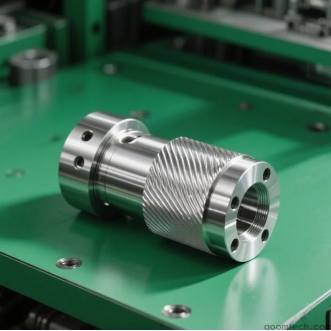
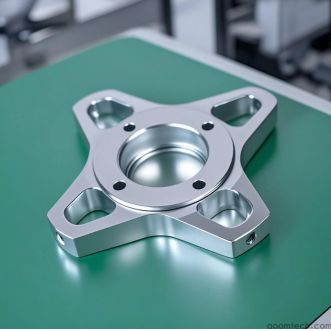
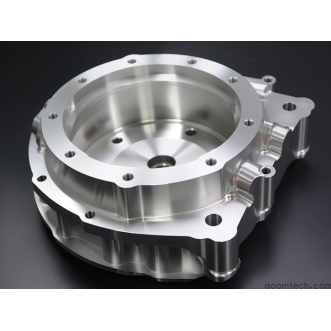
Non-standard part CNC machining often involves highly custom designs. These parts may include complex geometries, irregular shapes, deep cavities, or intricate internal channels.
For instance, a component used in a high-end 3D printer may require internal channels that guide material flow with extreme precision. Such designs cannot be produced using traditional standard tooling and require advanced CNC programming and multi-axis machining equipment.
This complexity increases engineering difficulty but also allows engineers to create highly optimized functional parts.
Low-Volume Production
Most non-standard parts are produced in low quantities. In many cases, only a few pieces are required for prototyping, testing, or specialized equipment.
Because of this low-volume nature, manufacturers must carefully balance cost efficiency and production time. Setup processes, tooling adjustments, and programming efforts become more significant compared to mass production.
CNC Machining Process for Non-Standard Parts
The CNC machining process for non-standard parts involves several important stages, from digital design to final manufacturing. Each step requires precision and technical expertise.
Design and Programming
The process begins with CAD (Computer-Aided Design) software, where engineers create a detailed 3D model of the part. This model is then converted into machining instructions using CAM (Computer-Aided Manufacturing) software.
These instructions guide the CNC machine on how to move cutting tools, including speed, direction, and depth of cut. For complex geometries, programming becomes more challenging and may require simulation to avoid errors or collisions.
Material Selection and Preparation
Material selection plays a critical role in performance. Depending on the application, materials may need to offer high strength, heat resistance, corrosion resistance, or flexibility.
For example, aerospace components may require titanium alloys, while chemical equipment parts may need corrosion-resistant stainless steel. Once selected, raw materials are cut and prepared into workable blanks before machining begins.
Machining Operations
Non-standard parts are created using multiple CNC operations, including milling, turning, drilling, and grinding.
Milling: Used for complex 3D shapes and flat surfaces
Turning: Used for cylindrical components
Drilling: Used to create precise holes
Grinding: Used for high-precision surface finishing
These operations are often combined in a carefully planned sequence to achieve the final design accurately.
Advantages of Non-Standard Part CNC Machining
High Precision and Quality
One of the biggest advantages is high precision. CNC machines operate based on digital instructions, which reduces human error and ensures tight tolerances.
This is especially important in industries like medical devices and aerospace, where even a small deviation can affect safety and performance.
Flexibility and Customization
CNC machining offers excellent flexibility. Designs can be easily modified by updating CAD/CAM files without changing the entire production setup.
This allows manufacturers to quickly produce different versions of a part for testing, development, or customization. It is especially valuable in automotive prototyping and specialized machinery production.
Challenges in Non-Standard Part CNC Machining
Cost and Time Management
One of the main challenges in non-standard part CNC machining is controlling cost and production time. Since each part is custom-made, setup time and programming effort are higher than standard production.
Tooling selection, machine setup, and design validation all contribute to increased cost. To manage this effectively, engineers often optimize designs for manufacturability and reduce unnecessary complexity.
Technical Expertise Requirements
This process requires highly skilled operators and engineers. They must understand CAD/CAM software, CNC programming, material properties, and machining strategies.
Lack of expertise can lead to programming errors, poor surface finish, or even part failure during production. Continuous training and experience are essential to ensure consistent quality.
Conclusion
Understanding what is non-standard part CNC machining helps businesses and engineers recognize its importance in modern manufacturing. It enables the production of highly customized, precise, and functional components that cannot be achieved through standard mass production methods.
Although it comes with challenges such as higher cost and technical complexity, its advantages in flexibility, accuracy, and innovation make it essential for industries like aerospace, medical, automotive prototyping, and advanced machinery design.
 How to Ensure Precision in CNC
 Small Batch Precision CNC Mach
 What surface finish can CNC ma
 CNC Machining Tolerance Settin