


What Products Can Be Made with 3-Axis CNC Machining? A Practical Guide
What a 3-Axis CNC Machine Can Actually Do
I get asked this a lot. Clients see 5-axis machines in videos and worry that 3-axis is outdated. It's not. In fact, 3-axis machining handles probably 70% of the parts in any product catalog.
The machine moves along X, Y, and Z axes. That means it cuts from the top, sides, and front-to-back. It can do flat surfaces, pockets, holes, contours, and most features you'd find on a typical mechanical part.
What it can't do easily: deep undercuts, complex curved surfaces on multiple sides, and features that require the tool to tilt. But for most engineering parts, you can work around these limits by flipping the part or using angled fixtures.
Everyday Products Made on 3-Axis Machines
Here are real examples I see in our shop every week:
Electronic enclosures and chassis. Those aluminum boxes that house circuit boards? Almost always 3-axis. The machine cuts the pocket for the board, drills mounting holes, and machines the outer profile. One setup, done.
Mounting brackets and plates. From simple L-brackets to complex sensor mounts. Most bracket designs have features on one or two planes. Perfect for 3-axis.
Gears and pulleys. Spur gears, timing pulleys, and sprockets all have features that repeat around a center axis. A 3-axis machine with a rotary indexer handles these easily.
Mold inserts and patterns. Many injection mold cavities are 2.5D — they have depth but no compound curves. 3-axis machines cut these efficiently.
Panel components. Front panels with cutouts for switches, displays, and connectors. These are almost always 3-axis jobs in our shop.
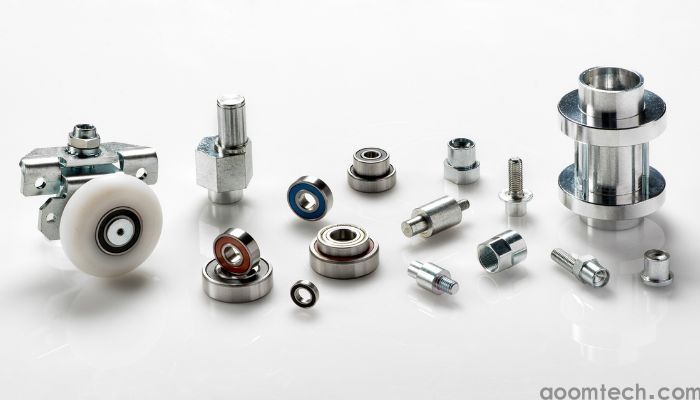
Where 3-Axis Shines and Where It Doesn't
The big advantage of 3-axis is simplicity. Setup is faster. Programming is more straightforward. There are fewer variables to manage. That means lower cost and shorter lead times.
But if your part has deep cavities, the tool length becomes a problem. Long tools deflect more, which hurts accuracy and surface finish. And if your design has features that require machining from five different angles, you'll need multiple setups. Each setup introduces positioning error.
For most clients, I recommend this approach: design for 3-axis first. If a simple flip or fixture solves the problem, you save money. Only move to 4- or 5-axis if the geometry truly requires it.
Making the Right Call for Your Project
When I review a client's drawing, I ask three questions:
Can all features be reached from three axes? If yes, 3-axis is the most cost-effective choice.
Do tight tolerances require minimum setups? If you need datum-sharing across multiple faces, 4-axis with a trunnion might be better.
What's your timeline? 3-axis setups are faster. If you need parts in a week instead of three, 3-axis is the way to go.
Send your CAD files to chen@aoomtech.com for a quote within 24 hours.
 CNC Machining Aluminum vs Stee
 Small Batch Precision CNC Mach
 How to Ensure Precision in CNC
 How to Calculate CNC Machining