


Manufacturer of Custom Aluminum Parts CNC Machining
Manufacturer of Custom Aluminum Parts CNC Machining
Manufacturer of Custom Aluminum Parts CNC Machining plays an important role in today’s global manufacturing industry. These manufacturers use advanced CNC (Computer Numerical Control) technology to produce high-precision aluminum components that are used in automotive, aerospace, electronics, medical devices, robotics, and many other industries. Aluminum is widely chosen because it is lightweight, corrosion-resistant, and offers an excellent balance of strength and machinability.
This article explains what these manufacturers do, why they are important, the full manufacturing process, key services, benefits, challenges, and how to choose the right partner. It is designed to help global readers clearly understand the process of custom aluminum parts CNC manufacturing in simple language.
Introduction to Manufacturer of Custom Aluminum Parts CNC Machining
The Significance of Manufacturers of Custom Aluminum Parts CNC Machining
Manufacturers specializing in CNC machining of custom aluminum parts are essential to modern production systems. They create precise, tailor-made components based on customer drawings and technical requirements.
For example, in the automotive industry, lightweight aluminum engine parts help improve fuel efficiency and reduce emissions. In electronics, aluminum heat sinks improve thermal management, protecting sensitive components. In medical applications, precise aluminum parts ensure safety and reliability in diagnostic and surgical equipment.
Without these manufacturers, many high-performance and precision-based products would not function correctly or efficiently.
The Manufacturing Process of Custom Aluminum Parts by CNC Machining
Design and Engineering
The process begins with CAD (Computer-Aided Design) software, where engineers create detailed 3D models of aluminum parts. These designs consider mechanical function, stress levels, and environmental conditions.
Accurate design is critical because even small errors can cause part failure or assembly issues. Designers also optimize the model for manufacturability, ensuring it can be efficiently produced using CNC machines.
Material Selection
Different aluminum alloys are selected depending on application needs. For example:
6061 aluminum: good strength, corrosion resistance, widely used in industrial parts
7075 aluminum: very high strength, used in aerospace and high-stress applications
1000/6000 series: excellent thermal conductivity, used in heat dissipation parts
Material selection directly affects machining performance, surface finish, and final product durability.
CNC Programming
CAD models are converted into machine instructions using CAM (Computer-Aided Manufacturing) software. This step generates toolpaths, cutting speeds, feed rates, and depth settings.
Precise programming is essential. Incorrect instructions may lead to dimensional errors, poor surface finish, or even part rejection.
Machine Setup and Tooling
In this stage, CNC machines are prepared with proper cutting tools, fixtures, and work-holding systems. For aluminum machining, carbide tools are commonly used because they provide sharp cutting edges and long tool life.
Correct setup ensures accuracy and stability. Poor tooling selection may result in vibration, tool breakage, or poor dimensional quality.
Machining Operations
Milling
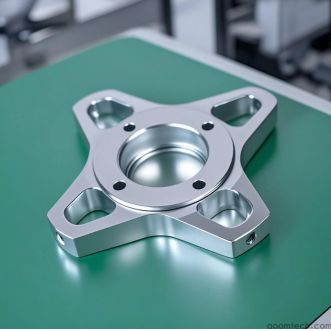
Milling uses rotating cutting tools to remove material and create flat surfaces, slots, holes, and complex 3D shapes. Tool selection is important; end mills with high helix angles are often used for aluminum to improve chip removal.
Cutting parameters such as spindle speed and feed rate must be carefully controlled to ensure smooth surface finish and dimensional accuracy.
Turning
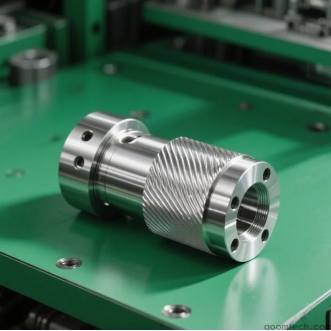
Turning is used to produce cylindrical parts such as shafts and bushings. The workpiece rotates while the cutting tool shapes its outer surface.
Maintaining concentricity is essential in turning operations. Carbide inserts are commonly used to achieve high precision and smooth finishes.
Drilling and Boring
Drilling creates holes for screws, bolts, or fluid channels, while boring refines or enlarges existing holes to precise dimensions.
Accurate hole placement is critical for assembly performance. Incorrect drilling can lead to misalignment or product failure.
Quality Control
Quality control ensures every part meets strict specifications. Manufacturers use tools such as calipers, micrometers, and coordinate measuring machines (CMMs).
Inspection includes dimensional checks, surface quality evaluation, and tool wear monitoring. Non-conforming parts are either reworked or rejected to maintain product reliability.
Finishing and Surface Treatment
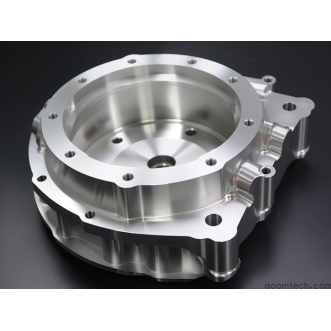
Finishing improves both appearance and performance. Common processes include deburring, polishing, anodizing, powder coating, and painting.
These treatments enhance corrosion resistance, improve wear resistance, and provide a professional appearance suitable for industrial and consumer applications.
Services Offered by CNC Machining Manufacturers
Milling Services
CNC machining milling services details include face milling, end milling, and profile milling. These operations are used to create complex shapes and precise flat surfaces. Proper tool selection and cutting control ensure high accuracy and surface quality.
Turning Services
Benefits of CNC turning in manufacturing include high efficiency in producing cylindrical parts with tight tolerances. Turning is widely used for shafts, threaded components, and mechanical connectors.
Drilling and Boring Services
These services ensure precise hole creation and finishing. Accurate drilling is essential for assembly alignment, while boring ensures dimensional precision for functional performance.
Grinding Services
Grinding improves surface finish and dimensional accuracy. Types include surface grinding, cylindrical grinding, and internal grinding. It is often used when extremely tight tolerances are required.
Finishing and Surface Treatment Services
These services improve durability and appearance. Processes like anodizing and polishing enhance corrosion resistance and aesthetic quality, making aluminum parts suitable for demanding environments.
Benefits of Manufacturer of Custom Aluminum Parts CNC Machining
High Precision
CNC machining ensures extremely accurate and repeatable production. Tight tolerances are achievable, making parts suitable for industries where precision is critical, such as aerospace and medical devices.
Customization
Manufacturers can produce fully customized parts based on customer drawings. This flexibility supports innovation and allows businesses to develop unique products.
Cost-Effectiveness for Small Batch Production
CNC machining is highly efficient for small and medium production runs. It reduces setup costs compared to traditional manufacturing methods, making it ideal for prototypes and niche products.
Efficiency and Productivity
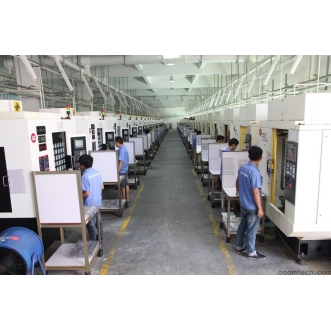
Once programmed, CNC machines can operate continuously with minimal supervision. This increases productivity and reduces production time while maintaining consistent quality.
Challenges in CNC Machining Manufacturing Services
Chip Formation and Evacuation
Aluminum machining often produces long chips that can interfere with tools and surface quality. Solutions include optimized cutting parameters and high-pressure coolant systems.
Tool Wear
Continuous machining leads to tool wear, especially when working with high-strength alloys. Regular tool inspection and replacement help maintain quality and reduce downtime.
Meeting Tight Deadlines
Production schedules can be challenging, especially for urgent orders. Efficient planning, communication, and backup machining strategies help ensure on-time delivery.
Choosing the Right Manufacturer of Custom Aluminum Parts CNC Machining
Experience and Expertise
Choose manufacturers with proven industry experience. Skilled companies understand complex machining requirements and can handle advanced part designs effectively.
Examples of experienced manufacturers include:
:contentReference[oaicite:0]{index=0} – known for high-precision machining and thin-wall complex parts
:contentReference[oaicite:1]{index=1} – offers integrated aluminum profile and CNC machining solutions
:contentReference[oaicite:2]{index=2} – specializes in automotive-grade aluminum components
:contentReference[oaicite:3]{index=3} – provides full-chain precision manufacturing services
:contentReference[oaicite:4]{index=4} – delivers custom CNC machining solutions for multiple industries
Quality Assurance
A reliable manufacturer should have strong quality systems such as ISO 9001 certification. This ensures consistent inspection processes and reliable production standards.
Range of Services and Capabilities
A good supplier should offer multiple machining operations, work with different aluminum alloys, and handle both simple and complex parts. This reduces the need to work with multiple vendors.
Cost and Pricing Transparency
Clear and detailed pricing is essential. A professional quote should include material cost, machining cost, finishing cost, and delivery time. Transparent pricing helps build trust and avoid hidden costs.
Customer Reviews and References
Customer feedback provides valuable insights into reliability and quality. Always check reviews and request references to evaluate real-world performance, delivery consistency, and service quality.
Conclusion
Manufacturer of Custom Aluminum Parts CNC Machining plays a key role in modern industrial production. These manufacturers deliver precision, flexibility, and efficiency across many industries. By understanding the manufacturing process, services, benefits, and challenges, businesses can make better decisions when selecting a supplier.
Choosing the right partner ensures high-quality parts, stable production, and long-term success in competitive markets.
 How to Ensure Precision in CNC
 Small Batch Precision CNC Mach
 What surface finish can CNC ma
 CNC Machining Tolerance Settin