


Custom CNC Machining Process for Non-standard Precision Parts
Custom CNC Machining Process for Non-standard Precision Parts
The Custom CNC Machining Process for Non-standard Precision Parts is a modern manufacturing method used to produce highly specialized components that cannot be replaced by standard, off-the-shelf parts. These parts are often designed for unique functions, strict tolerances, and complex working environments. CNC (Computer Numerical Control) technology makes it possible to manufacture these parts with high accuracy, repeatability, and efficiency.
This article explains what the process is, why it is important, the detailed production steps, key benefits, common challenges, and how to ensure a successful machining project in real industrial applications.
Introduction to Custom CNC Machining for Non-standard Precision Parts
The Significance of Custom CNC Machining for Non-standard Precision Parts
The Custom CNC Machining Process for Non-standard Precision Parts plays an essential role in industries where standard components cannot meet performance requirements. Non-standard precision parts are specially designed components created for specific applications, machines, or systems.
These parts are widely used in industries such as aerospace, medical devices, robotics, automotive engineering, and advanced research equipment. In aerospace, custom-machined components help ensure aircraft safety and performance. In the medical field, they support the production of surgical instruments and implantable devices that require extreme accuracy and biocompatibility.
Without custom CNC machining, many modern technologies would not function properly due to the lack of precise and tailored mechanical solutions.
Steps in the Custom CNC Machining Process for Non-standard Precision Parts
The steps in custom CNC machining non-standard parts involve several carefully controlled stages. Each stage directly affects the final quality, accuracy, and performance of the component.
Requirement Analysis and Design
The process begins with a detailed requirement analysis. Engineers communicate with clients to fully understand the part’s function, working environment, load conditions, and dimensional constraints. This step is critical because incorrect assumptions can lead to design failure.
Using CAD (Computer-Aided Design) software, engineers create a precise 3D model of the non-standard precision part. The model defines every geometric detail and tolerance requirement. A well-designed model ensures smooth manufacturing and reduces production errors.
Material Selection
Material selection is a key step in the Custom CNC Machining Process for Non-standard Precision Parts. The chosen material must match the part’s application requirements.
Important factors include:
Mechanical strength and hardness
Corrosion resistance
Thermal stability
Machinability
For example, titanium and stainless steel are commonly used in medical applications due to their biocompatibility. In aerospace applications, heat-resistant alloys are often selected to withstand extreme temperatures and pressure.
CNC Programming
After the design is completed, the CAD model is converted into a CNC program using CAM (Computer-Aided Manufacturing) software. This program contains detailed instructions for the machine, including toolpaths, cutting speeds, feed rates, and machining depth.
Accurate programming is essential. Poorly written code can cause tool collisions, incorrect dimensions, or surface defects. Proper optimization ensures both efficiency and precision.
Machine Setup and Tooling
During machine setup, operators prepare the CNC machine by installing the correct cutting tools and fixtures. Tool selection depends on material type and machining requirements.
Common tools include carbide end mills, drill bits, and diamond-coated cutters. Machine settings such as spindle speed and feed rate are adjusted according to the CNC program to ensure stability and precision.
Machining Operations
Milling
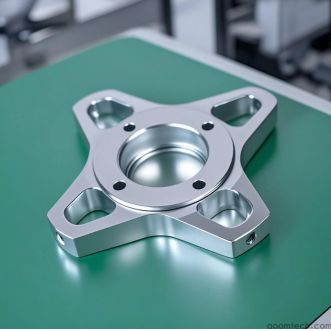
Milling is one of the most common operations in producing non-standard precision parts. A rotating tool removes material to create complex shapes, flat surfaces, and detailed features.
Ball-nose end mills are used for curved surfaces, while flat-end mills are used for flat areas. Proper parameter control ensures high surface quality and dimensional accuracy.
Turning
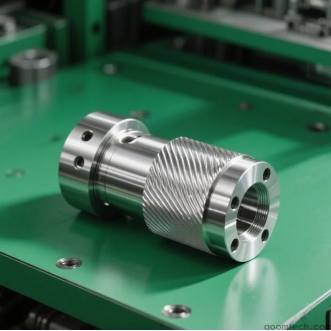
Turning is used to produce cylindrical components. The workpiece rotates while the cutting tool removes material. This process is commonly used for shafts, bushings, and threaded parts.
Maintaining concentricity and surface finish is essential. Improper settings can lead to vibration and dimensional errors.
Drilling and Boring
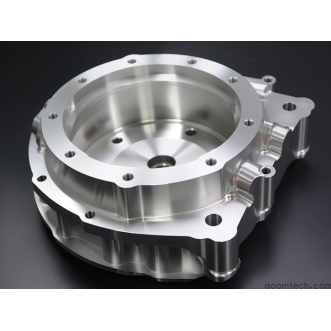
Drilling creates holes, while boring refines and enlarges them to achieve precise dimensions. These operations are especially important in assemblies where alignment is critical, such as robotic systems or mechanical joints.
Quality Control
Quality control is a critical stage in the Custom CNC Machining Process for Non-standard Precision Parts. Since these parts require tight tolerances, inspections are performed at multiple stages.
Tools such as Coordinate Measuring Machines (CMM), hardness testers, and surface profilometers are used to verify accuracy. If a part does not meet specifications, it is either reworked or rejected to maintain quality standards.
Finishing and Post-processing
After machining, finishing processes are applied. These may include deburring, polishing, anodizing, plating, or heat treatment.
These treatments improve surface quality, corrosion resistance, and mechanical strength. For example, polishing enhances appearance, while plating protects against environmental damage.
Benefits of Custom CNC Machining for Non-standard Precision Parts
High Precision
One of the major benefits of custom CNC for non-standard precision components is extremely high accuracy. CNC machines can achieve tight tolerances that are difficult or impossible with manual machining. This is essential for industries like aerospace and electronics, where even small errors can lead to system failure.
Full Customization
Custom CNC machining allows complete design flexibility. Engineers can produce complex shapes, unique geometries, and specialized features based on project requirements. This makes it ideal for innovation-driven industries and research applications.
Cost-effectiveness for Small-batch Production
For small production runs, CNC machining is more cost-effective than traditional manufacturing methods. There is no need for expensive molds or tooling, making it ideal for prototypes, custom machines, and limited production projects.
Challenges in Custom CNC Machining Non-standard Precision Parts
Complex Geometries
One major challenge is machining complex shapes. Non-standard parts often include deep cavities, curved surfaces, and irregular structures. Advanced multi-axis CNC machines, such as 5-axis systems, are often required to complete these tasks accurately.
Tool Wear and Breakage
Hard materials can cause rapid tool wear or breakage. To solve this, manufacturers use high-quality cutting tools, coatings, and optimized cutting conditions. Regular monitoring also helps prevent unexpected tool failure.
Surface Finish and Dimensional Accuracy
Achieving perfect surface quality and precise dimensions can be difficult due to vibration, heat, and tool deflection. Proper machine calibration, sharp tools, and stable cutting parameters are necessary to overcome these issues.
Ensuring a Successful Custom CNC Machining Project
Clear Communication
Clear communication between clients, designers, and machinists is essential. All technical requirements must be clearly defined at the beginning to avoid misunderstandings and production errors.
Partnering with an Experienced Provider
Choosing an experienced CNC machining provider significantly improves project success. Experience ensures better problem-solving, material handling, and precision control. Reviewing past projects and technical capabilities is an effective way to evaluate suppliers.
Prototyping and Testing
Prototyping is an important step before full production. It allows engineers to test design performance, verify dimensions, and identify potential issues early. This reduces risk and improves final product reliability.
Conclusion
The Custom CNC Machining Process for Non-standard Precision Parts is a vital technology in modern manufacturing. It enables the production of highly specialized components with exceptional accuracy, flexibility, and reliability.
Although challenges such as complex geometries and tool wear exist, careful planning, advanced equipment, and professional expertise can ensure successful results. By following proper design, machining, and quality control procedures, industries can achieve high-performance parts that meet demanding real-world applications.
 How to Ensure Precision in CNC
 Small Batch Precision CNC Mach
 What surface finish can CNC ma
 CNC Machining Tolerance Settin