


CNC Machining Process for Plastic Steel Parts
What Is Plastic Steel in CNC Machining?
Let me clear something up first. When we talk about CNC plastic steel processing at our shop, we're not mixing plastic with steel in a pot. Plastic steel refers to engineering-grade composite materials that combine polymer matrices with reinforcing fillers. The result is a material that handles mechanical loads better than standard plastics and resists wear longer. I've machined hundreds of plastic steel parts for clients in automotive, medical, and industrial equipment sectors.
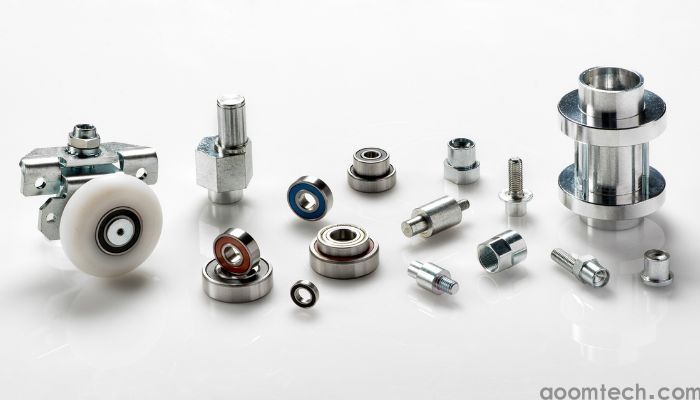
How We Machine Plastic Steel
The challenge with plastic steel is heat. Unlike metals, these composites don't conduct heat away from the cutting edge. Heat builds up fast. If you push the feed too high or run a dull tool, the material starts to melt locally. That ruins the surface finish and can cause dimensional drift. We handle this by keeping spindle speeds moderate — typically 10,000 to 15,000 RPM — and using sharp carbide tools with polished flutes that eject chips cleanly.
Coolant matters too. We use a fine mist system rather than flood coolant. Too much liquid causes thermal shock in the composite and swells the material. Too little and you get melting. We dialed this in over years of trial and error. Now we hold ±0.01 mm on plastic steel parts routinely.
Where Plastic Steel Parts Shine
I see plastic steel used most often in three scenarios. First, lightweight structural components in automotive assemblies — replacing metal parts to cut vehicle weight. Second, medical instrument parts that need to survive autoclave sterilization without corroding. Third, electronic housings where you need dimensional stability across temperature swings.
One client came to us with a connector housing that kept warping in their injection-molded nylon version. We switched them to a glass-filled plastic steel grade, machined it on our 5-axis mill, and the warpage disappeared. The part cost more per unit, but scrap rate dropped to near zero. Sometimes the material upgrade pays for itself.
Surface Finish Options You Can Expect
Plastic steel machines to a smooth finish. We can hit Ra 0.8 μm straight off the cutter. If your part needs a matte texture or a high-gloss polish, we handle that too. Just tell us the end use. For visible interior parts, we recommend a light vapor polish. For functional surfaces that slide against seals, we leave a fine machined finish with controlled texture.
Send your CAD files to chen@aoomtech.com for a quote within 24 hours.
 CNC Machining for Defense and
 CNC Machining for Aerospace: M
CNC Machining for Medical Devi
CNC Machining for Aerospace: M
CNC Machining for Medical Devi
 CNC Precision Machining Parts: