


Guide to CNC Machining of High-Precision Small-Batch Parts
Guide to CNC Machining of High - Precision Small - Batch Parts
The Guide to CNC Machining of High - Precision Small - Batch Parts explains how to produce accurate, reliable components in small quantities using modern CNC technology. These parts are widely used in aerospace, medical, automotive, and electronics industries where precision is critical and failure is not an option. This article provides a practical, easy-to-understand explanation of the full process, from design to final inspection.
Introduction to High - Precision Small - Batch CNC Machining
Significance and Challenges
High-precision small-batch parts play an important role in industries such as aerospace, medical devices, robotics, and electronics. These components are often used in critical systems like aircraft engines, surgical tools, and precision sensors. Even a very small dimensional error can lead to system failure or performance issues.
However, producing these parts in small batches creates several challenges. Manufacturers must balance cost-effectiveness with high accuracy, reduce setup time, and maintain consistent quality across every unit. Unlike mass production, small-batch machining does not benefit from economies of scale, making process control even more important.
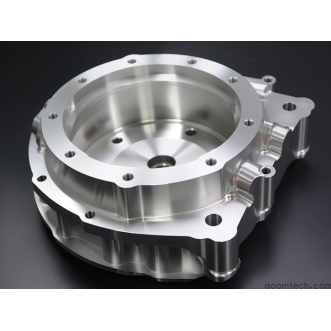
Examples include titanium medical implants, miniature aerospace brackets, and precision connectors in electronic devices.
Pre - machining Considerations for High - Precision Small - Batch CNC Parts
Part Design Optimization
Effective design is the foundation of successful machining. In pre - machining for high - precision small - batch CNC parts, engineers should consider CNC machine capabilities such as axis movement, tooling limitations, and fixture constraints.
Designs should be simplified where possible. Sharp internal corners should be avoided because they increase tool wear and may require special tools. Standard hole sizes, radii, and thread types should be used whenever possible to reduce machining complexity and cost.
CAD software with parametric modeling is highly recommended. It allows quick design changes without rebuilding the entire model, which is especially useful for small-batch production where design updates are frequent.
Material Selection
Material choice has a direct impact on machining performance and final part quality. Key factors include strength, wear resistance, corrosion resistance, thermal stability, and machinability.
In medical applications, titanium alloys such as Ti-6Al-4V are widely used due to their biocompatibility and corrosion resistance. In aerospace, aluminum-lithium alloys provide high strength while keeping weight low. For electronics, stainless steel and engineering plastics are commonly selected for stability and insulation properties.
Material properties also affect cutting speed, tool wear, and surface finish quality. Harder materials require slower cutting speeds and more rigid setups.
CNC Machining Operations
Milling Operations
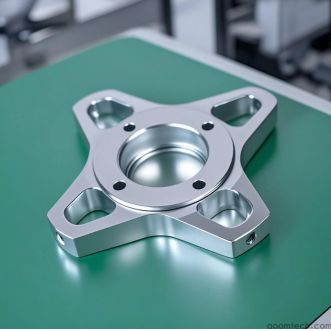
Milling is one of the most flexible processes in CNC machining. It is used to create flat surfaces, grooves, pockets, and complex 3D shapes.
Common tools include:
End mills – used for general cutting and slotting
Face mills – used for removing material from flat surfaces
Ball nose mills – used for curved or contoured surfaces
For high precision work, slower spindle speeds and controlled feed rates are recommended. Light depth of cut improves dimensional accuracy and reduces vibration. Proper cooling also helps maintain stability and surface quality.
Turning Operations
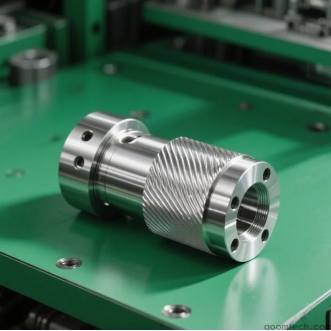
Turning is used for producing cylindrical components such as shafts, pins, and bushings. In CNC lathe machining, the workpiece rotates while the cutting tool remains stationary and removes material.
Common tools include turning inserts for general operations and form tools for specific profiles. Precise diameter control is achieved by carefully adjusting feed rate, spindle speed, and cutting depth.
High-quality surface finishes require stable clamping and proper tool alignment. Any vibration during turning can significantly affect roundness and tolerance.
Drilling and Boring
Drilling is used to create initial holes, while boring refines them to precise dimensions. Drill selection depends on material type and hole diameter.
Boring tools are used when tight tolerances are required. They allow fine adjustment of hole size and improve surface finish quality.
To avoid issues such as drill breakage or misalignment, it is important to use proper coolant, rigid fixturing, and correct spindle speeds. Pilot holes and drill guides can also improve accuracy.
Tooling and Fixturing
Tool Selection and Management
High-quality tools are essential in tooling in high - precision small - batch part machining. Carbide tools are commonly used because of their hardness and wear resistance.
A proper tool management system should track tool life, wear conditions, and replacement schedules. Regular inspection helps prevent unexpected tool failure and ensures consistent quality.
Tool presetting is also important because it ensures correct tool positioning before machining begins, reducing setup errors.
Fixturing Solutions
Stable fixturing is critical for precision machining. Fixtures hold the workpiece in place and prevent movement during cutting operations.
For small-batch production, flexible fixtures such as adjustable vises or modular clamping systems are commonly used. These allow quick setup changes between different part designs.
Fixtures must provide strong support without deforming the part. Precision-ground surfaces and properly aligned clamping forces help maintain accuracy during machining.
Quality Control in High - Precision Small - Batch CNC Machining
In - process Inspection
In-process inspection is essential for maintaining consistent quality. During machining, operators measure critical dimensions using calipers, micrometers, and coordinate measuring machines (CMMs).
This approach is part of quality control in high - precision small - batch CNC machining and helps detect errors early before they become costly problems.
Common inspection points include hole diameter, slot depth, surface flatness, and positional accuracy. Real-time adjustments based on inspection results help maintain tight tolerances.
Final Inspection and Testing
Final inspection ensures that all parts meet design specifications. This includes full dimensional checks, surface finish evaluation, and functional testing if required.
For mechanical parts, load testing or assembly testing may be performed to simulate real working conditions. If a part fails inspection, it may be reworked or scrapped depending on severity.
Using structured inspection checklists improves reliability and ensures no detail is missed.
Conclusion
The Guide to CNC Machining of High - Precision Small - Batch Parts highlights that success depends on careful planning, proper material selection, precise machining operations, and strict quality control. By following best practices in design, tooling, fixturing, and inspection, manufacturers can achieve high accuracy even in small production runs.
Understanding pre - machining for high - precision small - batch CNC parts, applying correct machining strategies, and maintaining strong quality systems are key to producing reliable components for demanding industries.
 How to Ensure Precision in CNC
 Small Batch Precision CNC Mach
 What surface finish can CNC ma
 CNC Machining Tolerance Settin