


High Precision CNC Machining Factory
High Precision CNC Machining Factory: A Complete Guide for Modern Manufacturing
Introduction to High Precision CNC Machining Factory
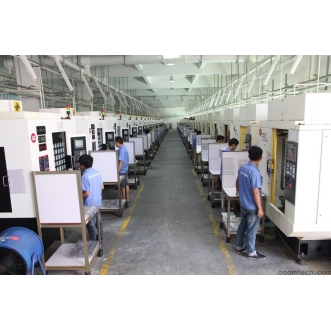
A High Precision CNC Machining Factory is a modern manufacturing facility that uses Computer Numerical Control (CNC) technology to produce parts with extremely tight tolerances and high accuracy. These factories are essential in today’s industrial world because many products require parts that must fit and function with very small margins of error.
Industries such as aerospace, medical devices, automotive, robotics, and electronics rely heavily on high-precision machining. Even a tiny deviation in part size can affect safety, performance, or product lifespan. This is why the role of a High Precision CNC Machining Factory is so important in global manufacturing.
The significance of high-precision CNC machining factories lies in their ability to transform complex engineering designs into real, functional, and reliable components that meet strict international standards.
Significance of High-Precision CNC Machining Factories
Meeting Stringent Industry Standards
High precision CNC machining factories are essential for industries where safety and accuracy are critical. For example, in aerospace manufacturing, engine and structural components must meet micron-level accuracy to ensure flight safety and performance stability.
A turbine blade in a jet engine is a good example. It must be machined with extremely tight tolerances to withstand high temperature, pressure, and rotational speed. Any small error could lead to vibration or failure, which is unacceptable in aviation systems.
Enabling Complex Design Realization
Modern products often have complex shapes and internal structures that cannot be made using traditional methods. A High Precision CNC Machining Factory uses advanced multi-axis machines to create these complex geometries accurately.
For example, in medical devices such as surgical implants or fluid control devices, internal channels and smooth surfaces must be precisely machined. CNC technology makes it possible to produce such parts consistently, ensuring both functionality and patient safety.
Operations in a High-Precision CNC Machining Factory
Order and Design Handling
The process begins when a factory receives customer drawings and technical specifications. Engineers review the design and may suggest improvements for manufacturability. This step often uses CAD (Computer-Aided Design) and CAM (Computer-Aided Manufacturing) software to convert designs into machine-readable programs.
For example, if a customer designs a part with extremely deep cavities that are difficult to machine, engineers may adjust the structure slightly to improve tool access while maintaining full functionality and precision.
Material Procurement and Inspection
Material selection is critical. High-quality materials such as stainless steel, titanium, aluminum alloys, and engineering plastics are commonly used depending on application needs.
Incoming materials are strictly inspected for hardness, composition, and structural integrity. For instance, titanium is widely used in aerospace and medical industries due to its strength and corrosion resistance, but its hardness requires special cutting tools and slower machining speeds.
CNC Machine Setup and Programming
Technicians set up CNC machines by installing tools, fixtures, and calibration systems. Programmers then define tool paths, spindle speeds, feed rates, and cutting depths.
Precision programming is essential. Even a small error in tool path calculation can lead to dimensional deviation. Many factories simulate machining processes before actual production to ensure accuracy and reduce risk.
Machining Processes
Milling
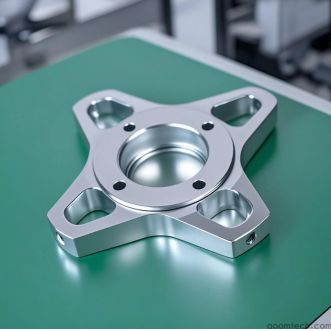
Milling is used to create flat surfaces, grooves, and complex 3D shapes. Carbide cutting tools are commonly used. Coolant systems help reduce heat, preventing material expansion that could affect accuracy.
Turning
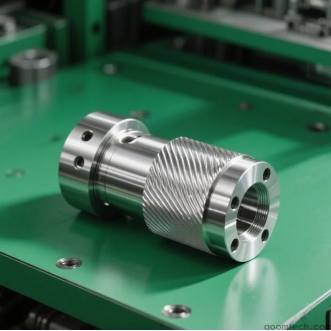
Turning involves rotating the workpiece while a cutting tool shapes it into cylindrical or conical forms. It is widely used for shafts, pins, and mechanical connectors where diameter precision is critical.
Grinding
Grinding is a finishing process used to achieve extremely smooth surfaces and tight tolerances. It is often the final step for parts requiring ultra-high precision.
Quality Control and Inspection
Quality assurance is a core part of every High Precision CNC Machining Factory. Advanced tools such as Coordinate Measuring Machines (CMM), optical comparators, and surface roughness testers are used to inspect parts.
For example, if a CMM detects a dimensional deviation in a batch of parts, engineers immediately analyze the machining process, adjust tool wear compensation, or recalibrate machines to correct the issue before continuing production.
Benefits of High-Precision CNC-Machined Parts
Enhanced Product Performance
Precision-machined parts improve overall product performance by reducing friction, increasing efficiency, and extending product lifespan. In automotive engines, for example, precisely machined fuel injection components help improve combustion efficiency and reduce emissions.
Interchangeability and Assembly Ease
High precision ensures that parts are consistent and interchangeable. This reduces manual adjustment during assembly and improves production efficiency, especially in mass production environments.
Innovation Facilitation
Advanced machining capabilities allow engineers to design more complex and innovative products. Without high-precision manufacturing, many modern technologies such as drones, robotics, and medical implants would not be possible.
Challenges Faced by High-Precision CNC Machining Factories
Advanced Equipment and Maintenance Costs
High-precision machines are expensive to purchase and maintain. Regular calibration, tool replacement, and software upgrades are necessary to maintain accuracy, which increases operational costs.
Skilled Labor Shortage
There is a global shortage of skilled CNC operators, programmers, and quality engineers. Training programs are essential but require time and investment.
Meeting Tight Deadlines and Cost Pressures
Customers often demand fast delivery while maintaining high precision. Balancing speed, cost, and quality is one of the biggest challenges in manufacturing operations.
How to Select a High-Precision CNC Machining Factory
Evaluate Experience and Reputation
Choose a factory with proven experience in your industry. A strong track record in producing similar parts increases reliability and reduces production risk.
Assess Equipment and Technology
Modern equipment such as 5-axis CNC machines enables the production of more complex and precise components. Advanced technology directly affects quality and efficiency.
Review Quality Management System
A strong quality system ensures consistency and reliability. Certifications such as ISO 9001 indicate that a factory follows internationally recognized quality standards.
Learn more about quality management standards here: ISO 9001 Quality Management Standard
Conclusion: Partnering with the Right High Precision CNC Machining Factory
A High Precision CNC Machining Factory plays a vital role in modern manufacturing by delivering accurate, reliable, and high-performance components. From aerospace to medical and automotive industries, precision machining supports innovation and product safety.
Understanding the operations in a high-precision CNC machining factory, the benefits of high-precision CNC-machined parts, and the challenges faced by high-precision CNC machining factories helps businesses make better sourcing decisions.
When choosing a manufacturing partner, always evaluate experience, technology level, and quality control systems. Following these principles ensures you find the right partner and achieve long-term production success.
 How to Ensure Precision in CNC
 Small Batch Precision CNC Mach
 What surface finish can CNC ma
 CNC Machining Tolerance Settin