


CNC Mechanical Machining Manufacturer
CNC Mechanical Machining Manufacturer: Operations, Advantages, Challenges, and Selection Guide
Introduction to CNC Mechanical Machining Manufacturer
Understanding CNC Mechanical Machining Manufacturers
A CNC Mechanical Machining Manufacturer is a company that uses computer-controlled machines to produce precise mechanical parts from raw materials such as metal, plastic, or alloy. CNC stands for Computer Numerical Control, meaning machines are operated through programmed instructions instead of manual control.
These manufacturers play a key role in modern industry. They supply high-precision components used in automotive systems, aerospace structures, medical devices, electronics, and industrial machinery. Without them, many advanced products we use today would not be possible to produce at scale and with consistent quality.
Operations of a CNC Mechanical Machining Manufacturer
Order Processing and Design Collaboration
The operations of a CNC Mechanical Machining Manufacturer usually begin with customer orders. Clients provide technical drawings, 3D models, and detailed requirements such as dimensions, tolerances, materials, and surface finish.
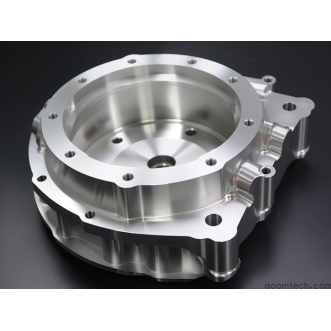
At this stage, manufacturers often collaborate with customers to improve the design for manufacturability. For example, a customer designing a complex housing part may need adjustments to reduce machining time and cost. By modifying internal structures or simplifying tight corners, the manufacturer can help reduce production cost while maintaining performance and quality.
This early cooperation often prevents production issues and improves final product efficiency.
Material Procurement and Quality Assurance
Once the design is confirmed, the manufacturer sources raw materials such as aluminum, stainless steel, carbon steel, brass, or engineering plastics.
Material quality is critical. For example, high-purity steel provides better strength and wear resistance, while low-quality material may cause deformation or cracking during machining or later use. Therefore, strict incoming inspections are performed to verify composition, hardness, and certification compliance.
CNC Programming and Machine Setup
Engineers use CAD/CAM software to convert designs into CNC programs. These programs define toolpaths, cutting speeds, spindle rotation, and feed rates.
For complex parts, such as aerospace brackets with curved surfaces and multiple holes, programmers carefully simulate machining paths to avoid collisions and optimize efficiency. After programming, technicians install tools, fixtures, and workholding systems on CNC machines to ensure stability and accuracy.
Machining Processes
Milling
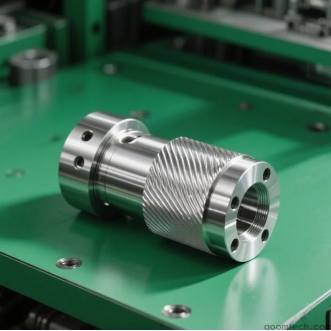
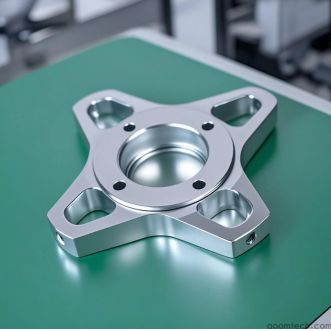
Milling uses rotating cutting tools to remove material and form shapes such as slots, flat surfaces, and cavities. Proper selection of cutting speed and feed rate is essential to achieve smooth surface finishes and tight tolerances.
Turning
Turning involves rotating the workpiece while a cutting tool shapes it into cylindrical or conical forms. Accuracy is controlled by adjusting depth of cut, tool position, and spindle speed.
Drilling and Boring
Drilling creates holes, while boring refines them to achieve precise diameter and surface finish. These operations require high-precision tools to ensure correct alignment and dimensional accuracy.
Quality Control and Inspection
Quality inspection is a core part of production. Manufacturers use calipers, micrometers, and Coordinate Measuring Machines (CMMs) to verify dimensions.
For example, if a CMM detects that a hole position is off by 0.02 mm, engineers may adjust tool calibration or CNC program parameters to correct the deviation. Surface finish inspection ensures parts meet customer requirements for smoothness and durability.
Advantages of Choosing a CNC Mechanical Machining Manufacturer
High Precision and Quality
One of the biggest advantages of a CNC Mechanical Machining Manufacturer is high precision. CNC systems can consistently achieve tight tolerances, such as ±0.01 mm.
For example, aerospace components like engine brackets require extremely accurate dimensions to ensure safety and performance. CNC machining ensures each part is identical and reliable.
Complex Part Production
CNC technology allows manufacturers to produce highly complex shapes that are difficult or impossible using manual methods. This includes parts with internal channels, curved geometries, and multi-axis features.
For instance, a custom hydraulic valve body with internal fluid channels can be machined accurately using multi-axis CNC machines.
Cost-Effectiveness for Medium to Large Batches
For medium and large production runs, CNC machining becomes cost-efficient. Once programming and setup are complete, machines can produce large quantities with minimal variation.
This reduces per-unit cost significantly. Many automotive suppliers rely on CNC Mechanical Machining Manufacturers for consistent and affordable mass production.
Challenges Faced by a CNC Mechanical Machining Manufacturer
High-Tech Equipment and Maintenance
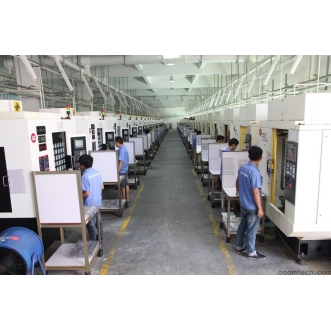
CNC machines are expensive and require regular maintenance. If a key machine fails, production may stop.
For example, a spindle failure in a milling machine can delay an entire production batch. Manufacturers must implement preventive maintenance schedules to reduce downtime risks.
Skilled Labor Requirement
This industry requires skilled CNC programmers, machinists, and quality inspectors. However, hiring and retaining experienced workers can be difficult.
Some manufacturers address this by investing in employee training programs and automation systems to reduce dependency on manual programming.
Meeting Tight Deadlines
Customers often demand fast delivery without compromising quality. Balancing speed and precision is a constant challenge.
For example, urgent aerospace orders may require manufacturers to run machines in multiple shifts and optimize workflows to meet delivery deadlines.
How to Select a CNC Mechanical Machining Manufacturer
Check for Experience and Expertise
When choosing a supplier, experience matters. A manufacturer familiar with your industry understands specific requirements and risks.
For example, a company experienced in automotive parts will better understand fatigue resistance, heat treatment, and tolerance requirements than a general machining provider.
Evaluate Equipment and Technology
Modern CNC machines, such as 5-axis systems, improve accuracy and reduce setup time. A well-equipped manufacturer can handle complex designs more efficiently.
Customers working on advanced aerospace or medical components often prefer manufacturers with advanced multi-axis machining capabilities.
Review Quality Control Measures
A reliable manufacturer should have strict quality control systems, including ISO-based procedures, inspection reports, and traceability systems.
Choosing a supplier with strong quality control helps reduce defects, rework costs, and delivery risks.
Conclusion: Making the Right Choice with CNC Mechanical Machining Manufacturers
Summary and Key Takeaways
A CNC Mechanical Machining Manufacturer plays a critical role in producing precise, reliable, and complex mechanical parts for modern industries. Their operations include design collaboration, material handling, CNC programming, machining, and strict quality control.
Key long-tail considerations such as operations of a CNC mechanical machining manufacturer, advantages of choosing a CNC mechanical machining manufacturer, challenges faced by a CNC mechanical machining manufacturer, how to select a CNC mechanical machining manufacturer, and services offered by a CNC mechanical machining manufacturer are essential for making informed decisions.
By carefully evaluating experience, technology, and quality systems, businesses can choose the right manufacturing partner and ensure long-term production success.
In today’s competitive manufacturing environment, selecting the right CNC partner is not just a technical decision—it is a strategic one.
 How to Ensure Precision in CNC
 Small Batch Precision CNC Mach
 What surface finish can CNC ma
 CNC Machining Tolerance Settin