


CNC Precision Machining Factory
CNC Precision Machining Factory: Complete Guide to Operations, Benefits, and Selection
Understanding CNC Precision Machining Factories
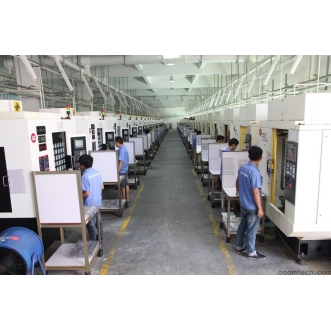
A CNC Precision Machining Factory is a specialized manufacturing facility that uses computer-controlled machines to produce high-accuracy parts. CNC stands for Computer Numerical Control, which means machines follow programmed instructions to cut, shape, drill, and finish materials with very high precision.
These factories are essential in modern industries such as aerospace, automotive, medical devices, robotics, and industrial equipment. They help companies produce reliable components that meet strict size and quality requirements.
Introduction to CNC Precision Machining Factory
A CNC precision machining factory connects digital design with physical production. Engineers create a 3D model, and the factory turns that model into a real part using advanced machines. This process reduces human error and improves consistency.
Because of this, CNC manufacturing has become a key solution for industries that require accuracy, repeatability, and complex part design.
Operations in a CNC Precision Machining Factory
Order Receiving and Design Review
The first step in the operations in a CNC precision machining factory is receiving customer orders. These orders include technical drawings, material requirements, tolerance limits, and surface finish expectations.
Engineers review the design carefully to ensure it can be manufactured efficiently. Sometimes, they discover issues such as overly tight tolerances or shapes that are difficult to machine. In such cases, the factory communicates with the customer to improve the design before production begins. For example, a deep internal groove might be modified to allow better tool access while maintaining functionality.
Programming and Setup
Once the design is approved, technicians use CAD/CAM software to create CNC programs. These programs define tool paths, cutting speeds, and machine movements.
For example, a complex aerospace bracket may require multi-axis machining instructions. Engineers simulate the process digitally to ensure accuracy before running the machine. After programming, operators install cutting tools, fixtures, and raw materials into the CNC machines for production.
Material Procurement and Preparation
The factory sources materials such as aluminum, stainless steel, titanium, and engineering plastics based on project requirements.
Material selection is very important. For example, hardened steel requires stronger cutting tools and slower machining speeds compared to aluminum. Some materials may also need pre-treatment like heat treatment or surface cleaning before machining begins.
Machining Processes
Milling
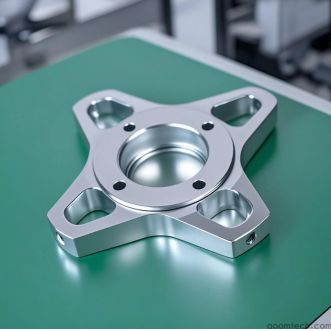
Milling uses rotating cutting tools to remove material and create shapes such as flat surfaces, grooves, and complex contours. To achieve high precision, operators adjust cutting speed, feed rate, and depth depending on material type and part design.
Turning
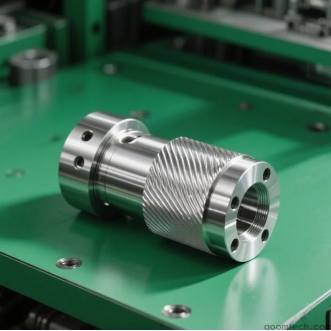
In turning operations, the workpiece rotates while a cutting tool shapes it into cylindrical or conical forms. This process is commonly used for shafts, bolts, and rotating components. Accurate feed control is essential to maintain dimensional precision.
Drilling and Boring
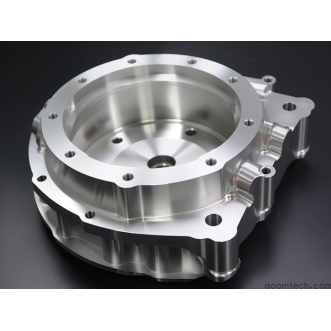
Drilling creates holes in materials, while boring improves hole accuracy and surface quality. High-precision tools ensure correct hole diameter and position, which is critical in assemblies where parts must fit perfectly.
Quality Control and Inspection
Quality control is one of the most important stages in a CNC precision machining factory. Every part is measured using tools such as calipers, micrometers, and coordinate measuring machines (CMM).
For example, if a CMM detects that a machined part deviates by even 0.02 mm from the required tolerance, the factory may adjust machine settings or modify tool wear compensation. This ensures consistent product quality.
Advantages of a CNC Precision Machining Factory
High Precision
The advantages of a CNC precision machining factory include extremely high accuracy. CNC machines can produce parts within very tight tolerances, sometimes as small as ±0.01 mm.
This level of precision is critical in industries like aerospace, where even small errors can affect performance and safety.
Repeatability
Once a CNC program is created, the machine can produce identical parts repeatedly with consistent quality. This is especially useful for mass production.
For example, an automotive company may order thousands of identical engine components, all manufactured with the same specifications and quality standards.
Complex Part Production
CNC factories can produce highly complex geometries that are difficult or impossible to create using traditional methods.
For instance, a medical device component with internal channels and curved surfaces can be manufactured accurately using multi-axis CNC machines.
Challenges Faced by a CNC Precision Machining Factory
High-Tech Equipment and Maintenance
The challenges faced by a CNC precision machining factory often include expensive equipment and maintenance costs. CNC machines require regular servicing to maintain accuracy.
For example, if a machine is not properly maintained, it may experience tool misalignment, leading to production delays and defective parts. Preventive maintenance schedules are essential to avoid such problems.
Skilled Labor Requirement
Operating CNC machines requires skilled workers, including programmers, machinists, and quality inspectors. Training and retaining these professionals can be difficult.
Some factories solve this issue by investing in training programs and offering competitive working conditions to retain experienced staff.
Meeting Tight Deadlines
Customers often require fast delivery while maintaining high precision. Balancing speed and quality is a major challenge.
For example, a factory may need to reorganize machine schedules and run multiple shifts to complete urgent orders without affecting quality standards.
How to Select a CNC Precision Machining Factory
Check Experience and Expertise
When learning how to select a CNC precision machining factory, experience is one of the most important factors. A factory with years of experience is more likely to understand complex machining requirements.
For example, a customer requiring medical-grade components would benefit from choosing a factory with proven experience in healthcare manufacturing.
Evaluate Equipment and Technology
Modern CNC machines, especially 5-axis systems, allow higher precision and efficiency. Factories with updated equipment can handle more complex designs.
A customer producing advanced aerospace parts may choose a factory with multi-axis CNC machines to ensure accuracy and efficiency.
Review Quality Control Measures
Strong quality control systems are essential. A reliable factory should follow international standards such as ISO 9001 quality management systems.
More information about quality standards can be found at ISO 9001 Quality Management Systems.
A factory with strict inspection processes helps reduce production errors and ensures consistent product quality.
Services Offered by a CNC Precision Machining Factory
The services offered by a CNC precision machining factory typically include:
CNC milling and turning services
Prototype development and small batch production
Mass production of precision parts
Surface finishing such as polishing, coating, and anodizing
Quality inspection and measurement reporting
These services help customers move from product design to final production smoothly.
Conclusion: Making the Right Choice with CNC Precision Machining Factories
A CNC Precision Machining Factory plays a vital role in modern manufacturing. It provides high precision, repeatability, and the ability to produce complex parts for many industries.
However, challenges such as equipment maintenance, skilled labor needs, and tight deadlines must also be considered.
When selecting a partner, it is important to evaluate experience, equipment, and quality control systems. By understanding these factors, businesses can choose the right factory and achieve better production results.
Start by comparing multiple factories, reviewing their capabilities, and ensuring they meet your technical and quality requirements before making a final decision.
 How to Ensure Precision in CNC
 Small Batch Precision CNC Mach
 What surface finish can CNC ma
 CNC Machining Tolerance Settin