


CNC Machining: Which Company is the Best?
CNC Machining of Golf Club Molds
Introduction to CNC Machining of Golf Club Molds
The production of high-quality golf clubs depends heavily on the accuracy of their molds. These molds shape the final form, weight balance, and performance of each club. CNC Machining of Golf Club Molds is a modern manufacturing method that uses computer-controlled machines to create highly precise and consistent molds.
The significance of CNC machining for golf club molds lies in its ability to turn digital designs into real, physical molds with excellent accuracy. These molds directly affect how a golf club performs in terms of distance, control, and feel. With CNC technology, manufacturers can produce golf club molds that improve consistency, appearance, and overall product quality.
Importance of CNC Machining for Golf Club Molds
Precision and Consistency
CNC machining ensures extremely high precision when producing golf club molds. Because the process is computer-controlled, every mold follows the exact same design specifications. This is important for mass production, where consistency is required.
For example, when producing a golf club head mold, CNC machining guarantees that each mold has the same weight distribution and aerodynamic shape. This consistency helps every finished golf club perform in a similar and predictable way, which is essential for both professional and amateur players.
Complex Design Realization
Modern golf clubs often have complex shapes designed to improve performance. CNC machining can accurately create these detailed mold structures from digital designs.
For example, a driver head mold with an aerodynamic curved surface or a cavity-back iron design can be precisely manufactured using CNC technology. Without CNC machining, producing such complex shapes with high accuracy would be very difficult.
Process of CNC Machining Golf Club Molds
Design and Programming
The process starts with a digital design using CAD (Computer-Aided Design) software. Engineers create a 3D model of the golf club mold, considering performance needs such as balance, shape, and material.
Next, CAM (Computer-Aided Manufacturing) software converts the design into a CNC program. This program controls tool paths, cutting speed, and machining depth.
For example, when designing a putter mold, engineers may face challenges in programming smooth curves and fine surface details. The CNC program must be carefully optimized to avoid surface errors.
Material Selection and Preparation
Choosing the right material is very important. Common materials include aluminum, steel, and composite materials.
Aluminum is lightweight and easy to machine, making it suitable for prototype molds. Steel is stronger and more durable, often used for long-term production molds. Material hardness affects cutting speed and tool wear, so machining parameters must be adjusted accordingly.
Fixture and Setup
The material must be firmly fixed on the CNC machine using a fixture. This ensures stability during cutting and prevents movement or vibration.
For example, a custom fixture may be used to hold an aluminum block in place while machining a golf club head mold. A stable setup ensures accuracy and prevents deformation during machining.
Machining Operations
Milling: Milling is used to shape the mold. Cutting tools remove material layer by layer to create the final form. Speed and feed rates must be adjusted based on material type.
Drilling and Boring: These processes create holes and internal features in the mold. Precision is important for fitting components like inserts or shafts.
Finishing: Polishing and surface finishing improve mold quality. A smooth surface helps the golf club release easily from the mold and improves final appearance.
Quality Control and Inspection
After machining, the mold is carefully inspected using tools like CMM (Coordinate Measuring Machines), micrometers, and optical devices.
For example, if a CMM detects a small deviation in mold dimensions, corrections are made before production continues. This ensures high-quality output.
Benefits of CNC Machined Golf Club Molds
High-Quality Output
CNC machining ensures excellent mold quality, which leads to better-performing golf clubs. Every detail is controlled with high accuracy.
Cost-Effectiveness for Large Production
Although setup costs are high, CNC machining becomes cost-effective in medium and large-scale production because it reduces labor and improves efficiency.
Design Flexibility
Designs can be easily updated in CAD software and reprogrammed for CNC machines. This allows fast development of new golf club models.
Challenges in CNC Machining Golf Club Molds
Maintaining Precision over Large Surfaces
Large molds may face issues such as tool wear and machine vibration. These can affect accuracy over time.
Complex Surface Machining
Golf club molds often have curved and irregular shapes. Programming and machining these surfaces require advanced skills and careful control.
Tool Wear and Breakage
Hard materials can cause tools to wear quickly. Manufacturers must manage tool life using cooling systems and optimized cutting paths.
Applications of CNC Machined Golf Club Molds
Professional Golf Equipment
High-end golf brands use CNC machining to produce professional-grade clubs with excellent performance and precision.
Custom Golf Club Production
CNC machining allows manufacturers to create custom golf clubs tailored to individual players, including personalized weight balance and design.
Mass Market Manufacturing
Large-scale manufacturers use CNC machined molds to produce affordable and reliable golf clubs for beginners and intermediate players.
Conclusion
CNC Machining of Golf Club Molds plays an important role in modern golf club manufacturing. It provides high precision, design flexibility, and consistent quality. Although there are challenges such as tool wear and complex programming, the benefits are much greater for both small and large production.
Understanding the importance of CNC machining helps manufacturers improve product quality and efficiency. As technology continues to improve, CNC machining will remain a key method in producing advanced golf equipment.
CNC Machining Services for Large-Scale Manufacturing
Introduction to CNC Machining Services for Large-Scale Manufacturing
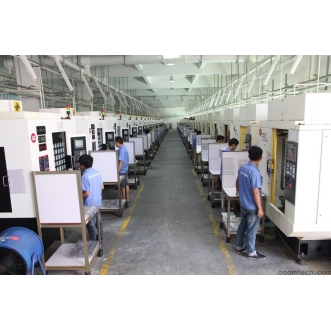
In modern industry, CNC machining services play a very important role in large-scale manufacturing. These services use computer-controlled machines to produce large quantities of parts with high accuracy and speed.
The significance of CNC machining in large-scale manufacturing is that it helps companies produce consistent, high-quality products efficiently. Many industries such as automotive, electronics, and consumer goods rely on CNC machining services to meet production demands.
Significance of CNC Machining in Large-Scale Manufacturing
High-Volume Production Capability
CNC machines can operate continuously with minimal manual intervention. This makes them ideal for producing large quantities of parts in a short time.
For example, automotive companies use CNC machining to produce engine components in large volumes while maintaining consistent quality.
Precision and Consistency
In large-scale production, every part must meet the same standard. CNC machining ensures that all parts are made with high precision.
For example, in electronics manufacturing, even small parts must fit perfectly. CNC machining ensures that every component is identical and reliable.
Features of CNC Machining Services for Large-Scale Manufacturing
Advanced Equipment and Technology
Modern CNC machining services use advanced machines such as multi-axis CNC systems and high-speed machining centers.
For example, 5-axis CNC machines can produce complex aerospace components with high precision in large quantities.
Customization Options
Even in large-scale production, CNC machining allows customization. Manufacturers can adjust designs without stopping the entire production system.
For example, furniture manufacturers can produce customized parts in bulk while still meeting specific customer needs.
Benefits of Large-Scale CNC Machining Services
Cost-Effectiveness
Although initial investment is high, CNC machining reduces labor costs and production errors, making it cost-effective in the long term.
Shortened Lead Times
CNC machines work quickly and efficiently, helping companies meet tight deadlines.
For example, consumer product manufacturers can bring new products to market faster using CNC machining services.
Challenges in Large-Scale CNC Machining Services
Initial Investment and Setup Costs
Setting up CNC machining systems requires investment in machines, software, and training. This can be a challenge for some companies.
Maintaining Quality at Scale
As production increases, maintaining consistent quality becomes more difficult. Strong quality control systems are needed to ensure standards are met.
How to Select CNC Machining Services for Large-Scale Manufacturing
Assess Experience
It is important to choose a service provider with experience in large-scale production. Experienced providers understand how to manage high-volume manufacturing efficiently.
Evaluate Equipment and Technology
Modern and advanced machines ensure better quality and faster production. Companies should check whether the provider uses updated CNC systems.
Review Quality Control Systems
A strong quality control system ensures that every part meets required standards. This helps avoid defects and production issues.
Conclusion
CNC machining services for large-scale manufacturing provide an efficient and reliable solution for producing high-quality parts in large volumes. They offer precision, speed, and flexibility, making them essential in modern industry.
Although challenges such as cost and quality control exist, proper planning and the right service provider can help overcome these issues. Understanding CNC machining services helps manufacturers improve productivity and competitiveness in the global market.
 How to Ensure Precision in CNC
 Small Batch Precision CNC Mach
 What surface finish can CNC ma
 CNC Machining Tolerance Settin