


3 Tips to Prevent Deformation of Aluminum Parts During CNC Machining
Introduction to Aluminum Part Deformation in CNC Machining
During CNC machining, aluminum parts are very likely to experience deformation. This is a common real-world problem in manufacturing. Aluminum is a soft and lightweight material, which makes it easy to machine, but also more sensitive to heat, cutting forces, and clamping pressure.
When deformation happens, the final part may not match the required design dimensions. This can lead to serious issues such as poor assembly fit, reduced performance, or even complete part failure. For example, a slightly bent aluminum bracket may not align correctly during assembly, causing misalignment in the entire structure. In precision industries like automotive, aerospace, and electronics, even small deformation can lead to costly rework or scrap.
To solve this problem, manufacturers need to apply proper machining strategies. Below are the 3 Tips to Prevent Deformation of Aluminum Parts During CNC Machining, based on practical CNC manufacturing experience.
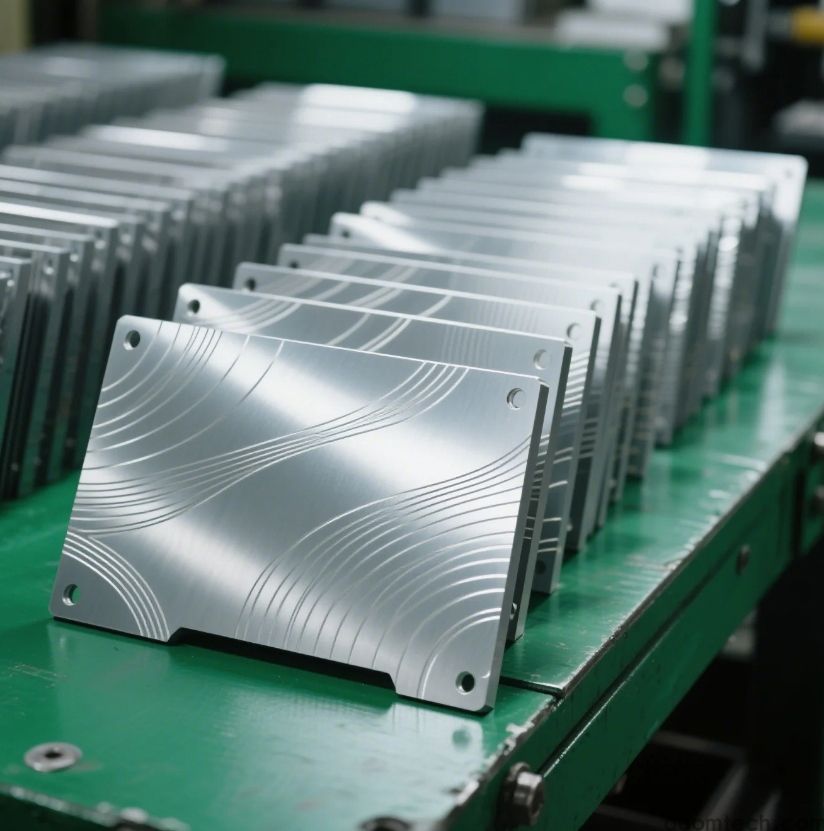
Tip 1: Optimize Cutting Parameters
One of the most effective ways to reduce deformation is through cutting parameter optimization for aluminum part deformation prevention. Cutting parameters directly affect heat generation and cutting force, which are two major causes of deformation.
Spindle Speed and Feed Rate
Spindle speed refers to how fast the cutting tool rotates, while feed rate is how fast the tool moves through the material. If spindle speed is too high or feed rate is too low, excessive heat can build up. This heat causes aluminum to expand, leading to distortion during machining.
A better approach is to balance both parameters:
Use higher spindle speed with a moderate feed rate to reduce cutting force per tooth.
Avoid extremely slow feed rates, which increase friction and heat.
Adjust settings based on tool type, coating, and aluminum grade (such as 6061 or 7075).
As a general guideline, aluminum machining often uses high spindle speeds and relatively faster feed rates compared to steel. However, the optimal combination should always be tested based on machine capability and part geometry.
Depth of Cut
Depth of cut also plays an important role in controlling deformation. A large depth of cut increases cutting force, which can bend or distort thin-walled aluminum parts.
To reduce risk:
Use a smaller depth of cut for finishing operations.
Apply multiple passes instead of one heavy cut.
Separate roughing and finishing strategies clearly.
For example, a roughing pass can remove most material quickly with a moderate depth of cut, while the finishing pass uses a lighter cut to achieve final precision without stressing the part.
Tip 2: Improve Clamping and Fixturing
Proper workholding is essential for clamping and fixturing to prevent aluminum part deformation. Even with perfect cutting parameters, poor fixturing can still cause bending or warping.
Proper Clamping Design
Clamping systems must hold the part securely without applying excessive localized force. Aluminum is soft, so too much pressure can easily leave marks or deform the surface.
Effective solutions include:
Using soft-jaw vises to reduce direct hard contact.
Custom fixtures that match the shape of the part.
Multiple contact points to distribute force evenly.
Using protective pads between clamp and workpiece.
This helps spread clamping force across a larger area, reducing stress concentration that leads to deformation.
Fixture Location and Alignment
Fixture setup accuracy is equally important. If the fixture is not aligned correctly on the CNC machine table, uneven cutting forces can occur during machining.
To ensure correct setup:
Use a dial indicator to check parallelism and alignment.
Verify fixture positioning before starting machining.
Ensure workpiece reference surfaces are stable and clean.
Accurate fixturing ensures that cutting forces are applied evenly, improving both precision and dimensional stability.
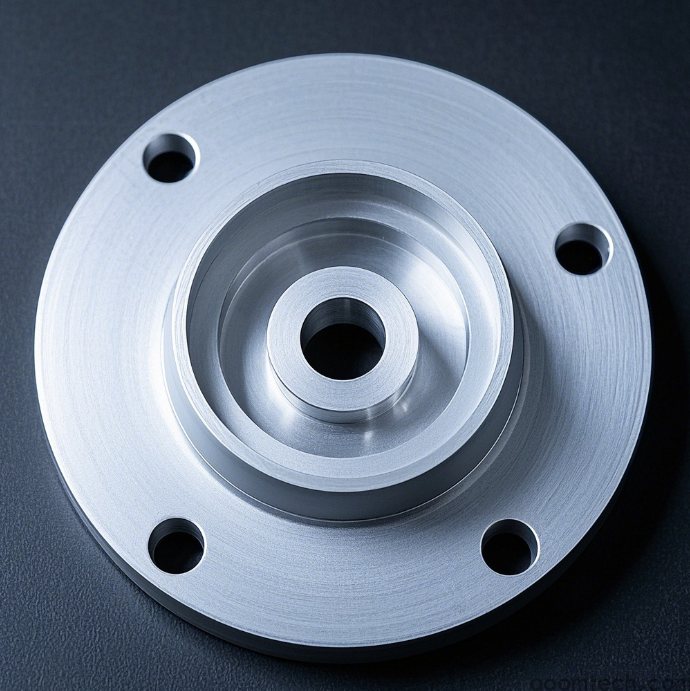
Tip 3: Control Heat Generation
Heat is one of the main causes of aluminum deformation. Effective heat control to stop aluminum part deformation in CNC machining is essential for stable results.
Coolant Application
Coolant helps reduce cutting temperature and improves chip removal. For aluminum machining, water-based coolants are commonly used due to their strong cooling performance.
Proper coolant use includes:
Flood cooling for high-speed or heavy cutting operations.
Mist cooling for detailed or light machining tasks.
Ensuring coolant reaches the cutting zone directly.
Coolant not only reduces heat but also prevents chip buildup, which can otherwise increase friction and cause additional deformation.
Tool Selection and Maintenance
Cutting tool condition has a direct impact on heat generation. A sharp tool cuts cleanly with less force, while a worn tool increases friction and heat.
Best practices include:
Using sharp carbide tools designed for aluminum machining.
Choosing polished or coated tools (such as TiB2 or ZrN coatings) to reduce friction.
Regularly inspecting tools for wear, chipping, or dull edges.
Replacing tools before they become too worn helps maintain stable cutting conditions and prevents unnecessary heat buildup.

Conclusion
Aluminum part deformation is a common challenge in CNC machining, but it can be effectively controlled with the right approach. By applying the 3 Tips to Prevent Deformation of Aluminum Parts During CNC Machining—optimizing cutting parameters, improving clamping and fixturing, and controlling heat generation—manufacturers can significantly improve part accuracy and stability.
These methods are widely used in modern CNC machining industries and are essential for producing high-quality aluminum components with tight tolerances. With proper process control and attention to detail, deformation can be minimized, resulting in better performance, fewer defects, and lower production costs.
 Process of Custom High-Precisi
 CNC Machining Parameter Settin
 5 Key Tips for CNC Machining o
 Small-batch Precision Parts 5-