


How to Select CNC Machining Parts Manufacturers
How to Select CNC Machining Parts Manufacturers
Introduction to Selecting CNC Machining Parts Manufacturers
The Importance of Making the Right Choice
Choosing the right CNC machining parts manufacturer is very important for businesses and individuals who depend on precision components. The right partner can provide high-quality parts, on-time delivery, and cost-effective solutions. When the choice is correct, production runs smoothly and product performance stays reliable.
However, a wrong decision can cause serious problems such as poor-quality parts, production delays, communication issues, and higher overall costs. This is why understanding How to Select CNC Machining Parts Manufacturers is essential before starting any project.
Factors in Choosing CNC Machining Parts Manufacturers
Quality Assurance
Quality assurance is one of the most important factors in selecting a manufacturer. A reliable company should have a complete quality control system to ensure every part meets required standards.
This includes in-process inspections using tools such as calipers, micrometers, and Coordinate Measuring Machines (CMMs) to confirm dimensional accuracy. Final inspections may also include non-destructive testing (NDT) to detect internal defects.
Certifications like ISO 9001 are also important because they show that the manufacturer follows standardized quality management systems. For example, a strict quality control process can ensure that a CNC-machined automotive engine part meets all safety and performance requirements without failure.
Experience and Expertise
Experience plays a key role when choosing a manufacturer. Companies with many years in the industry are more likely to understand complex machining challenges and provide stable solutions.
It is helpful to choose manufacturers that have worked on similar projects or industries. Their ability to handle different materials such as aluminum, steel, and plastics, as well as processes like milling, turning, and drilling, shows strong technical expertise.
For example, an experienced manufacturer may successfully produce an aerospace component with complex internal structures that would be difficult for less experienced companies to handle.
Technology and Equipment
Modern equipment is essential for producing accurate and high-quality parts. Advanced CNC machines with multi-axis functions, high-speed machining, and smart control systems improve both precision and efficiency.
When evaluating manufacturers, it is important to check the age of their machines, how often they are maintained, and whether they regularly upgrade their equipment. A company using modern technology is more likely to meet strict design requirements.
For instance, a five-axis CNC machine can produce highly complex 3D shapes in a single setup, improving accuracy and reducing production time.
Production Capacity
Production capacity must match your project needs. Some projects require small prototype batches, while others need large-scale mass production.
A strong manufacturer should have enough CNC machines, skilled operators, and efficient production scheduling systems. If capacity is too limited, it can lead to delays and missed deadlines.
For example, a manufacturer with limited machines may struggle to complete a large order of electronic parts, causing delays in product launch schedules.
Cost-effectiveness
Cost is always an important factor, but it should not be the only consideration. A good manufacturer offers fair pricing while maintaining quality standards.
It is recommended to compare quotes from multiple suppliers and review what is included, such as materials, finishing, and inspection costs. Sometimes a slightly higher price offers better long-term value through higher quality and fewer defects.
Negotiation tips include asking for volume discounts or suggestions to optimize design for lower production cost without reducing performance.
Evaluating CNC Machining Part Manufacturers
Customer Reviews and Testimonials
Customer feedback is a useful way to evaluate reliability. Reviews on industry websites, forums, and business directories can show real customer experiences.
Positive reviews often indicate good communication and consistent quality, while negative reviews may reveal issues such as delays or poor workmanship.
For example, a company might avoid a manufacturer after reading multiple reviews about late deliveries and inconsistent part quality.
Factory Visits (if possible)
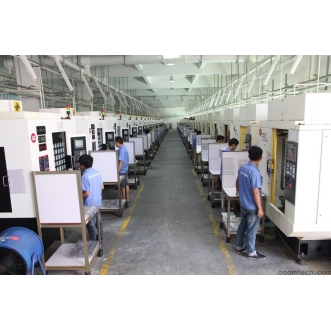
Visiting a factory provides direct insight into how a manufacturer operates. You can observe equipment condition, production flow, and quality control procedures.
A clean, organized, and well-managed factory usually reflects strong production discipline. On the other hand, outdated machines or poor organization may indicate potential risks.
For example, a visit might reveal that a supplier uses old machines that cannot meet modern precision requirements, helping you avoid future problems.
Communication and Customer Service
Good communication is essential for smooth cooperation. A reliable manufacturer should respond quickly, provide clear updates, and be open to feedback.
Strong customer service helps solve problems quickly and avoids misunderstandings during production.
For example, if a design issue appears during production, a responsive manufacturer can quickly suggest solutions and prevent delays.
Tips for Selecting CNC Parts Manufacturers
Request Samples
Requesting samples is a practical way to check quality before placing large orders. You can evaluate dimensions, surface finish, and overall workmanship.
This step helps confirm whether the manufacturer can meet your expectations. If sample quality is poor, it is better to look for another supplier early.
Check for Customization Capabilities
If your project requires special designs, customization ability is very important. A good manufacturer should understand technical drawings and offer design support if needed.
They should also be flexible in adjusting processes to meet unique requirements.
For example, a manufacturer with strong customization skills can help produce a specialized medical device part that requires very tight tolerances.
Assess Supply Chain Reliability
A stable supply chain ensures smooth production. Manufacturers must be able to source raw materials on time and manage risks such as shortages or delays.
If supply chain management is weak, production schedules may be affected.
For example, a shortage of a specific metal alloy could delay an entire production batch if the manufacturer does not have reliable suppliers.
Conclusion: Making an Informed Decision on CNC Machining Parts Manufacturers
Understanding How to Select CNC Machining Parts Manufacturers is essential for achieving high-quality results and smooth production. Key factors include quality assurance, experience, technology, production capacity, and cost-effectiveness. In addition, evaluating reviews, visiting factories, and testing communication can help you make a safer choice.
By following these factors in choosing CNC machining parts manufacturers, applying evaluating CNC machining part manufacturers methods, and using practical tips for selecting CNC parts manufacturers, you can reduce risks and improve project success.
Start by researching potential manufacturers based on these criteria and choose a partner that best fits your technical and business needs.
 How to Ensure Precision in CNC
 Small Batch Precision CNC Mach
 What surface finish can CNC ma
 CNC Machining Tolerance Settin