


CNC Machining of Parts for Oil and Gas Industry
CNC machining of parts for oil and gas industry is very different from making ordinary industrial parts. In this field, parts often work under high pressure, in seawater, in sour service with hydrogen sulfide, or in systems where a small leak can become a major safety problem. API standards are widely used for key product groups such as wellhead and tree equipment and valves, while ISO 15156 gives requirements and recommendations for metallic materials used in H2S-containing environments because failure can put people, equipment, and the environment at risk.
For buyers, engineers, and project teams, the biggest pain points are clear: choosing a material that will last, machining hard alloys without losing accuracy, controlling cost, and proving quality with the right records. A good machining plan solves all four problems together. In oil and gas work, the best result usually comes from matching the material, machining method, inspection plan, and product standard before the first chip is cut.
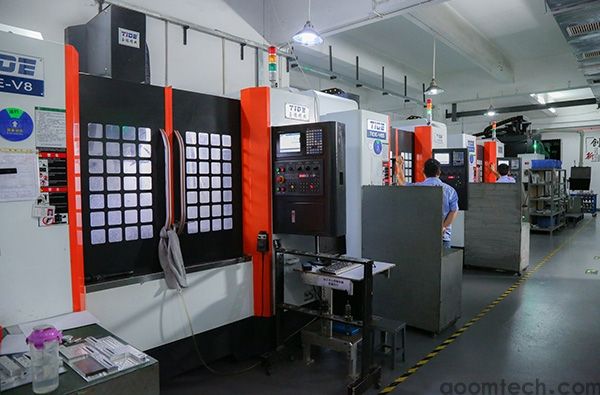
Why Oil and Gas Parts Are More Demanding
Oil and gas components are often pressure-retaining or pressure-controlling parts. API Spec 6A is used for wellhead and tree equipment, and API Spec 6D is used for valves. Both standards focus on consistent manufacturing, testing, and documentation, which tells you something important: in this industry, the part is not only judged by size and shape. It is also judged by whether it can perform safely in service and whether the manufacturer can prove that performance with records.
The service environment also raises the risk level. ISO 15156 was written for metallic materials in H2S-containing oil and gas environments and explains that wrong material choices can lead to costly corrosion damage and serious safety consequences. In simple terms, oil and gas machining is not just about making a part that fits. It is about making a part that keeps working when chemicals, pressure, temperature, and time all work against it.
This is why many shops struggle when they enter this market for the first time. Materials such as duplex stainless steel, super duplex stainless steel, and nickel alloys give strong corrosion resistance, but they are also harder to machine than common steels. Sandvik notes that duplex and higher-alloy stainless grades bring more heat generation, higher cutting forces, and chip-control challenges, while milling these materials can cause thermal cracking, edge chipping, burr formation, and surface-finish issues if the setup is not correct.
Material Selection for Oil and Gas CNC - Machined Parts
Material selection for oil and gas CNC - machined parts should start with the service conditions, not with the machine shop’s stock list. The first questions should be simple: Will the part see H2S, CO2, chlorides, seawater, high temperature, high pressure, erosion, or a combination of these? ISO 15156 is the key reference for metallic materials in sour service, and its purpose is to guide selection and qualification of cracking-resistant materials for oil and gas production equipment.
Duplex stainless steels are often a strong choice when you need both strength and corrosion resistance. Outokumpu states that duplex grades have about a 50/50 ferritic-austenitic structure, high mechanical strength, and high resistance to stress corrosion cracking. It also notes that, for a comparable corrosion level, duplex can offer roughly twice the strength of standard austenitic stainless steels. That matters in oil and gas because higher strength can support slimmer designs and lower material weight without giving up corrosion performance.
For more severe duty, especially offshore and in high-pressure process systems, super duplex is widely used. Outokumpu explains that super duplex grades were developed for high-pressure process systems on offshore installations and that their high strength allowed equipment downsizing and lower material use. This is a very practical lesson for cost - effective CNC machining for oil and gas components: a more expensive alloy can still reduce total cost if it cuts wall thickness, weight, handling time, or long-term maintenance.
Nickel alloys become important when the environment is even more aggressive. Haynes International says HASTELLOY C-276 has outstanding resistance to pitting and crevice attack in chloride-bearing environments and is very resistant to sulfide stress cracking and stress corrosion cracking in sour oilfield environments. This does not mean every part should be made from a nickel alloy. It means the alloy should be considered when duplex or standard stainless grades no longer give enough margin for the real service conditions.
A practical rule is this: do not approve a material only by grade name. Approve it by service, standard, mechanical requirement, corrosion requirement, and documentation package. In oil and gas work, “stainless steel” is not a complete answer. The exact alloy, hardness, supply condition, heat treatment route, and sour-service suitability all matter.
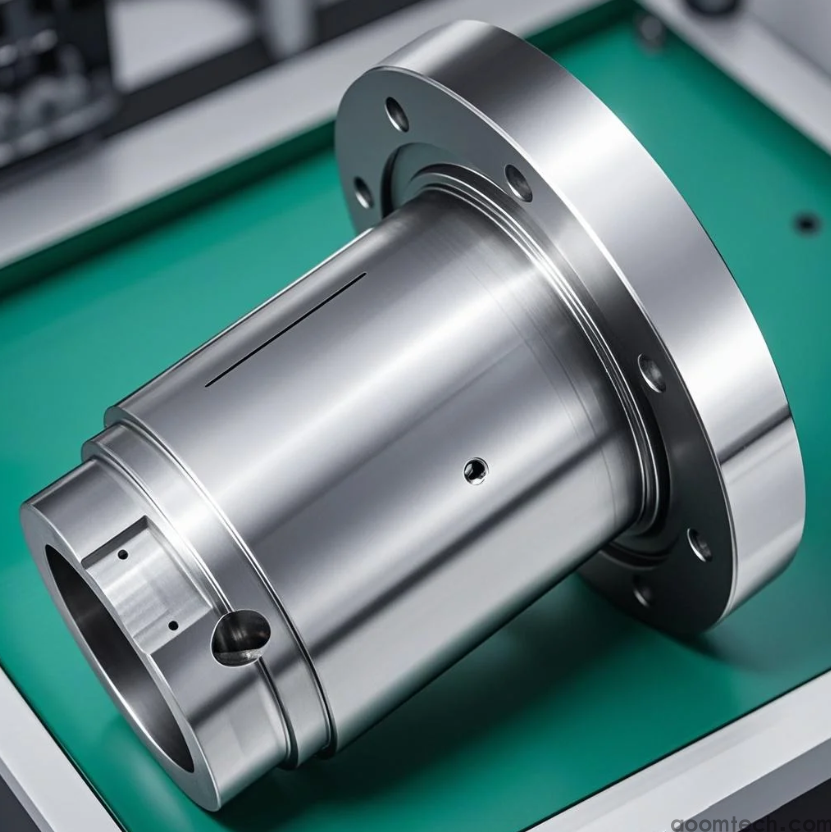
High - Pressure CNC Machining Requirements for Oil and Gas Components
High - pressure CNC machining requirements for oil and gas components are not only about holding a tight tolerance. They also include protecting sealing areas, controlling concentricity, keeping threads and bores stable, and avoiding hidden damage from poor machining practice. API standards for wellhead equipment and valves exist because high-pressure parts need controlled manufacturing and testing, not casual workshop methods.
In real shop work, the highest-risk zones are often internal bores, sealing faces, shoulders, threads, and connection areas. Long bores are especially difficult because vibration becomes a major limit. Sandvik explains that with long overhangs, vibration reduces speed, feed, and depth of cut, and that damped boring bars can create a more secure process with close tolerances, better surface quality, and lower cost per component. For deep internal oil and gas parts, this is not a small detail. It is often the difference between repeatable accuracy and scrap.
Another common problem is heat. In duplex and similar materials, heat can shorten tool life and hurt part quality. Sandvik recommends coolant, sharp cutting edges, positive rake geometry, and tool choices that help chip control and reduce plastic deformation. If a supplier cannot explain how it will control heat, chip flow, vibration, and burrs on a critical pressure part, that is a warning sign.
Machining Process Selection for Oil and Gas Industry Parts
Machining process selection for oil and gas industry parts should follow the geometry of the part and the behavior of the alloy. Outokumpu notes that stainless steel machining commonly includes milling, turning, drilling, and threading, and that the higher the alloying content, the more difficult the material usually becomes to machine. This is why process planning matters so much in oil and gas work: the material and the feature set must be planned together.
Turning is usually the base process for shafts, seats, stems, threaded connections, and round pressure parts. Milling is often used for faces, pockets, patterns, key features, and multi-sided housings. Drilling and boring are critical for flow passages and deep internal features. In practice, the safest route is often to machine as many critical features as possible in one stable setup, because every extra re-clamp adds risk to concentricity and position. This is a practical manufacturing inference based on the stability and tolerance guidance given by tooling suppliers for stainless and duplex machining.
Tool choice also matters more than many buyers expect. For duplex and higher-alloy stainless steels, Sandvik recommends internal coolant, sharp edges, and insert geometries that reduce notch wear and burr formation. Outokumpu also advises using tools and inserts designed for stainless steel and following supplier recommendations to improve chip length and tool life. This is one of the easiest ways to avoid cost creep: the wrong insert is cheaper only until it starts making scrap.
If the part has a long bore, poor accessibility, or a thin-wall area, process stability should be treated as a design requirement, not a shop-floor afterthought. Sandvik states that damped tools are especially useful for long overhangs and can improve surface quality, process security, and metal removal rate. For oil and gas parts, where one unstable bore can ruin a high-value forging, this kind of planning protects both schedule and budget.
Corrosion - Resistant CNC Machining in Oil and Gas
Corrosion - resistant CNC machining in oil and gas does not begin and end with the alloy grade. The machining process itself can support corrosion performance or damage it. Surface tears, burrs, embedded contamination, and poor finishing practice can all reduce the value of an expensive material. Outokumpu warns that when grinding stainless steel, worn abrasives can smear the surface instead of removing metal, and the same tools used for carbon steel should not be used for stainless steel because of the risk of extraneous rust.
That advice is very practical for oil and gas parts. If you machine duplex or nickel alloy parts on shared equipment, your cleaning, tool control, and finishing discipline must be strong. Keep stainless and nickel finishing tools separate from carbon steel work where needed, remove burrs completely from seal grooves and thread starts, and make sure the final surface condition matches the drawing and service requirement. Corrosion resistance is not only a chemistry issue. It is also a surface-integrity issue.
It is also wise to be careful with post-machining cold work and heat treatment history. Haynes notes that cold work can affect the stress-corrosion-cracking resistance of C-276 and that re-annealing may be important for optimum corrosion performance after significant cold work. The practical lesson is simple: after heavy forming, aggressive straightening, or repair work on a corrosion-resistant alloy, confirm the final condition with the material supplier or standard instead of assuming the part is still fully acceptable.
Quality Control in CNC - Machined Oil and Gas Parts
Quality control in CNC - machined oil and gas parts should be planned before production starts. API Q1 is the oil and gas quality management standard for organizations that provide products to the petroleum and natural gas industry, and API says the current edition promotes operational efficiencies and continual improvement. In other words, quality in this industry is supposed to be systematic, documented, and repeatable.
A strong control plan usually starts with four basic items: complete drawing review, raw material traceability, first-article verification, and a formal inspection and test plan. API source-inspection guidance describes an Inspection and Test Plan as a detailed plan that guides source inspection activities against technical information, acceptance criteria, and reporting requirements. That is exactly the level of control buyers should expect for serious oil and gas parts.
Material verification is especially important when expensive alloys have similar appearances but very different service limits. API training material for RP 578 identifies positive material identification, or PMI, as the standard approach for material verification in the industry. For critical parts, buyers should ask a supplier how it handles material certificates, heat numbers, segregation of similar grades, and PMI points before and after machining where needed.
Inspection should also go beyond simple dimensional checks. API source-inspection guidance describes quality-control steps such as visual testing, penetrant testing, radiography, ultrasonic testing, and dimensional verification. The exact methods depend on the part and standard, but the lesson is universal: oil and gas parts need inspection matched to the risk of the feature, not only to the ease of measurement.
For pressure-containing or pressure-controlling products, documentation matters almost as much as the machining itself. API 6D defines requirements for manufacturing valves and includes testing and documentation, while the API Monogram program is designed to support consistent manufacturing to applicable API specifications. A supplier that can machine the part but cannot deliver organized test records, traceability, revision control, and nonconformance handling is not fully ready for oil and gas work.
How to Control Cost Without Losing Reliability
Many teams focus too much on the price per kilogram of material and too little on total manufacturing cost. In oil and gas work, total cost usually includes raw material, machining time, tool wear, scrap risk, inspection, documentation, delays, and field reliability. Outokumpu points out that duplex and super duplex can reduce material weight and even transportation and assembly costs because of their higher strength. This is why the cheapest alloy on paper is not always the cheapest finished solution.
The next cost lever is process stability. Sandvik shows that controlling vibration in long-bore machining can improve surface quality, increase metal removal rate, and lower cost per component. In practical terms, avoiding one rejected high-value body, stem, or valve component can pay for better tooling very quickly. Stable setups, correct coolant delivery, and suitable inserts are cost-control tools, not luxury items.
A third cost lever is planning quality early instead of sorting defects later. API Q1 training material highlights planning for product realization, monitoring, measurement, analysis, improvement, risk assessment, and contingency planning. For buyers, this means the best suppliers usually discuss risks up front: long material lead times, hard-to-machine alloys, special inspection points, subcontracted heat treatment, and pressure-test scheduling. The more clearly these issues are controlled early, the lower the final cost of the project usually becomes.
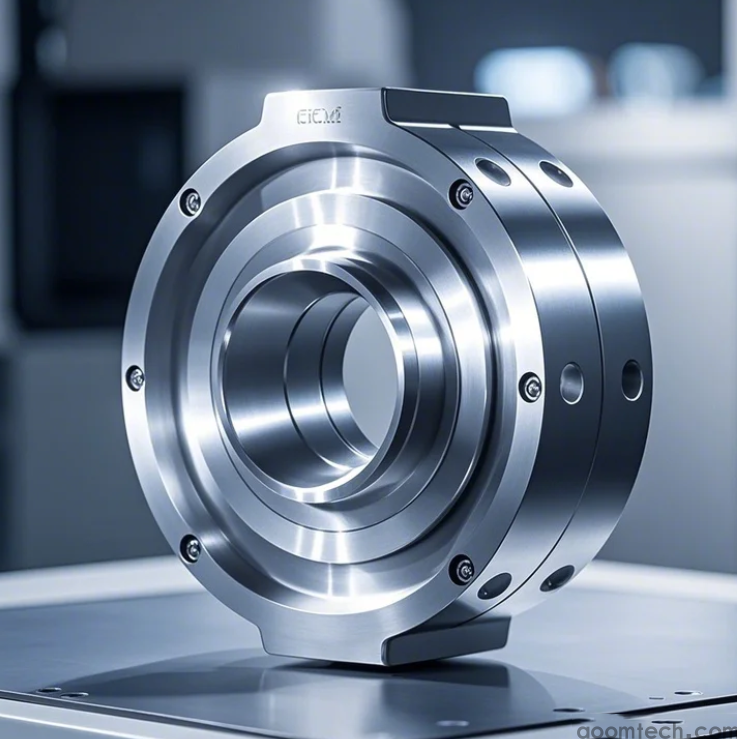
How to Choose the Right CNC Supplier for Oil and Gas Work
If you are selecting a machining partner, ask simple but direct questions. Does the supplier understand API and ISO requirements that matter for your part? Does it have experience with duplex, super duplex, or nickel alloys? Can it show material traceability, PMI practice, inspection planning, and final documentation? Can it support source inspection if your customer requires it? These questions are more useful than asking only about machine size or hourly rate.
It is also smart to verify certifications instead of only trusting a sales presentation. API’s Composite List is a real-time directory for API Monogram licensees and management-system registered organizations, and API says it is the easiest way to check current status. That gives buyers a practical way to confirm whether a manufacturer’s quality claims are current and in scope.
A reliable supplier will usually speak clearly about limits as well as strengths. It should tell you which alloys it machines well, which inspections it performs in-house, which tests are subcontracted, and where long lead times may appear. In oil and gas machining, honesty is part of quality. A supplier that clearly defines risk and control points is often safer than one that promises everything.
Final Takeaway
The best approach to CNC machining of parts for oil and gas industry is to treat machining, material, corrosion resistance, high-pressure duty, and quality control as one system. Start with real service conditions. Choose the alloy by standard and environment, not by habit. Use stable machining methods and the right tooling for difficult materials. Protect surface quality. Demand traceability, PMI, and a real inspection plan. When those steps are in place, you get parts that are not only precise on the machine, but dependable in the field.
 How to Ensure Precision in CNC
 Small Batch Precision CNC Mach
 What surface finish can CNC ma
 CNC Machining Tolerance Settin