


?Common CNC Machining Types
Introduction to Common CNC Machining Types
Importance of Understanding CNC Machining Types
Understanding the different Common CNC Machining Types is very important for manufacturers, engineers, and hobbyists. Each machining type has its own strengths and is suitable for different materials, part shapes, and production needs.
If the wrong machining type is chosen, it can lead to serious problems. For example, using CNC drilling instead of CNC milling for a complex 3D part may result in poor surface quality and extra manual finishing work. Choosing CNC turning for a non-cylindrical part may increase production time and cost. Therefore, selecting the correct machining method helps improve quality, efficiency, and cost-effectiveness.
CNC Milling
Process Description (CNC milling - process and applications)
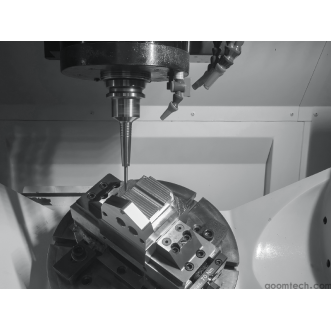
CNC milling is a machining process where a rotating cutting tool removes material from a fixed workpiece. The tool moves along multiple axes, usually 3-axis (X, Y, Z), but also 4-axis or 5-axis for more complex shapes.
Simple process steps:
A CAD model of the part is created.
The design is converted into a CNC program (G-code).
The workpiece is fixed on the machine table.
The cutting tool rotates at high speed and moves along programmed paths.
Material is removed layer by layer until the final shape is formed.
Applications
CNC milling is widely used in many industries. In aerospace, it is used to produce turbine blades and structural parts with complex surfaces. In the automotive industry, it is used for engine blocks, cylinder heads, and gearbox housings. In mold-making, it is used to create plastic injection molds with high precision.
Other examples include electronic housings, robotic parts, and medical device components.
Advantages and Limitations
Advantages:
High precision and excellent surface quality
Can machine complex 3D shapes
Works with metals, plastics, and composite materials
Suitable for prototypes and small-to-medium batch production
Limitations:
High machine and setup cost
Requires skilled programming and operation
Tool wear can occur during long production runs
CNC Turning
Process Description (CNC turning - advantages and limitations)
CNC turning is a machining process where the workpiece rotates while a fixed cutting tool removes material. It is mainly used for cylindrical parts.
Simple process steps:
The raw material is clamped into a chuck.
The workpiece rotates at high speed.
The cutting tool moves along the length or diameter.
Operations such as facing, threading, grooving, and turning are performed.
Applications
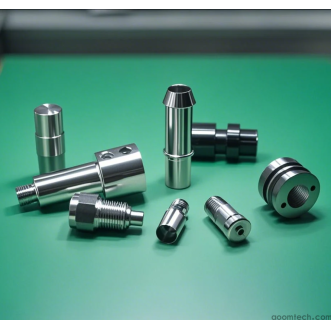
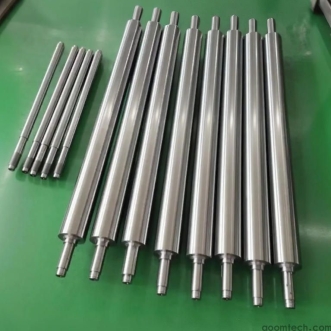
CNC turning is commonly used to manufacture shafts, bolts, bushings, and axles. In the automotive industry, it produces drive shafts and transmission parts. In plumbing systems, it is used for threaded pipes and fittings. It is also widely used in aerospace and industrial machinery components.
Advantages and Limitations
Advantages:
High precision for cylindrical parts
Fast and efficient material removal
Ideal for mass production with consistent quality
Limitations:
Limited to mostly round or cylindrical shapes
Not suitable for complex 3D geometries without additional machining
Setup cost may be high for small batches
CNC Drilling
Process Description
CNC drilling uses a rotating drill bit to create holes in a workpiece. The CNC system controls the position, depth, and speed of drilling.
Simple process steps:
The workpiece is fixed in place.
The drill bit rotates and moves to the programmed position.
The tool drills to a specified depth or passes through the material.
The system may repeat drilling for multiple hole positions.
Applications
CNC drilling is widely used for creating holes for screws, bolts, fluid channels, and electrical connections. In construction, it is used for drilling steel beams for structural joints. In electronics, it is used for printed circuit boards (PCBs). It is also used in automotive and aerospace assemblies.
Advantages and Limitations
Advantages:
High accuracy in hole placement
Fast production of multiple holes
Suitable for many materials
Limitations:
Risk of drill bit breakage in hard materials
Requires proper cooling and chip removal
Limited to hole-making operations
CNC Grinding
Process Description (CNC grinding - applications in industries)
CNC grinding uses an abrasive wheel to remove very small amounts of material. It is mainly used for high-precision finishing and smooth surface requirements.
Types include surface grinding, cylindrical grinding, and internal grinding.
Simple process steps:
The workpiece is securely fixed.
A grinding wheel rotates at high speed.
The wheel removes tiny layers of material.
The CNC system controls precise movement for final finishing.
Applications
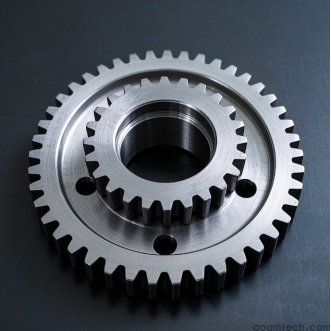
CNC grinding is used in industries requiring very high precision. It is common in bearing production, gear manufacturing, and precision shafts. In aerospace, it is used for turbine blades. In medical industries, it is used for implants and surgical tools. It is also widely used in optical components.
Advantages and Limitations
Advantages:
Extremely high precision and smooth surface finish
Works well with hard materials
High repeatability for batch production
Limitations:
Slow material removal rate
High cost of grinding wheels
Risk of heat damage if not controlled properly
Integrating Different CNC Machining Types
Combining for Complex Parts
In real manufacturing, different Common CNC Machining Types are often combined to produce complex parts. A single machining method is not always enough.
For example, a metal shaft may first be produced using CNC turning to create its cylindrical shape. Then CNC milling is used to add key slots or holes. Finally, CNC grinding is applied to achieve high precision and a smooth surface finish.
Another example is mold production, where CNC milling creates the main shape, drilling creates cooling channels, and grinding ensures final surface quality.
Conclusion
Understanding Common CNC Machining Types such as milling, turning, drilling, and grinding helps manufacturers choose the right process for each application. Each method has unique advantages and limitations, and in modern manufacturing, they are often combined to achieve the best results.
By learning these processes and their applications, businesses can improve production efficiency, reduce costs, and ensure high-quality parts.
 Process of Custom High-Precisi
 CNC Machining Parameter Settin
 5 Key Tips for CNC Machining o
 Small-batch Precision Parts 5-