


Mass Production CNC Machining of Parts
Mass production CNC machining of parts is about more than making a large number of pieces on the same machine. In real factory work, success comes from building a stable process around the machine: repeatable fixturing, planned tool changes, steady chip removal, on-machine checks, and a workflow that keeps the spindle cutting instead of waiting. NIST’s guidance on process monitoring and capability shows that stable control is central to repeatable output, while machine builders such as Haas and Makino highlight pallet systems and external loading as key ways to raise throughput in production environments.
For buyers and production engineers, the main pain points are usually the same: the cost per part stays too high, quality shifts between batches or shifts, the wrong machine is chosen for the part family, and small delays in loading, setup, or inspection turn into large losses at scale. Official guidance from NIST, Renishaw, FANUC, and Seco all point to the same lesson: high-volume profitability depends on process control, low downtime, controlled tool life, and automation that cuts idle time and manual variation.
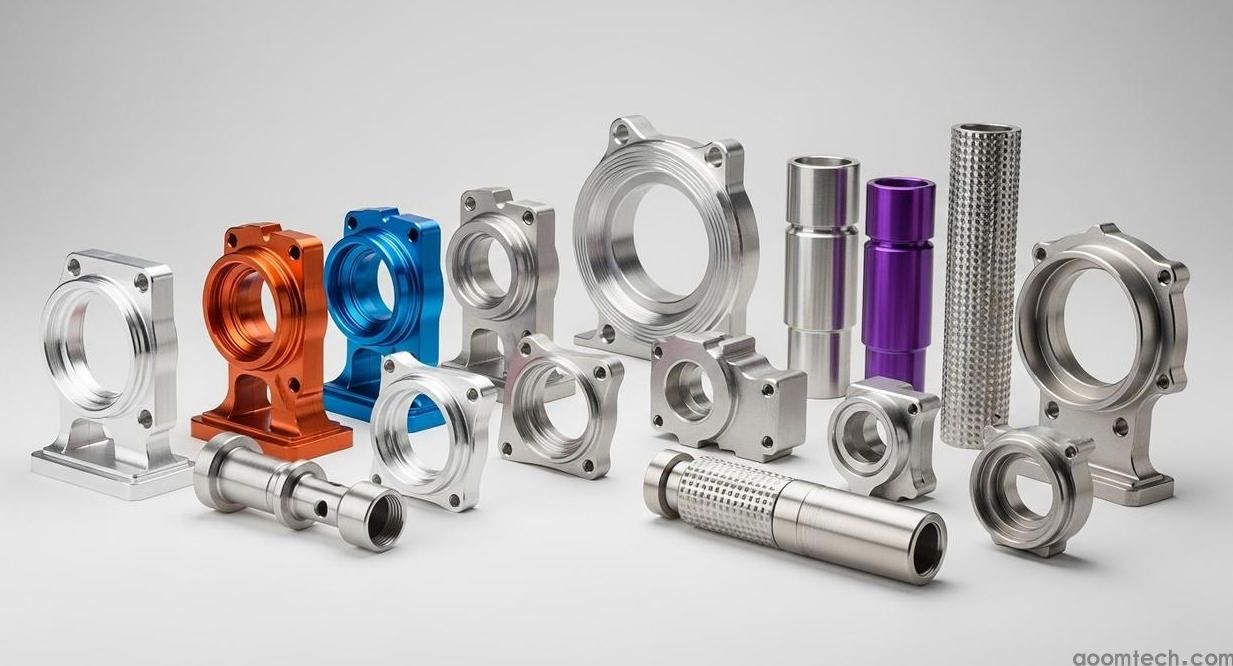
Why Mass Production CNC Machining Is Different
In low-volume work, a shop can sometimes absorb extra setup time, manual inspection, or frequent operator adjustment. In mass production, those small losses repeat hundreds or thousands of times. That is why mass production CNC machining of parts needs a process that is easy to repeat, easy to monitor, and hard to disrupt. NIST explains that control charts are used to routinely monitor quality, and process capability compares the output of an in-control process with the specification limits. In simple terms, a production line must be both stable and capable, not just fast on a good day.
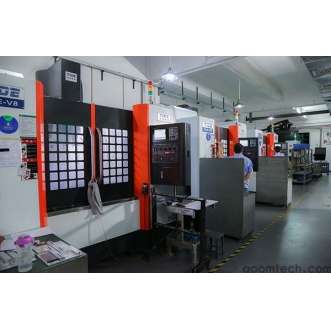
This is also why production shops often move toward pallet systems, horizontal machining centers, machine tending robots, and standard tooling. Haas states that pallet pools increase spindle run time and allow unattended automation, while Makino notes that horizontal machining centers are designed as the core of high-volume machining lines and that one major productivity benefit is loading and unloading outside the cut cycle.
High output needs low idle time. If the spindle stops for loading, tool checks, or waiting on inspection, the cost per part rises quickly. Haas pallet systems are built specifically to stage parts outside the machine and raise run time.
Consistency matters as much as speed. NIST’s statistical process control guidance shows that routine monitoring is required to catch drift before it turns into scrap.
Material flow and chip flow both matter. Okuma and Makino both stress that poor chip evacuation leads to stoppages, bad surface finish, shorter tool life, and lost uptime.
Cost-Saving Strategies for Mass-Production CNC Part Machining
One of the most practical cost-saving strategies for mass-production CNC part machining is to stop looking only at tool price. Seco’s production-economy guidance explains that total cost is the sum of machine cost and tool cost, and that the best cutting speed is the point where the combined total is lowest. The same source also warns that too much attention on the cheapest tooling can raise the overall production cost. For high-volume work, the right question is not “Which insert is cheaper?” but “Which process gives the lowest cost per good part?”
Another major cost lever is setup reduction. NIST defines quick changeover as reducing the time between the last good part of one run and the first good part of the next run, and its manufacturing case studies show that SMED-style work can cut setup time sharply. Even in dedicated mass production, faster setup still matters for tool offsets, fixture replacement, planned maintenance, and part-family changeovers.
Part design also has a direct effect on cost. Protolabs’ machining guidance says that designing with machining in mind can accelerate production time and reduce production costs. For large runs, simple design choices such as realistic tolerances, accessible features, reasonable wall thickness, and fewer special tools can save money on every single part.
Reduce setups. Use palletized workholding, zero-point location, and fixtures that allow outside-the-machine loading whenever possible. This keeps the machine cutting while operators prepare the next part set.
Standardize tools. Quick-change tooling and verified tool data reduce measuring time, lower setup effort, and increase machine utilization.
Automate repetitive handling. FANUC says machine-tending robots can load, unload, and transfer parts, increase uptime, and often lower operating cost compared with manual handling.
Design for machinability. Keep difficult deep features, thin walls, and non-standard details under control so cycle time and tooling complexity do not grow without good reason.
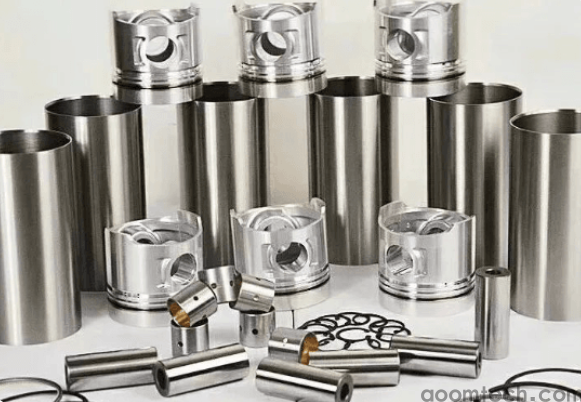
Selecting CNC Machines for Mass-Production of Parts
Selecting CNC machines for mass-production of parts should start with the part family, not with the machine catalog. A compact vertical machining center can work well for simple parts and limited faces. But when the job needs multiple faces, fast loading, better chip drop, and higher automation, a horizontal machine often makes more sense. Makino states that its J-Series horizontal machining centers are designed for mass production of high-volume workpieces, and its machine deployment guidance says horizontal productivity comes in large part from loading and unloading outside the cutting process. Okuma also links horizontal designs with stronger chip evacuation and shorter cycle times in production settings.
For many production programs, the best machine is not simply the fastest spindle. It is the one with the right combination of rigidity, tool capacity, pallet handling, coolant delivery, and maintenance support. Okuma highlights improved chip evacuation, short tool changes, and thermal stability for production machining, while Makino points to high-pressure, high-flow coolant as a way to improve tool life by removing heat and chips from the cutting zone.
Look for pallet automation. Haas notes that pallet pools allow scheduled loading and higher spindle uptime, which is especially useful for unattended running.
Check chip evacuation early. Okuma warns that poor chip evacuation can cause conveyor stoppages, bad surface finish, and shorter tool life.
Do not ignore tool capacity. High-volume lines lose time when tool changes, sister tools, or backup tools are not planned well enough. Makino and Okuma both position larger tool capacity as a production advantage.
Choose automation that fits the run style. FANUC and Okuma both present robot tending, pallet changers, and flexible automation as scalable options rather than one-size-fits-all systems.
Quality Control in Mass-Produced CNC-Machined Parts
Good quality control in mass-produced CNC-machined parts begins before the first production run. The process must have clear part features to monitor, a measurement method that is repeatable, and a reaction plan for drift. NIST’s engineering statistics handbook explains that control charts are used for routine quality monitoring and that process capability measures how well an in-control process fits the specification limits. This matters because a process can run all day and still fail if it is stable but centered in the wrong place or too wide for the tolerance.
On-machine probing is one of the most practical ways to reduce scrap and keep output stable. Renishaw says its probing and tool-setting systems help manufacturers reduce scrap rates, eliminate downtime, and improve component quality. Its product literature also says automated probing speeds part setup and simplifies in-process inspection. For a mass-production program, that means fewer manual touches, quicker offset correction, and faster detection of shift-to-shift variation.
Tool condition should also be monitored, not guessed. Sandvik says machining monitoring systems can confirm that a tool is present, not broken, and running within correct parameters, while Okuma lists tool breakage detection and automatic compensation as ways to protect quality and reduce scrap in high-production environments. This is a very practical point: when a worn or broken tool keeps cutting unnoticed, one tool problem can become an entire bin of bad parts.
Validate the process first. Run capability studies on key dimensions before full release, not after customer complaints. NIST’s capability guidance provides the foundation for this approach.
Use control charts during production. Watch trend movement, not only out-of-tolerance parts. NIST’s SPC guidance stresses routine monitoring and corrective action when needed.
Automate checks where possible. Probing, tool setting, and breakage detection reduce manual variation and help stop problems earlier.
Workflow Optimization in Mass-Production CNC Machining
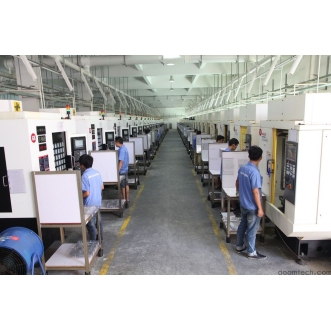
Real workflow optimization in mass-production CNC machining is about removing waiting time from the whole system, not just shortening the cut cycle. NIST’s lean guidance points to quick changeover as a proven way to reduce lost time between runs, and its manufacturing case studies show that better flow and bottleneck management can raise output while cutting work in process. In practice, that means the best production lines are designed so material, tools, programs, and inspection all arrive at the machine in the right order.
Digital tool management also helps more than many shops expect. Sandvik says verified tooling data can reduce programming time, lower tool-related errors, and increase uptime. In mass production, where the same program may run for months, better tool data creates a more reliable link between process planning, CAM programming, setup, and reordering.
Automation should be used to protect flow, not only to replace labor. FANUC explains that machine-tending robots increase uptime and can support continuous operation, while its machine-state logging tools are designed for real-time data tracking and predictive maintenance to reduce downtime. Okuma makes the same point from the maintenance side: scheduled preventive maintenance protects machine performance and helps avoid costly surprises.
Stage raw material and pallets in advance. External loading and pallet scheduling reduce waiting time at the machine.
Track downtime by cause. Machine-state logging and similar tools help separate cutting time from stoppages, alarms, and waiting.
Protect the process with coolant and chip control. Internal coolant and high-flow systems improve chip evacuation and tool life, especially in deeper-hole and high-output work.
Plan maintenance before failure. Preventive maintenance and predictive tools are cheaper than emergency downtime in a production line.
Common Mistakes That Raise Cost or Scrap
A common mistake in mass production CNC machining of parts is trying to save money by buying the cheapest tooling while ignoring machine time, scrap risk, and operator intervention. Seco’s production-economy guidance warns directly against focusing too much on naked tooling cost instead of total production cost. In high-volume work, a tool that lasts longer and runs more predictably is often the cheaper option in the end.
Another mistake is weak attention to chip control. Sandvik’s milling and drilling guidance notes that chip jamming, chip re-cutting, and weak evacuation damage surface finish and process reliability, and it specifically says internal coolant is preferred to avoid chip jamming in deeper drilling. Shops that ignore chip behavior often think they have a tooling problem when they really have a chip-removal problem.
The third mistake is treating quality as an end-of-line inspection task. NIST’s SPC guidance and Renishaw’s probing guidance both point in the opposite direction: quality should be watched during the process, not only after the parts are already made. For mass production, prevention is cheaper than sorting.
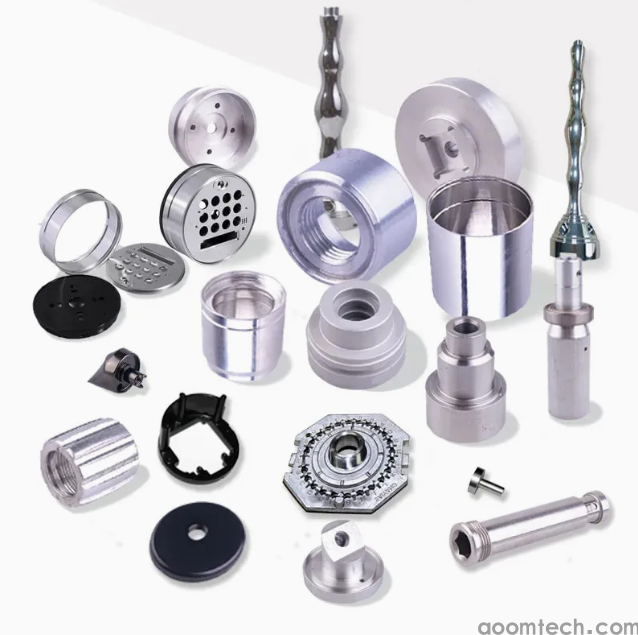
What Buyers Should Ask a CNC Supplier Before Release
If you are outsourcing mass production CNC machining of parts, ask direct questions about capability, control, and uptime. A strong supplier should be able to explain how it manages process capability on key dimensions, how it handles tool life, what level of probing or in-process inspection it uses, and how it keeps chips, pallets, and materials moving without long idle periods. Those are not side details. They are the basic levers that NIST, Renishaw, Haas, FANUC, Makino, and Okuma all link to stable production.
Can you show process capability data for critical dimensions? NIST identifies capability analysis as the comparison between process spread and specification limits.
Do you use probing, tool setting, or breakage detection? These tools help reduce scrap and improve repeatability.
How do you run unattended or extended shifts? Reliable answers usually involve pallet systems, robot tending, or clear staffing and monitoring plans.
How do you control setup and changeover time? NIST’s lean guidance shows setup reduction is a real cost lever, not just a shop-floor slogan.
Do you review the design for machinability before launch? Protolabs’ guidance shows that better part design can shorten production time and lower cost.
The most reliable path to profitable mass production CNC machining of parts is simple to say but hard to execute: choose machines that fit the part family, design parts for machining, shorten setup, automate loading where it makes sense, monitor the process with real data, and treat chip control and maintenance as production tools, not afterthoughts. Shops that do these things usually achieve the goals every buyer wants: lower cost per part, better quality consistency, and a workflow that stays stable even when volume goes up.
 How to Ensure Precision in CNC
 Small Batch Precision CNC Mach
 What surface finish can CNC ma
 CNC Machining Tolerance Settin