


Small-batch CNC Machining of Mechanical Parts
Small - batch CNC machining of mechanical parts
Small - batch CNC machining of mechanical parts is often chosen when a company needs a few parts fast, needs to test a design, or needs several different part types in small quantities. The problem is simple: the machining itself may be fast, but the programming, workholding, proving out the first part, and inspection still take real time. When you spread that preparation over only a few pieces, the price per part rises quickly. At the same time, CNC is still one of the most flexible ways to make precise metal or plastic mechanical parts in low-volume, high-mix work.
This is why buyers often feel stuck between two bad choices: pay high setup costs for a small run, or lower the price by taking risks with tools, process planning, or inspection. The better approach is to control the job before cutting starts. Good design-for-machining decisions, simpler setups, standard tools, and smart in-process inspection can cut cost without giving up quality.
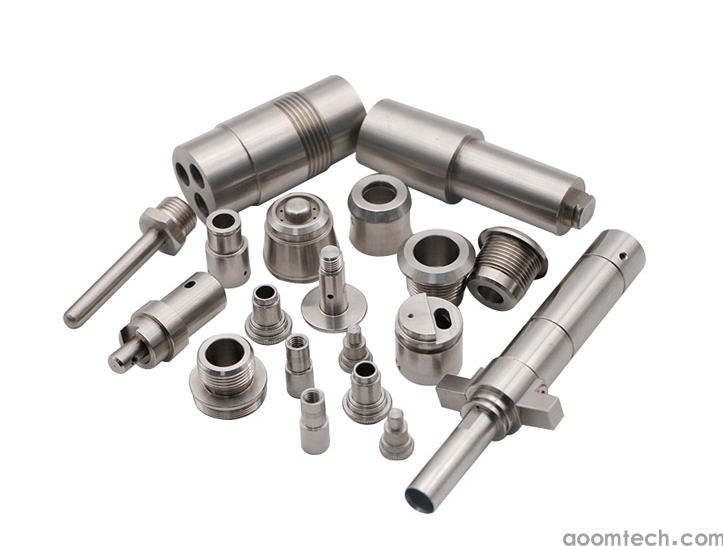
Why small batches cost more than many buyers expect
In small quantities, the fixed work matters more than the cutting time alone. A shop must still review the CAD model, build or select fixtures, load tools, set offsets, prove the program, and inspect the first parts. Xometry notes that low-volume jobs have higher unit cost because setup and machine preparation are spread across fewer units, and that machining time is often the biggest cost driver in CNC pricing.
That does not mean CNC is the wrong process for small runs. It means the process must be planned for high mix as well as low volume. Protolabs describes low-volume, high-mix manufacturing as making many different kinds of parts in small quantities, and highlights CNC machining as a strong fit when you need precise parts, flexible materials, and tight tolerances without committing to large runs.
The main lesson is practical: if you want a lower quote, do not only ask for a cheaper machine hour. Ask how the shop will reduce setups, shorten programming time, reuse workholding, and avoid extra tools. Those changes usually move the price more than arguing over raw material alone.
Practical cost - control in small - batch mechanical part CNC manufacturing
The fastest cost reduction usually comes from part design. Sharp inside corners are a classic problem. Protolabs explains that perfectly square internal corners often force the use of very small end mills or even EDM, both of which are slower and more expensive. A better option is to add corner reliefs or larger internal radii so the shop can use larger cutters and remove material faster.
Deep pockets, thin walls, and over-complicated one-piece designs also push cost up. Very deep pockets take longer to cut and can release residual stress as walls get taller. Thin walls can flex, warp, or break during machining. If geometry becomes too difficult to hold or fixture, Protolabs recommends considering two simpler parts joined with screws or bolts instead of one very complex part. In small batches, that trade can lower total cost because it reduces machining difficulty and setup risk.
Material choice is another strong lever. If the function allows it, choose a material with better machinability. Protolabs notes that aluminum offers excellent machinability and low cost, and specifically describes 6061 as a strong balance of machinability, versatility, and price. In contrast, harder and less machinable metals can add cutting time, tool wear, and inspection effort. In other words, do not buy a hard-to-machine alloy unless the part truly needs it.
Tolerances should also be selective, not global. Protolabs states that fine-tuning tolerances can improve quality and reduce cost, and warns that overly tight requirements can drive secondary operations such as grinding or EDM. Their machining guidance also says tighter tolerances must be clearly called out on a technical drawing for the exact features that need them. The practical rule is simple: tighten only the surfaces that affect fit, sealing, alignment, balance, or bearing performance. Leave non-critical features on a normal shop tolerance.
Small - batch CNC machining techniques for mechanical parts
The best small - batch CNC machining techniques for mechanical parts are the ones that remove human handling steps. Modular workholding is one of the simplest examples. Haas states that modular systems and precision vise jaws help shops tailor clamping to the geometry, minimize setup time, and improve consistency across runs. Autodesk makes the same point in a newer workflow context, saying integrated workholding tools help small shops save time and standardize proven setups.
For multi-sided parts, reducing setups often matters more than buying the most advanced machine. Autodesk and Haas both state that 5-axis or multi-axis machining can reduce the number of setups, improve accuracy, and allow the use of shorter tools. Autodesk also notes that 3+2 machining is often much less expensive than full simultaneous 5-axis when the part mainly needs indexed access to angled faces rather than continuous complex motion. So the smart choice is not “always use 5-axis.” It is “use the simplest process that removes avoidable re-clamping.”
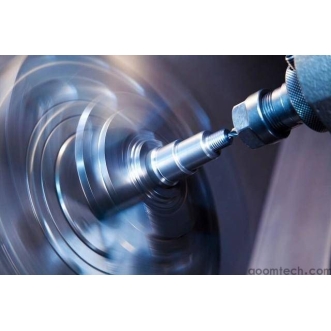
Process choice should also match the part shape. For cylindrical mechanical parts, Protolabs says a lathe is often the best option, and that turned parts can offer better surface finish on cylindrical features at a lower price than trying to mill the same geometry. Their live-tool turning guidance also shows that flats, slots, grooves, and axial or radial holes can often be added in the same turning setup. For shafts, bushings, fittings, spacers, and similar components, that can remove a second operation and lower both cost and variation.
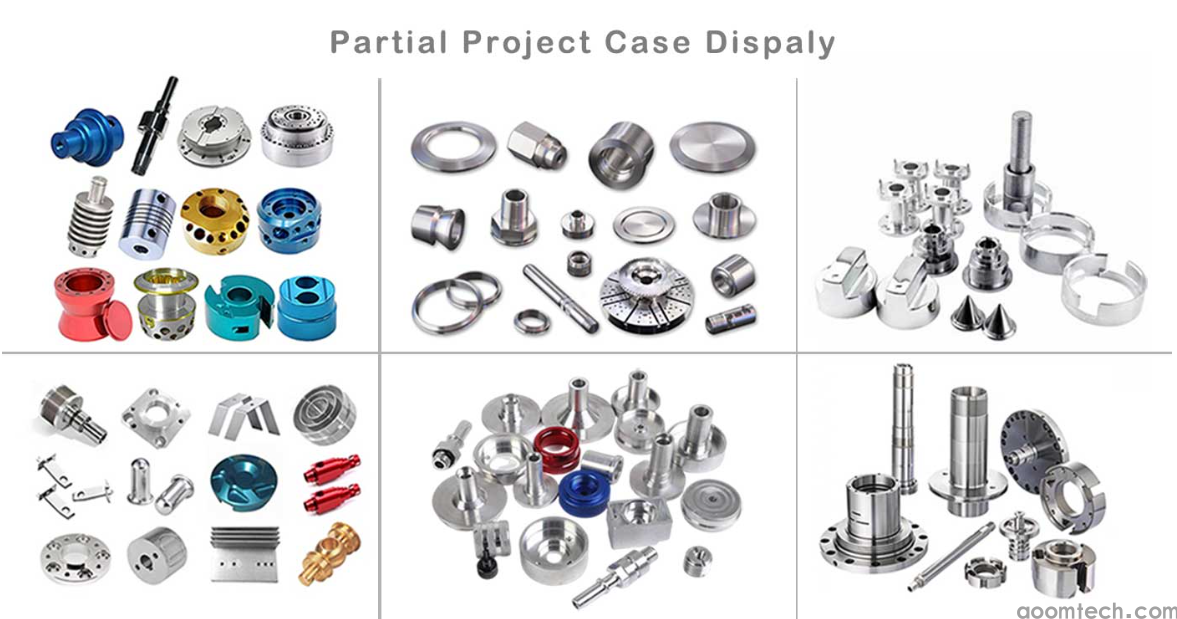
Tool selection for small - batch CNC machining of mechanical components
Tool selection for small - batch CNC machining of mechanical components should focus on speed of changeover, stability, and predictability. In small runs, shops lose money when they spend too much time searching for tool data, building tool assemblies by hand in CAM, or pulling special cutters for one unusual feature. Autodesk and Sandvik both highlight digital tool libraries and automated CAM workflows as a way to reduce programming time, lower the risk of mistakes, and standardize results across jobs and programmers.
Physical tool change time matters too. Sandvik says quick-change tooling increases machine utilization by reducing measuring, setup, and tool change time, and one Sandvik example states that a holder change in a standard turning operation can drop from five to ten minutes to about thirty seconds. For a long production run, that is helpful. For small batches with frequent changeovers, it can be decisive. This is why many successful job shops prefer modular holders, pre-set tool assemblies, and repeatable interfaces rather than rebuilding every tool at the machine.
Stable cutting matters more than chasing the highest feed rate on paper. Kennametal recommends larger-core end mills, the shortest possible overhang, stub-length tools where possible, and balanced holders to reduce vibration. Sandvik gives similar advice: minimize overhang, check tool-holder runout, improve clamping, and use cutter geometry that lowers cutting force when chatter appears. The real-world message is clear. In small-batch work, a stable tool that repeats well is usually better than an aggressive tool that saves a few seconds but creates scrap or rework.
Roughing and finishing should also use the right tool style. Sandvik explains that round inserts or radius-style cutters are common for roughing and semi-roughing in profile milling, while ball nose end mills are used for finishing and super-finishing. For slots, they note that full slotting with an end mill is demanding, so depth should be reduced and chip evacuation considered carefully. In turning, Sandvik also recommends precision coolant for finishing because it improves process security, chip control, and component quality. These are not small details. They are the difference between a short, repeatable process and a job that constantly stops for tool wear, bird nests, or chatter.
How to keep quality consistent from first part to last
Quality control in tiny lots is different from quality control in mass production. NIST states that in small-batch manufacturing of one to ten parts, traditional statistical process control methods are not sufficient, and recommends process-intermittent gauging such as probing on the machine. NIST further notes that probing data can be used to adjust the finish pass or correct tool offsets for the next part. This is one of the most important ideas in modern small - batch CNC machining of mechanical parts: do not wait until the lot is finished to learn that the tool drifted.
Renishaw describes machine tool probing and on-machine tool measurement as established best practice. Their guidance says automated setup, in-cycle gauging, tool setting, and broken-tool detection help reduce scrap, cut downtime, reduce setup time, and improve process control. Haas makes a similar point for its probing system, saying automatic tool-setting cycles allow the operator to multitask while the machine measures tools, and that probing can reduce scrap through tool wear and breakage monitoring.
A practical inspection flow is straightforward. Approve the first piece with a full dimensional check on critical features. Then keep in-cycle checks on the dimensions most likely to move, such as bore size, position-related features, or surfaces affected by tool wear. For stable features, Renishaw documents the common practice of probing every nth component to reduce overall cycle time. That approach gives a good balance between speed and control in small runs, especially when critical features still receive tighter attention than cosmetic ones.
Consistency also depends on documentation, not only inspection hardware. Autodesk states that standardized setup sheets save time, reduce errors, and improve communication between programming and the shop floor. Their FeatureCAM guidance also says automation helps standardize CAM programming across the team and increase consistency. If you want parts one through twenty to look the same, the shop needs the same setup logic, tool naming, offsets, workholding notes, and inspection plan every time the job is rerun.
What to send your machine shop before you order
If the part is simple, a 3D model may be enough for an early quote. If the part has critical fits, sealing faces, positional tolerances, or customer-specific inspection needs, send a proper 2D drawing as well. Protolabs states that tighter tolerances must be specified on a technical drawing for the exact features that need them, and that first article inspection checks all dimensions on the 2D drawing, including GD&T. Xometry’s tolerance guidance also emphasizes fits, datums, GD&T, inspection methods, and CAD drawing preparation.
In practical terms, your package should clearly show the material, the quantity, the finish or coating, the truly critical dimensions, and the inspection level you expect. If you need evidence, ask for a dimensional inspection report or FAI, not only a basic pass/fail inspection. Protolabs lists these report levels separately for CNC machining, and defines FAI as a formal inspection of the start of a run using calibrated or certified measurement equipment to verify that the part meets specification. That level of clarity saves time, cuts back-and-forth emails, and prevents the wrong features from getting the shop’s attention.
The bottom line is that the cheapest small-batch job is rarely the one with the lowest hourly rate. The best results come from parts designed for machining, selective tolerances, repeatable fixturing, stable and easy-to-change tools, and in-process quality checks that catch drift before scrap appears. When those pieces are in place, small - batch CNC machining of mechanical parts can be fast, cost-controlled, and highly consistent even when the order quantity is small.
 How to Ensure Precision in CNC
 Small Batch Precision CNC Mach
 What surface finish can CNC ma
 CNC Machining Tolerance Settin