


CNC Machining Mechanical Parts Customization
CNC Machining Mechanical Parts Customization is a modern manufacturing solution that allows industries to produce highly precise, tailor-made components for specific applications. Instead of relying on standard, off-the-shelf parts, companies can design and manufacture mechanical parts that perfectly match their technical and functional needs.
Introduction to CNC Machining Mechanical Parts Customization
The Significance of Custom-made Mechanical Parts
Custom-made mechanical parts play a critical role in many industries. Standard parts often cannot meet unique design or performance requirements. For example, in the automotive industry, engines require specially designed gears and shafts. In aerospace, aircraft systems depend on lightweight yet strong components with very strict tolerances. In industrial machinery, custom brackets, housings, and connectors help machines operate more efficiently and safely.
These industries rely on precision in CNC machining of custom mechanical parts to ensure performance, safety, and long service life.
Benefits of CNC Machining for Mechanical Parts Customization
Precision and Accuracy
CNC machining is known for extremely high precision. Modern CNC machines can achieve tolerances within microns, ensuring that every part fits perfectly into the final assembly. This level of accuracy is essential for parts like engine components, gears, and hydraulic systems.
High precision reduces wear, improves efficiency, and increases the reliability of the final product.
Versatility in Design
One of the biggest advantages of CNC machining is design flexibility. Using CAD/CAM software, engineers can create highly complex shapes that are difficult or impossible to produce manually. This includes curved surfaces, deep cavities, internal channels, and detailed geometric features.
This makes it possible to produce innovative components that improve product performance and functionality.
Material Compatibility
CNC machining supports a wide range of materials, including aluminum, stainless steel, titanium, copper, plastics, and engineering composites. Each material has different properties such as strength, weight, and heat resistance.
For example, aluminum is lightweight and easy to machine, while titanium is stronger but requires slower machining speeds. Proper material selection ensures the best balance between performance and cost.
The CNC Machining Process for Mechanical Parts Customization
Design and Engineering
The process begins with detailed design using CAD software. Engineers define dimensions, tolerances, and functional requirements. Then CAM software is used to generate toolpaths for CNC machines.
To optimize the process of CNC customizing mechanical parts, designers should avoid sharp internal corners, ensure proper wall thickness, and consider tool accessibility during machining.
Material Preparation
Raw materials are selected based on mechanical and environmental requirements. They are cut into suitable sizes before machining. Some materials may require heat treatment, such as annealing, to improve machinability and reduce internal stress.
Proper material preparation helps ensure stability and consistency during machining.
Machining Operations
CNC machining includes several key operations:
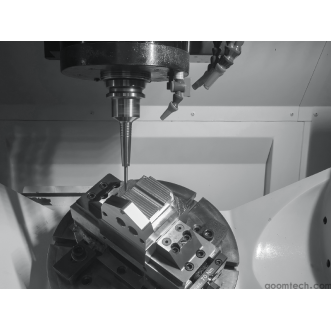
Milling: Used to create flat surfaces, grooves, and complex 3D shapes.
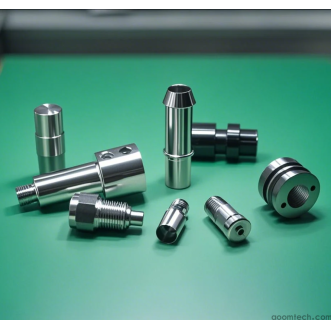
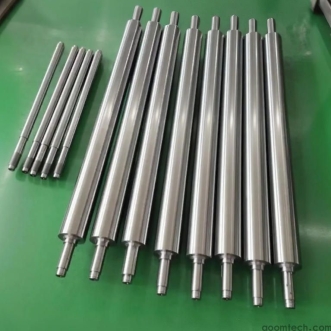
Turning: Used for cylindrical parts like shafts and bushings.
Drilling: Used to create precise holes.
Grinding: Used for ultra-smooth surface finishes and tight tolerances.
Each operation requires proper tool selection, cutting speed, and feed rate to ensure quality results.
Quality Control
Quality control is a key part of CNC machining. During production, measurements are taken using calipers, micrometers, and coordinate measuring machines (CMM).
Final inspection ensures the part meets all design requirements. Non-conforming parts are either reworked or rejected to maintain strict quality standards.
Choosing a CNC Machining Service Provider for Mechanical Parts Customization
Technical Expertise
A reliable service provider should have strong technical experience in machining different types of mechanical parts. They should be capable of handling complex geometries and tight tolerances.
When evaluating a supplier, request sample parts or case studies to assess their capability in handling projects similar to yours.
Quality Assurance
A strong quality system is essential. Look for providers with certifications such as ISO 9001. This shows they follow standardized quality management processes.
A good provider will have clear inspection procedures, documentation systems, and proper handling of non-conforming products.
Cost-effectiveness
Cost is important, but it should not compromise quality. Factors affecting cost include material type, machining time, complexity, and finishing requirements.
To improve cost efficiency, consider design optimization, bulk production discounts, and simplifying unnecessary features.
Working closely with your provider can help reduce costs while maintaining quality standards.
Case Studies of CNC Machining Mechanical Parts Customization
Case Study 1: High-Precision Gear Manufacturing
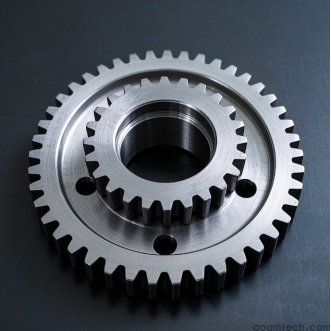
A manufacturing company needed a custom gear with a unique tooth profile for a high-performance machine. The challenge was achieving extremely tight tolerances while maintaining durability.
The CNC provider used advanced multi-axis machining and optimized the design to reduce stress points. Strict inspection ensured every gear met performance requirements. The result was improved machine efficiency and reduced mechanical failure rates.
Case Study 2: Medical Industry Component
A medical equipment manufacturer required a custom mechanical housing for a diagnostic device. The part needed high precision, corrosion resistance, and compliance with medical standards.
The service provider selected medical-grade stainless steel and used precision CNC machining techniques. All parts underwent strict quality inspection and surface treatment to ensure safety and durability.
This project highlights the importance of regulatory compliance and precision in medical applications.
Conclusion
CNC Machining Mechanical Parts Customization is essential for industries that demand precision, reliability, and flexibility. It enables the production of complex components that standard manufacturing methods cannot achieve.
By understanding the process of CNC customizing mechanical parts, from design to quality control, businesses can make better decisions and improve product performance.
When selecting a supplier, focusing on technical capability, quality assurance, and cost balance is key to success. Whether in automotive, aerospace, medical, or industrial applications, CNC machining continues to be a powerful solution for modern manufacturing needs.
 Process of Custom High-Precisi
 CNC Machining Parameter Settin
 5 Key Tips for CNC Machining o
 Small-batch Precision Parts 5-