


Small-batch Precision Parts 5-axis CNC Machining
Introduction to Small-batch Precision Parts 5-axis CNC Machining
The Significance of Small-batch Precision Parts
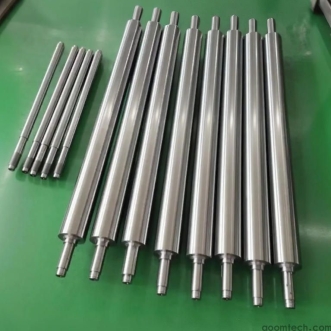
Small-batch precision parts are essential in many modern industries where customized, limited-quantity, and highly accurate components are required. Unlike mass production parts, small-batch components are often designed for prototypes, specialized equipment, or short production runs where flexibility and precision matter more than volume.
For example, in the medical device industry, small-batch precision parts are used to manufacture custom surgical tools and implants tailored to individual patient needs. In the aerospace sector, they are used for testing components and specialized structural elements. The automotive aftermarket also relies on these parts for performance upgrades and replacement components, while the electronics industry uses them for high-precision connectors, housings, and micro-components.
Role of 5-axis CNC Machining
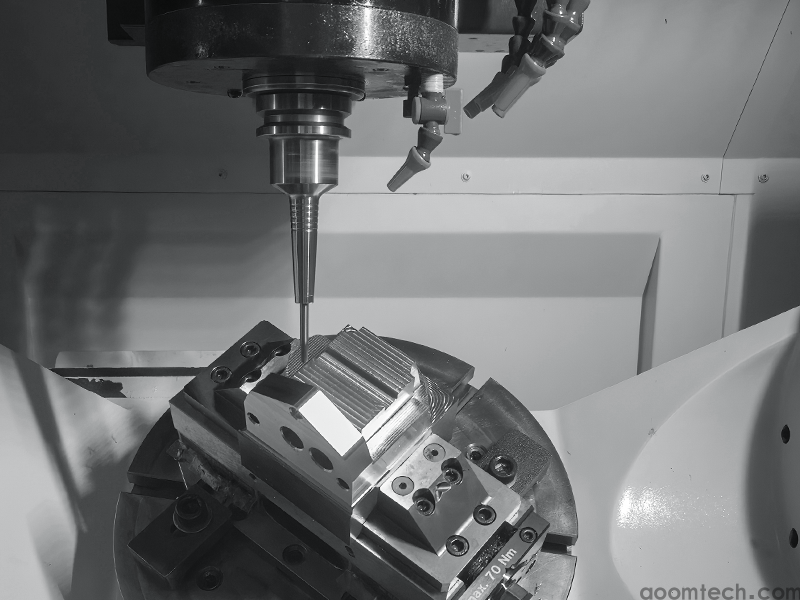
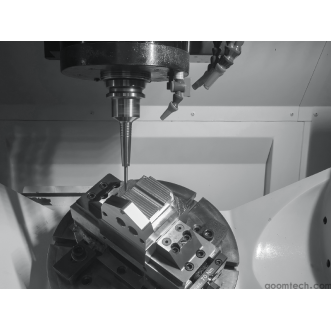
5-axis CNC machining significantly improves the production of complex small-batch precision parts. Unlike traditional 3-axis machines that move along X, Y, and Z directions, 5-axis machines add two rotational axes. This allows the cutting tool and workpiece to move simultaneously in five directions.
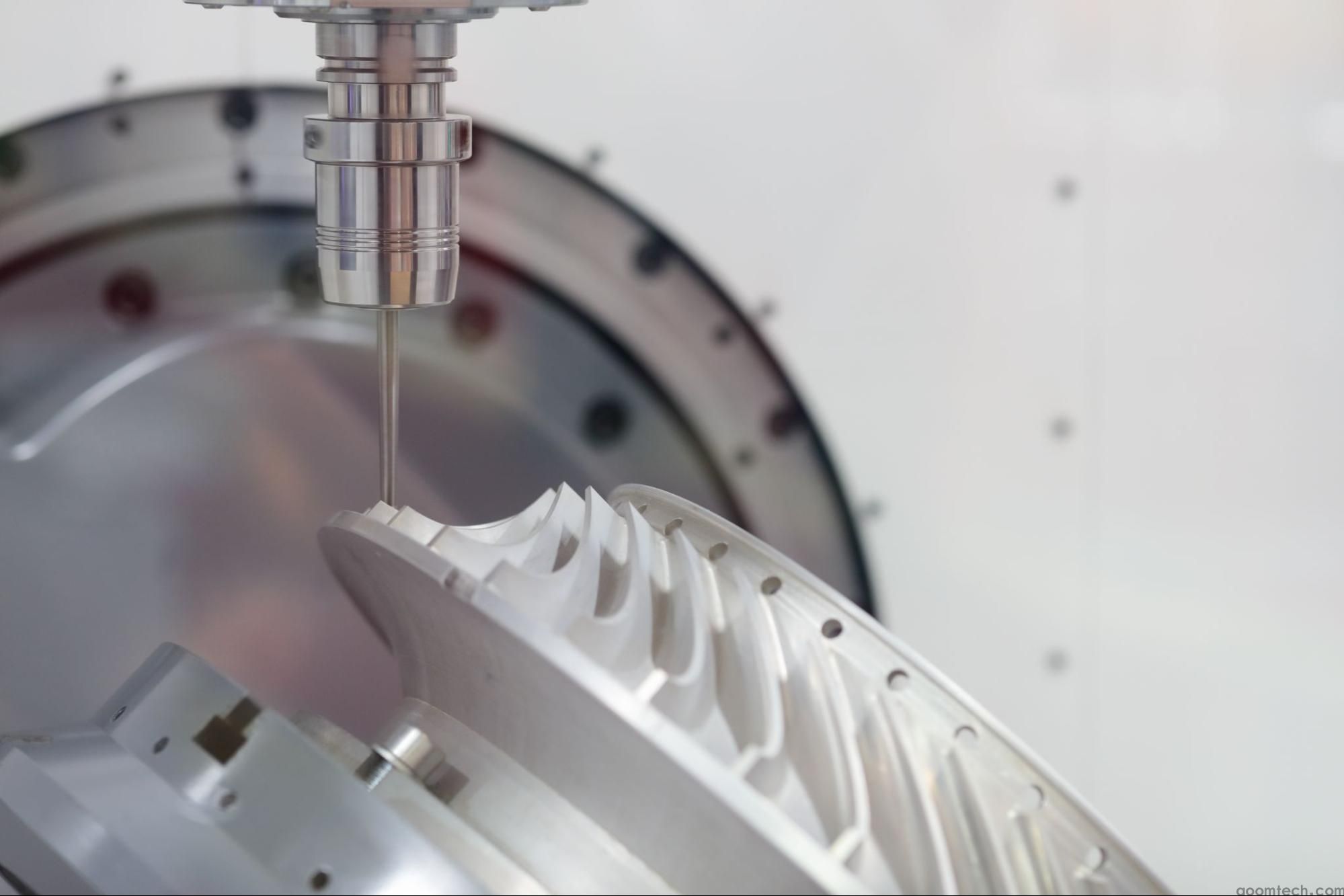
This capability makes it possible to machine complex geometries in a single setup. Parts such as turbine blades, medical implants, aerospace brackets, and intricate mold components can be manufactured more efficiently and with fewer errors. By reducing the need for multiple setups, 5-axis CNC machining improves both accuracy and productivity.
Benefits of 5-axis CNC Machining for Small-batch Precision Parts
Enhanced Precision
One of the most important benefits of 5-axis CNC machining for small-batch precision parts is improved accuracy. Since the part can be machined from multiple angles without repositioning, the risk of cumulative setup errors is greatly reduced.
In high-demand industries like aerospace and medical manufacturing, tolerances can often reach ±0.005 mm or even tighter depending on material and design requirements. This level of precision ensures proper part functionality, safety, and long-term reliability.
Complex Geometry Machining
5-axis CNC machining is especially powerful when producing complex geometries. It can handle undercuts, deep cavities, curved surfaces, and multi-angle features that are difficult or impossible with traditional machining methods.
For instance, in the jewelry industry, highly detailed custom designs can be created with smooth finishes and intricate shapes. In aerospace engineering, turbine blades with complex aerodynamic surfaces can be manufactured efficiently. This flexibility makes 5-axis machining ideal for innovative and customized product development.
Reduced Production Time
Another major advantage is reduced production time. Because multiple machining operations can be completed in a single setup, there is no need for repeated clamping or repositioning of the workpiece.
In many cases, production time for small-batch parts can be reduced by 30% to 50% compared to traditional 3-axis machining methods. This is especially valuable for industries that require fast prototyping and quick product iterations.
Challenges in Small-batch Precision Parts 5-axis CNC Machining
Programming Complexity
Despite its advantages, challenges in 5-axis machining of small-batch parts often begin with programming. 5-axis toolpaths are significantly more complex than 3-axis toolpaths. Programmers must carefully control tool orientation, collision avoidance, and multi-axis synchronization.
Advanced CAD/CAM software such as Siemens NX, Mastercam, or Fusion 360 is typically required. Even with software assistance, skilled engineers are needed to simulate toolpaths and ensure safe and efficient machining operations.
Tooling and Setup
Tooling and setup are also more demanding in 5-axis CNC machining. Specialized cutting tools may be required to reach difficult angles or deep features. Additionally, fixture design must ensure stable and accurate positioning without interfering with tool movement.
If setup is not precise, it can lead to machining errors such as misalignment, poor surface finish, or even tool collisions. Proper fixture design and careful calibration are critical for successful production.
Cost Considerations
Cost is another important factor. 5-axis CNC machines are more expensive to purchase, operate, and maintain compared to 3-axis machines. In addition, programming, tooling, and operator training also increase overall production costs.
However, for small-batch production, these costs can often be justified. Reduced setup time, improved accuracy, and lower scrap rates help balance overall manufacturing expenses. Many manufacturers also improve cost efficiency by sharing machine capacity across multiple projects or optimizing tool life through careful planning.
Key Considerations for Small-batch Precision Parts 5-axis CNC Machining
Part Design Optimization
Effective design is crucial for successful machining. In key considerations for small-batch 5-axis CNC precision parts, design optimization plays a major role in reducing complexity and improving manufacturability.
Designers should take advantage of 5-axis capabilities by reducing unnecessary features such as sharp internal corners or overly complex geometries that do not add functional value. Smooth transitions and accessible tool paths help improve machining efficiency and reduce production risks.
Collaboration between designers and CNC engineers is essential to ensure that parts are both functional and manufacturable.
Machine and Operator Competence
The quality of Small-batch Precision Parts 5-axis CNC Machining depends heavily on machine condition and operator skill. A well-maintained and properly calibrated machine ensures stable accuracy over long production cycles.
Operators must also be highly trained in 5-axis programming, setup, and real-time monitoring. Even small mistakes in tool alignment or parameter settings can significantly affect part quality. Regular training and preventive maintenance are essential for consistent results.
Quality Control
Quality control is a critical step in precision manufacturing. For small-batch production, every part often carries high value, so inspection must be strict and consistent.
Common inspection tools include coordinate measuring machines (CMM), laser scanners, and precision micrometers. These tools help verify dimensional accuracy, surface finish, and geometric tolerances.
Typical quality control points include checking complex curves, verifying multi-axis alignment, and ensuring flatness across multiple surfaces. In-process inspection is also important to detect issues early and reduce waste.
Conclusion
Small-batch Precision Parts 5-axis CNC Machining is a powerful manufacturing solution for industries that require high accuracy, complex geometries, and flexible production. While it offers clear advantages such as improved precision, reduced production time, and the ability to manufacture complex shapes, it also comes with challenges like programming complexity, tooling requirements, and higher costs.
By focusing on smart design optimization, skilled operation, and strict quality control, manufacturers can fully unlock the potential of 5-axis CNC technology. Understanding the benefits of 5-axis CNC machining for small-batch precision parts, the challenges in 5-axis machining of small-batch parts, and the key considerations for small-batch 5-axis CNC precision parts helps ensure successful and cost-effective production.
As industries continue to demand more customized and precise components, 5-axis CNC machining will remain a key technology driving innovation and manufacturing excellence.
 Process of Custom High-Precisi
 CNC Machining Parameter Settin
 5 Key Tips for CNC Machining o
 Small-batch Precision Parts 5-