


CNC Machining Process Flow for Titanium Alloy Parts
The CNC Machining Process Flow for Titanium Alloy Parts is a carefully controlled manufacturing sequence designed to produce high-precision components used in demanding industries such as aerospace, medical, and automotive engineering. Titanium alloys are known for their excellent strength-to-weight ratio, corrosion resistance, and biocompatibility, but they are also challenging to machine. This makes a structured process essential for achieving accuracy, efficiency, and long tool life.
Introduction to CNC Machining of Titanium Alloy Parts
Significance of Titanium Alloy Parts
Titanium alloy parts are widely used because they combine light weight with very high strength. In aerospace, they are used in engine components, airframe structures, and fasteners to reduce overall aircraft weight while maintaining safety and durability. In the medical field, titanium is commonly used for implants such as bone screws and joint replacements due to its biocompatibility and resistance to body fluids. In automotive applications, titanium parts improve performance in high-stress areas such as engine valves and exhaust systems.
However, titanium alloys generate heat quickly during machining and are difficult to cut. This makes process control and planning extremely important.
Pre-Machining Considerations for Titanium Alloy CNC Parts
Material Selection and Handling
Proper material selection is the first step in successful machining. Titanium alloys come in different grades, each with unique properties. For example, Grade 5 titanium (Ti-6Al-4V) is widely used in aerospace because it offers excellent strength, corrosion resistance, and good machinability compared to other titanium grades.
During handling, contamination must be strictly avoided. Titanium is chemically reactive at high temperatures and can be affected by oils, moisture, or reactive chemicals. It should be stored in a clean, dry environment and handled with protective gloves to maintain material integrity.
Part Design Optimization
Design optimization plays a key role in pre-machining for titanium alloy CNC parts. Because titanium has low thermal conductivity and high strength, poor design can lead to heat buildup and tool wear.
Avoid sharp internal corners to reduce stress concentration
Design smooth transitions to improve tool movement
Ensure sufficient clearance for cutting tools
Use CAD/CAM simulation to detect machining risks before production
These adjustments help reduce machining difficulty and improve final part quality.
Tool and Machine Selection
Selecting the right tools and machines is critical. Titanium machining requires rigid CNC machines with high torque and stable cutting performance.
Carbide cutting tools are commonly used due to their hardness and heat resistance. Tool geometry also matters—negative rake angles are often used in roughing operations to improve tool strength and reduce edge chipping.
Machine selection should consider spindle power, rigidity, and cooling system capability. Low-speed, high-torque machines are generally preferred for titanium alloys.
CNC Machining Operations for Titanium Alloy Parts
Milling Operations
Milling in titanium alloy part CNC machining requires careful control of cutting speed and heat generation. Compared to aluminum or steel, titanium requires lower cutting speeds and controlled feed rates to prevent overheating.
Key practices include:
Using high-performance coolant to reduce heat and improve chip removal
Applying trochoidal milling strategies for roughing operations
Maintaining sharp cutting tools to reduce cutting force
For finishing operations, stable cutting conditions and optimized spindle speed are essential to achieve smooth surface finishes and tight tolerances.
Turning Operations
Turning titanium parts requires strong tool stability and precise parameter control. Carbide inserts with special coatings (such as TiAlN) are commonly used to resist heat and wear.
Important considerations include:
Maintaining moderate spindle speed to avoid excessive heat
Using stable clamping systems to prevent vibration
Monitoring tool wear closely to avoid sudden tool failure
Even small vibrations can affect surface quality and dimensional accuracy, so rigidity is essential throughout the process.
Drilling and Boring Operations
Drilling titanium requires specialized drill geometry and controlled chip evacuation. Peck drilling is commonly used to prevent heat buildup and chip clogging.
For boring operations, precision alignment is critical to achieve accurate hole diameter and surface finish. Tool offsets should be adjusted carefully based on real-time measurement feedback.
Quality Control in Titanium Alloy CNC Machining
In-Process Inspection
Quality control in titanium alloy CNC machining is essential throughout production, not just at the end. In-process inspection helps detect errors early and reduce waste.
Common inspection methods include:
Using calipers and micrometers for dimensional checks
Measuring surface roughness with specialized testers
Monitoring tool wear conditions regularly
Critical dimensions such as hole diameter, wall thickness, and slot width must be checked frequently to ensure consistency.
Thermal Management Monitoring
Titanium has low thermal conductivity, meaning heat builds up quickly in the cutting zone. If not controlled, this can lead to tool failure or part deformation.
Thermal monitoring methods include infrared sensors and thermal cameras. If temperature rises too high, operators may adjust:
Coolant flow rate
Cutting speed
Feed rate
This ensures stable machining conditions and longer tool life.
Post-Machining Processes
Deburring and Edge Finishing
After machining, titanium parts often contain burrs that can affect assembly and safety. Deburring is necessary to remove sharp edges and improve part usability.
Common methods include:
Manual abrasive finishing
Rotary brush deburring
Electrochemical deburring for complex geometries
Edge finishing such as chamfering or rounding also helps reduce stress concentration and improve durability.
Surface Treatment
Surface treatment enhances performance and extends the life of titanium parts. Different methods are used depending on application requirements.
Anodizing: Improves corrosion resistance and surface appearance
Shot peening: Increases fatigue strength by creating compressive surface stress
Polishing: Enhances surface smoothness for medical and aesthetic applications
The choice of treatment depends on environmental exposure, mechanical load, and functional requirements.
Conclusion
The CNC Machining Process Flow for Titanium Alloy Parts requires careful planning, precise control, and strict quality management at every stage. From material selection and design optimization to machining operations and final inspection, each step plays a critical role in ensuring performance and reliability.
By understanding the unique challenges of titanium—such as heat buildup, tool wear, and low thermal conductivity—manufacturers can improve efficiency and produce high-quality components for aerospace, medical, and industrial applications.
A well-structured process not only improves machining accuracy but also reduces production cost and increases tool life, making titanium machining both practical and efficient when properly managed.
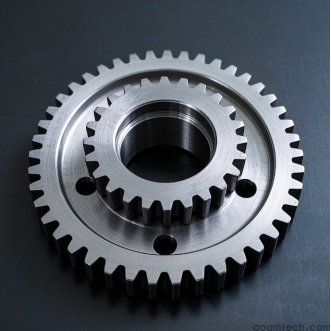 Process of Custom High-Precisi
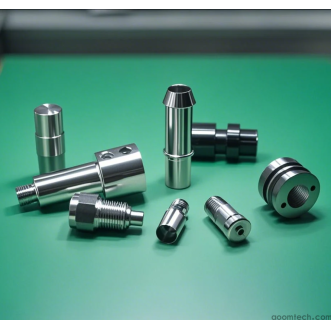 CNC Machining Parameter Settin
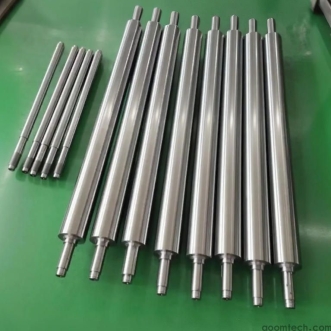 5 Key Tips for CNC Machining o
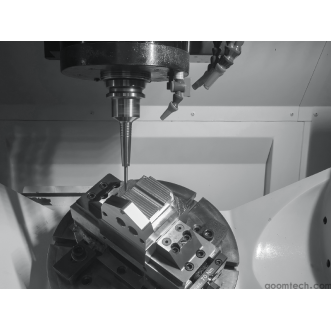 Small-batch Precision Parts 5-